HOW A DUTCHMAN AND AN AUSTRIAN FOUND HAPPINESS NEAR SRBAC
While many dream of a better life in more developed countries — stable jobs, secure incomes, predictable routines — some choose a completely different path. Among them are Denis Tijsman (45) from Rotterdam and his wife Julijana (31) from the outskirts of Vienna, who traded big-city life for the quiet hills of Sitneši near Srbac, where they have spent nearly four years living in harmony with nature, far from the noise and pressure of urban life.
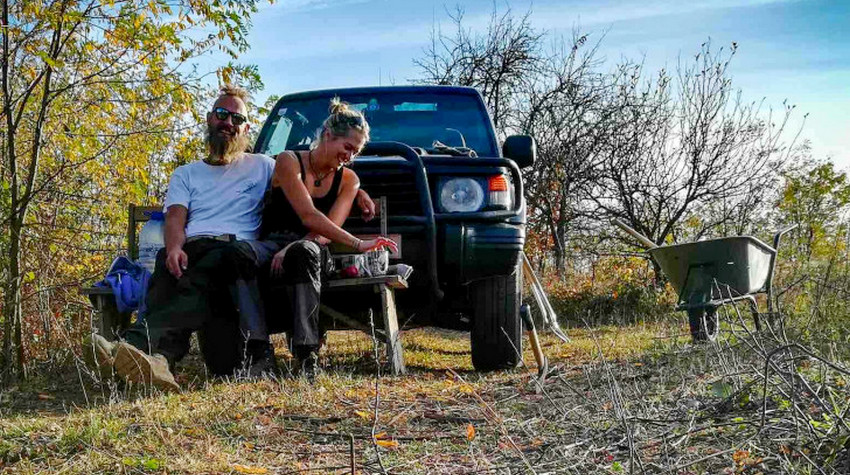
Their
decision was bold, almost unconventional. They arrived at a hilly property
beneath Mount Motajica with no prior experience in livestock, farming, or
sustainable living. Denis had worked in management in a private company, and
Julijana left university driven by a desire for change. Both walked away from a
safe, predictable lifestyle and stepped into the unknown.
The
couple met in 2015 in Thailand, where Denis worked as a diving instructor and
Julijana was his student. After she became an instructor as well, they traveled
the world teaching diving. Their journey to the Balkans began through WWOOOF,
an international network connecting volunteers with organic farms. They
originally planned to visit eight farms, but never made it past the first —
Sitneši won them over instantly.
“We
planned to stay only two weeks, but we loved it so much that we extended our
stay to three months. That’s when the idea of having our own piece of land was
born,” Julijana explains.
In the beginning, they slept in a tent, cooked over a fire, and learned everything from scratch. With no water, electricity, or tools, giving up still wasn’t an option.
“We
were like a team learning how to survive and organize life. It wasn’t hard
because we never cared for luxury,” Denis recalls.
Their
motto “little by little,” tattooed on their skin, became a symbol of
persistence. Today, their farm operates as a small, self-sustaining ecosystem.
Denis handles infrastructure, and Julijana takes care of the animals and
production. Most of what they know about rural life they learned from books and
the internet, researching techniques and gradually building knowledge.
“At
first we raised sheep, but switched to French Alpine goats. Goats eat
everything — bushes, shrubs — which fits our land much better. Now we even make
hay out of branches from cut trees,” Denis says.
Over
time, a donkey named Ludwig joined their farm as a guardian for the herd — an
idea inspired by Canadian farmers who use donkeys to protect livestock.
“One
time a jackal took a lamb, so we decided to try with a donkey. It worked. When
a predator appears, Ludwig simply kicks it and scares it away. Later, a female
donkey, Heidi, joined him, and now she’s pregnant. We plan to produce donkey
milk in the future,” Julijana says.
They
also have a Belgian Malinois trained for more than 300 hours to monitor the sky
and react to hawks and other predators.
“We
trained him to warn us by barking, and he does a great job even though dogs
usually don’t expect danger from above. His only flaw is that he also reacts to
airplanes,” Denis adds with a laugh.
Another unique feature of their farm is a mobile chicken coop moved every two days.
“The
manure falls directly onto the soil, so the chickens fertilize the land
themselves. The earth regenerates naturally. With our old fixed coop, the soil
became too acidic. Now, everything grows healthier,” Denis explains.
The
couple produces almost all their food. Their land holds around 200 old fruit
trees scattered across the property. Julijana makes vinegar, jams, and natural
creams. They still buy a few basic items, but their goal is full independence.
“A
neighbor taught me how to make cheese and kajmak. I also make homemade
elderflower, blackberry, and strawberry wine for the evenings after work. We
even bought a beehive — though we lost three hives the first year due to cold
weather. Now they’re in a better spot, so we hope they survive winter,” she
says.
Caring
for health and nature is their top priority. They avoid chemicals and cosmetics
because their water source lies below the property.
“Anything
artificial would end up in our spring. So we wash with natural soap, and
honestly, it’s better for our skin and our sanity. I don’t even bother with
makeup — the only ones who see me are the goats,” Julijana adds.
Although
they don’t yet fully live off the farm, they earn additional income from the
Netherlands and Austria.
“We
work 80 to 100 hours a week, but it’s not exhausting. It’s better to be tired
from real work than stressed out in an office. Life is fuller now. People want
instant results, but we’ve learned to wait — sometimes for months, sometimes
for years. When I see that the number of birds on our land has increased
tenfold, that’s the greatest reward,” Denis says.
Julijana
runs their Instagram and TikTok profiles under the name a_good_eggsample,
sharing stories from life on the farm. With a talent for writing, she hopes to
write a book someday, though for now there’s little time for that.
Denis notes that people often romanticize this lifestyle, but behind every photo lie hours of physical work.
“If I
could choose, I would do everything the same — only earlier. At 45, it’s harder
on the body. But I couldn’t imagine doing this without Julijana. It’s important
that both partners share the same vision. Even when we disagree, we find
compromise. Our life together is built on years of trust and understanding,”
Denis told Glas Srpske.
Julijana’s
mother and stepfather frequently visit. They even bought land next to their
property — planning to build a weekend cottage on half a hectare and use the
remaining four hectares as a small farm.
“At
first, my mom didn’t like my decision at all, but now she visits often, stays
ten days at a time, and helps us. She even sleeps on our property, while my
stepfather prefers a hotel. We also discovered that although my stepfather is
Austrian, my mom’s family originally comes from this area — her maiden name was
Vidović, which is common in the nearby village of Srđevići. In a way, that
connects us even more to this place,” Julijana says.
The
couple quickly made friends in the village — from local butchers and restaurant
owners to mechanics and construction workers who helped them settle in.
“People
here are wonderful; everyone helps each other. It feels good to be part of a
community. Once we were looking for our lost dog, and every neighbor invited us
in for a drink. In the end, we spent more time socializing than searching for
the dog,” Denis laughs.

Join our
Viber Community
NATALIJA LIVED 25 YEARS WITH HER MOTHER’S KIDNEY – NOW HER TENANT WANTS TO GIVE HER A SECOND CHANCE

PERUĆICA NAMED EUROPE’S MOST SECLUDED “ENCHANTED” FOREST
A 113-YEAR-OLD FOUNTAIN IN DONJA PECKA STILL FLOWS TODAY
MUSHROOM DAYS OF BALKANA BRING TOGETHER HUNDREDS OF HIKERS AND NATURE LOVERS
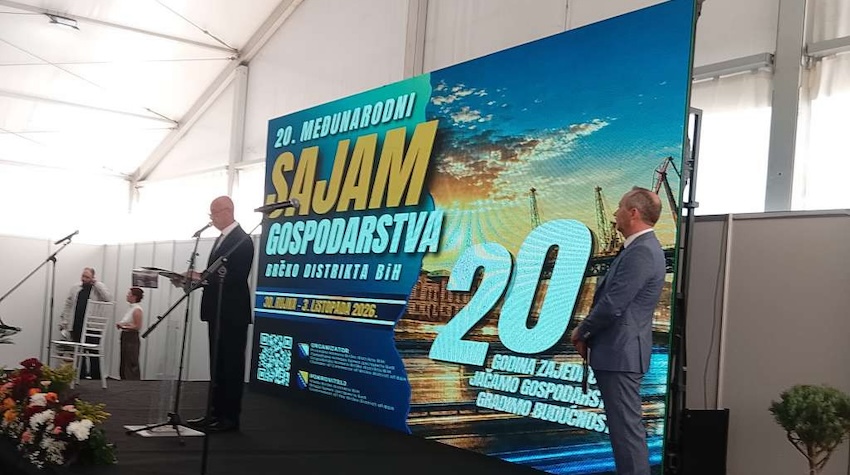
INTERNATIONAL ECONOMY FAIR IN BRČKO BRINGS TOGETHER MORE THAN 120 EXHIBITORS
NATALIJA LIVED 25 YEARS WITH HER MOTHER’S KIDNEY – NOW HER TENANT WANTS TO GIVE HER A SECOND CHANCE
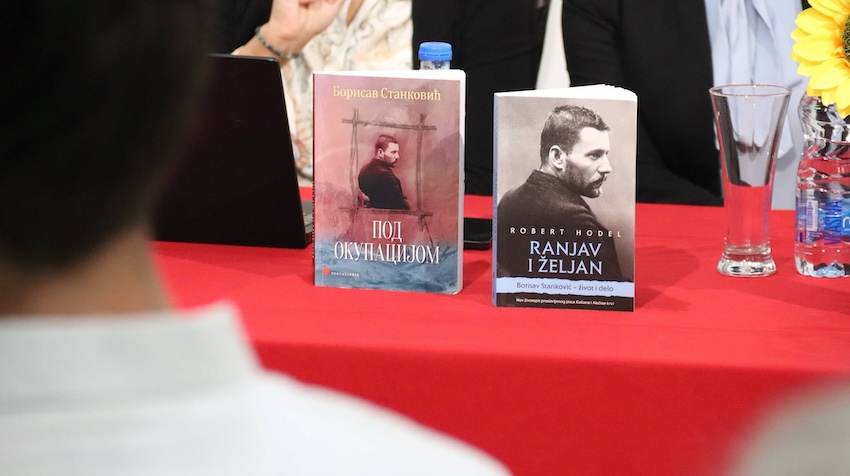
BORA STANKOVIĆ’S LITERARY LEGACY REMEMBERED IN DERVENTA
PERUĆICA NAMED EUROPE’S MOST SECLUDED “ENCHANTED” FOREST

FROM MARTIN BROD TO DRENJIJADA: A PERFECT IDEA FOR AN AUTUMN DAY TRIP

BANJA LUKA GAINS MORE VISIBILITY IN SPANISH MEDIA


 The situation at the border crossings