FOREIGN WORKERS FILL THE GAP AS DOMESTIC LABOR SHORTAGE GROWS IN BOSNIA AND HERZEGOVINA
A growing shortage of domestic workers, especially in hospitality and service industries, has led to an increasing reliance on foreign labor in Bosnia and Herzegovina.

The trend is most visible in the Federation of BiH, where the number of work permits issued to citizens of third countries rises every year, particularly for workers from Asia. It is no longer unusual for visitors in Sarajevo, Mostar or Neum to be served by waiters who communicate in English because they do not yet speak the local language.
Tourism workers in Neum are already preparing for the upcoming summer season, but once again the main problem is the lack of staff. According to Davor Krešić, director of the “Sunce” hotel, employers are forced to import labor.
“We tried to resist this problem as much as possible, but there are simply no quality workers available in the entire country. That’s why we will again have to hire foreign labor. If large tourist destinations in the region like Croatia have not managed to solve this issue, it is hard to expect us to do better,” Krešić said.
Most of the imported workforce in Neum comes from Nepal and the Philippines.
Data from the Employment Service of the Federation of BiH show that between January 1 and December 31, 2025, a total of 3,698 foreign citizens lived and worked in the Federation. Since the annual report is not yet final, the number could be even higher.
By country of origin, the largest number of permits was issued to citizens of India (553), followed by Turkey (479), Nepal (399), Bangladesh (283), Serbia (192) and Croatia (163). A significant number of permits were also issued to workers from China (101) and Kuwait (91), indicating an increasingly diverse foreign workforce structure.
The strongest growth is recorded in hotel and hospitality services, sectors that have suffered from chronic labor shortages for years. In 2025, a total of 536 work permits were issued in these activities, while an additional 255 were issued for other service sectors such as cleaning, logistics and personal services.
Restaurant and hotel owners warn that without foreign workers they would not be able to maintain business volume, especially during the tourist season. The departure of domestic workers to EU countries, unfavorable demographic trends and the lack of interest among young people in certain jobs have further worsened the labor market situation.
Workers from India, Nepal and Bangladesh are most often employed in hospitality, hotels and auxiliary services. Employers say these workers are willing to work longer hours and more easily accept conditions that local workers increasingly reject.
More than half of all permits in the Federation were issued in Sarajevo. In 2025 alone, 2,121 work permits were granted in the canton, reflecting the city’s role as the administrative, tourist and economic center with the highest concentration of hotels, restaurants and services.
Experts warn that the trend of hiring foreign workers will continue unless serious systemic measures are introduced to retain domestic labor. At the same time, better regulation is needed to protect foreign workers’ rights and prevent abuse.
While foreign workers currently fill critical gaps in the labor market, analysts stress that relying on imported labor is not a long-term solution, but rather a response to deep structural and demographic problems in the local economy.

Join our
Viber Community

NEW GENERATION OF STUDENT THEATRE MEMBERS TAKES THE STAGE

AUTUMN FRUITS AND HONEY FESTIVAL COMES TO BANJALUKA

DEJAN KOKANOVIĆ CONQUERS 336 KM THROUGH THE ITALIAN ALPS

HOMEMADE AJVAR - A TASTE OF TRADITION

OKTOBERFEST KICKS OFF IN MUNICH, EXPECTING 6.5 MILLION VISITORS
DEJAN KOKANOVIĆ CONQUERS 336 KM THROUGH THE ITALIAN ALPS

DERVENTA BRINGS ITS PAST TO LIFE: 3D FORTRESS AND VIRTUAL TOUR OF THE CITY
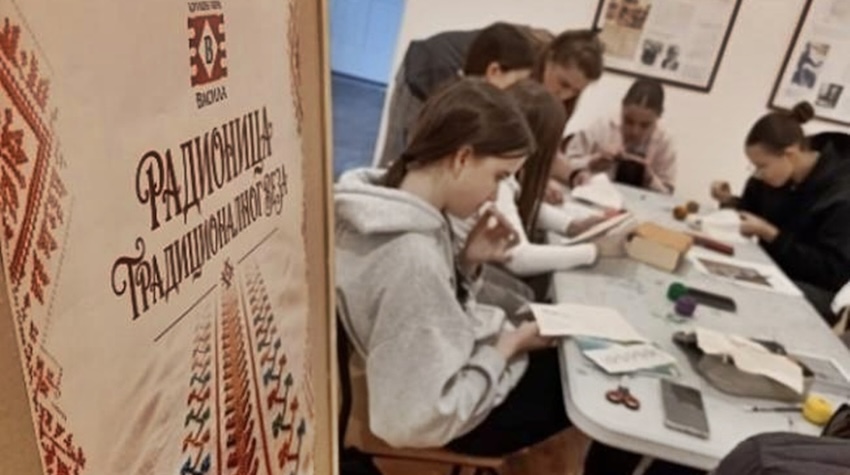
HERZEGOVINIAN EMBROIDERY IN THE HANDS OF NEW GENERATIONS
OKTOBERFEST KICKS OFF IN MUNICH, EXPECTING 6.5 MILLION VISITORS

SPANISH TRAVEL WRITER DISCOVERS THE GREEN SIDE OF BANJA LUKA

 The situation at the border crossings