RETURNING TO THE ROOTS: A PATH TOWARD A BRIGHTER FUTURE FOR KOZAREVINA
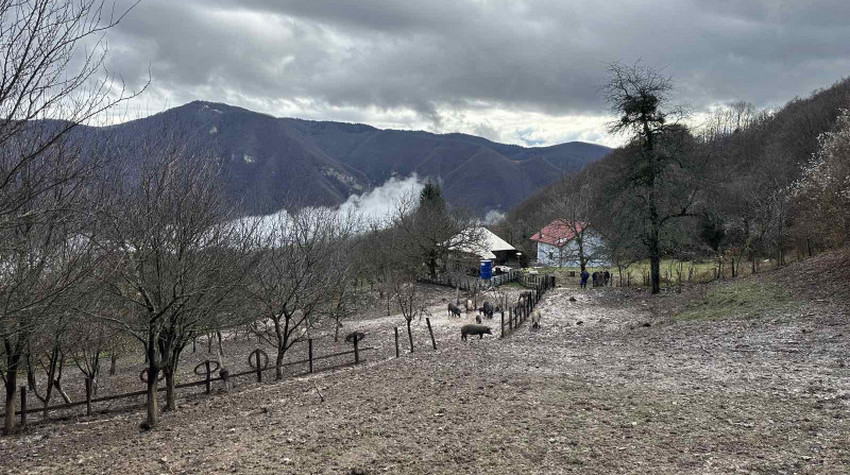
At 920 meters above sea level, in the village of Kozarevina, 17 kilometers from Foča, beneath the church in Okolišta, late autumn carries no grey tones—only light. Here, high above the fog that often settles in the valleys, the sun warms the meadows and forest clearings almost every day. In this quiet, almost mountainous sanctuary, Borivoje “Boro” Vilotić has found a new calling after 44 years in medicine: raising mangalica pigs, an indigenous and remarkably resilient breed.
Today,
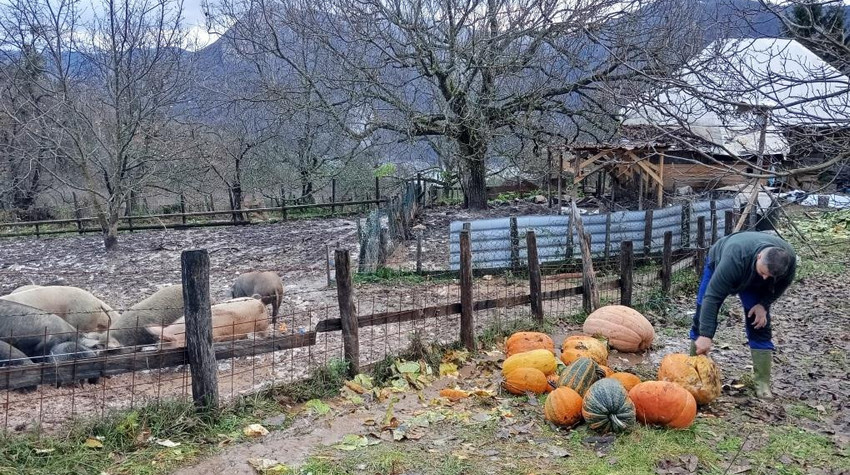
Vilotić’s farm is home to 22 mangalicas—two boars, ten sows, and ten piglets.
Standing by a wooden fence, watching them roam freely, he explains why he chose
this particular breed.
“Mangalica
has soft, healthy fat rich in good cholesterol. Anyone dealing with high cholesterol,
blood pressure, low immunity, or undergoing chemotherapy should use mangalica
meat and fat. I recommend this from personal experience. We had a health issue
in the family, and after including this meat in the diet, the condition
improved significantly. Blood counts improved, iron levels rose, good
cholesterol increased. The benefits are tremendous. These pigs are never fed
concentrates and are resistant to almost all diseases,” says Borivoje.
His property in Kozarevina blends tradition with modern livestock practices.
Part
of the area where the mangalicas roam is under video surveillance, and an
automatic feeder simplifies daily work. Their diet is natural, meaning the
workload is minimal.
“We
have an automatic feeder that releases corn and barley. We feed them pumpkin,
cabbage, apples, potatoes, and other vegetables, but they love spending time in
the mud and the forest, feeding on acorns, roots, and grass. That’s why raising
them isn’t demanding. Our farm covers ten dunams, fenced with an electric
boundary, and they spend most of their time in the woods. Three pregnant sows
don’t even come to the barn—they farrow on their own and return from the forest
after some time with several piglets. A mangalica usually gives birth to five
or six piglets, but one of mine had eight because conditions here are ideal,”
Vilotić told Radio Foča.
The
work is a family effort—his son, wife, and daughter-in-law help, and in the
summer, when Kozarevina briefly comes to life, his 88-year-old mother joins
them.
For the
rest of the year, the village remains quiet—almost deserted. But Borivoje says
the silence and sunny days are exactly what keep him motivated.
He
also receives support for raising indigenous breeds. The Ministry of
Agriculture grants him 140 KM per mangalica annually, while the municipality of
Foča adds another 100 KM per sow that farrows. These incentives, he says, help
him expand and secure enough feed.
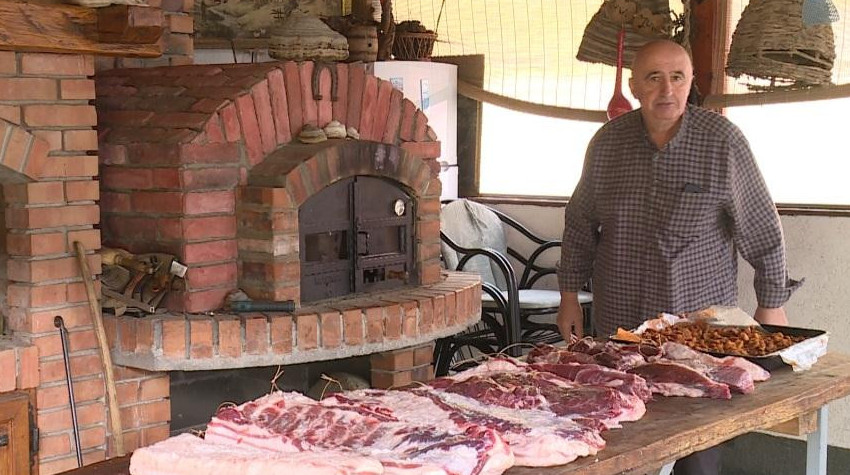
His plan is to grow the herd to about 50 animals in the coming years and then begin selling meat and products—natural, high-quality, and healthy.
“We
plan to expand the herd to around 50 pigs so we can benefit from it. A
mangalica farrows twice a year—actually two and a half times if you count the
cycle accurately. Once the piglets are weaned, the sow starts breeding again
within five days. It’s amazing. We also made sure to replace boars so they’re
not in the same bloodline—something you really have to consider,” he says.
According
to Borivoje, everyone should dedicate at least a small part of their time to
their village and produce a portion of their own healthy food.
“We
have forgotten the village, forgotten healthy food. If we don’t work in
agriculture as much as we can, at least to produce for ourselves—without
chemicals, without spraying—we’ll face serious problems. Look how polluted the
world is, how diseases are increasing. Yet we have nature, a gift from God, and
we should make better use of it. I urge everyone who can, who has the
conditions and the will, to try—if not with pigs, then with some other kind of
livestock or vegetables,” he stresses.
He remembers a time when Kozarevina, Okolišta, and Slatina were full of life.
“We
used to walk seven kilometers to school in Slatina. This area had two four-year
and two eight-year schools. There used to be a cooperative here. From here to
Čajniče, forty kilometers away, the region was bustling with people. Now,
there’s no one. Sadly, we ourselves contributed to that. I think people should
consider how even a small return to the village could revive agriculture and
life,” he concludes.
The
story of Borivoje Vilotić shows that returning to one’s roots can lead to a
healthier, safer, and more hopeful future.

Join our
Viber Community
TRAVELING BY CAMPERVAN FOR THE FIRST TIME? HERE’S WHAT YOU SHOULD KNOW BEFORE YOU GO

NEW RAIL LINK BETWEEN REPUBLIKA SRPSKA AND SERBIA: DAILY TRAIN SERVICE FROM ZVORNIK TO BELGRADE
‘DRŽAVNI POSAO’ CREW FILMS NEW PROJECT IN TREBINJE
SEE SRPSKA RECEIVES CHARTER FROM BANJA LUKA TOURIST ORGANIZATION

GALIJA TO CELEBRATE MAJOR ANNIVERSARY IN BANJA LUKA
SEE SRPSKA RECEIVES CHARTER FROM BANJA LUKA TOURIST ORGANIZATION
NEW RAIL LINK BETWEEN REPUBLIKA SRPSKA AND SERBIA: DAILY TRAIN SERVICE FROM ZVORNIK TO BELGRADE

BANJA LUKA BOOK FAIR 2026 OPENS TODAY

DAYS OF SEMBERIJA IN AUSTRIA: CULTURE, TRADITION AND LOCAL PRODUCTS PRESENTED TO AUSTRIAN AUDIENCES

FROM EUROPEAN STAGES TO HER HOMETOWN: JOVANA RALJIĆ BRINGS VIVALDI TO BANJALUKA


 The situation at the border crossings