GUIMARÃES – THE CITY WHERE PORTUGAL IS STILL BEING BORN
If there is a city that seems modest at first glance but reveals the full grandeur of its past upon closer look, it is the Portuguese city of Guimarães.

When
people from the hilly Balkans think of Portugal, Lisbon and Porto usually come
to mind, perhaps Madeira as the birthplace of Cristiano Ronaldo, and only the
most devoted football fans recall Guimarães. Yet, beyond its famous football
club Vitória SC, this city has so much more to offer.
Located
in northern Portugal, just about half an hour’s drive from Porto, Guimarães is
often called the “Cradle of the Nation.” This title is no coincidence: Afonso
Henriques, later known as Dom Afonso I, the first king of Portugal, was born
here. In the 12th century, he began the process of establishing an independent
Portuguese state. It was in Guimarães, within hidden chapels and castles, that
decisions were made and stories written that shaped the country’s identity. A
single step into its historic center makes it clear why.
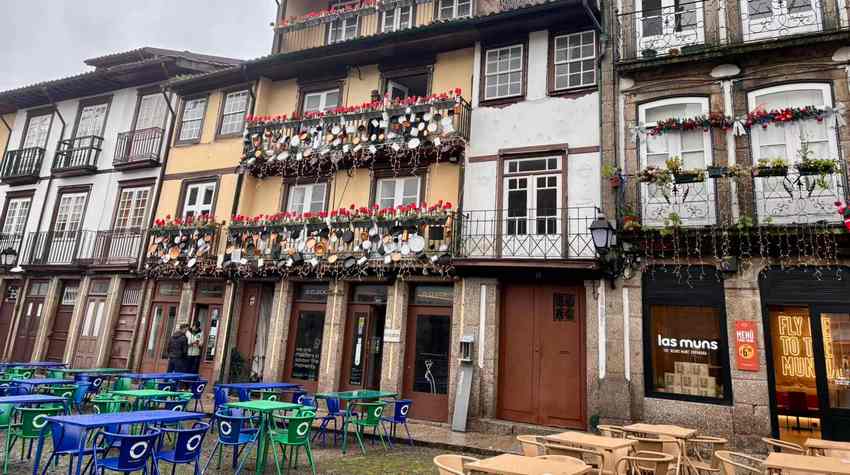
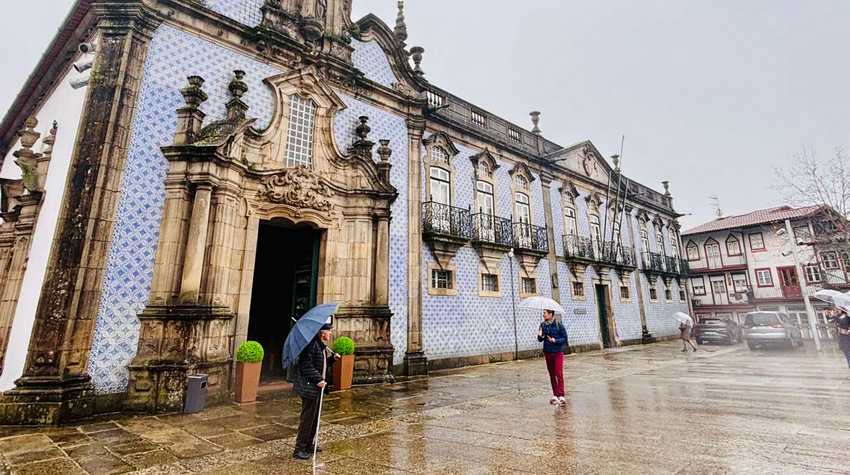
The
streets are narrow, paved with large stones that seem to have preserved the
traces of thousands of footsteps over the centuries. On small squares, flowers
hang from windows, while elderly men play dominoes on terraces bathed in the
morning sun.
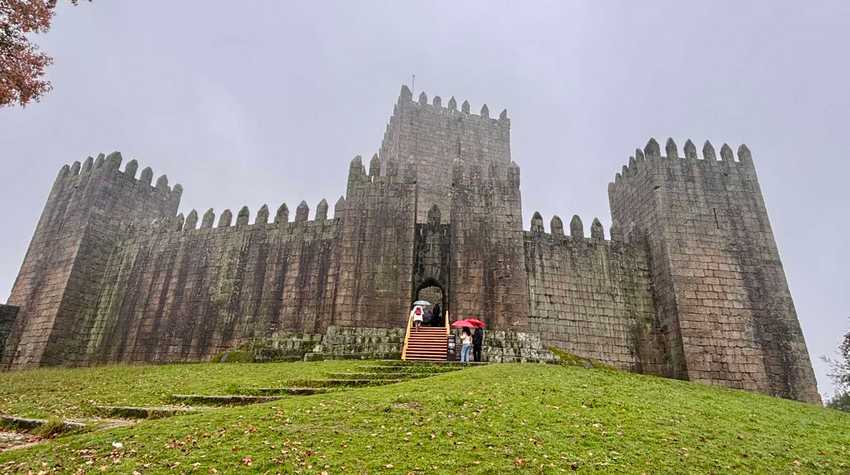
A gentle uphill walk through shadowed façades that breathe old Europe leads to the silhouette dominating the city: the Guimarães Castle (Castelo de Guimarães). Its massive 10th-century stone walls rise toward the sky, solid and austere, as if still guarding the identity of Portugal.
Just a
few steps away stands the Chapel of São Miguel, a small stone structure with
simple doors. Inside, the dim light reveals a stone believed to have been
touched by King Afonso Henriques during his baptism. Locals will tell you,
“This is where everything begins,” and at that moment, time truly seems to
stand still.
A
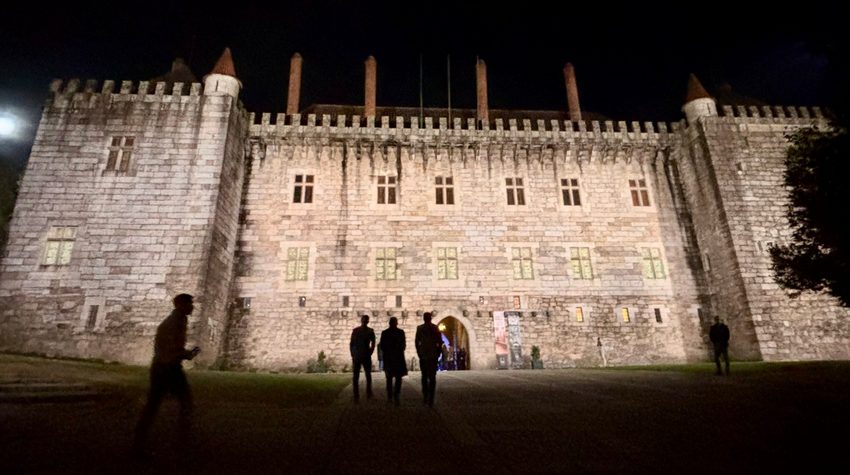
completely different energy radiates from the Paço dos Duques de Bragança, a
15th-century palace built for Duke Afonso of Bragança. Combining Gothic and
Renaissance styles, its massive walls, tall chimneys, towers, and arcaded
courtyards give the impression of a powerful fortress, while the
interior—featuring wooden ceilings resembling inverted ship hulls, tapestries,
and weapons—testifies to the luxury and power of the Bragança family. Today,
the palace is a key historical attraction and also the official secondary
residence of the President of Portugal.
Above
Guimarães rises Monte da Penha, one of the city’s most recognizable landmarks
and an important tourist and religious destination. At its summit stands the
Santuário da Penha, a renowned sanctuary attracting visitors year-round. Penha
can be reached on foot, by car, or by cable car, which connects the city center
to the hilltop and offers panoramic views. Known for its viewpoints, landscaped
parks, forest trails, and distinctive granite formations, Monte da Penha is
considered one of the symbols of Guimarães.
During
our visit to the “Cradle of Portugal,” we also explored two museums. The Centro
Internacional das Artes José de Guimarães (CIAJG) is a contemporary art center
dedicated to the work of José de Guimarães and international modern art,
renowned for exhibitions linking contemporary creativity with archaic and
non-European cultures. The Museu da Cidade presents the city’s development
through centuries via multimedia displays. Guimarães’ vibrant cultural life can
also be felt at Teatro Jordão, a venue for theater performances, concerts, and
local events, where tradition meets modern artistic expression.
As
mentioned earlier, Guimarães is also a city where football holds a special
place. Vitória SC brings together generations of fans and often stands at the
center of social life, demonstrating how sport and local identity go hand in
hand.
Gastronomy and local wines further enrich the visitor experience.
Northern Portuguese
specialties are a must-try: various codfish dishes, beef prepared in countless
ways, and traditional sweets such as tortas de Guimarães. Vinho Verde—light and
refreshing—perfectly complements the local cuisine and adds authenticity to
every meal.
Our
hosts, the Guimarães Tourism Board, provided us with an unforgettable
experience: a visit to the small village of Caldas das Taipas and the Quinta da
Cancela winery, where we were welcomed by Arthur Faria Carvalho, the owner and
heir to an estate that has been producing outstanding wine since 1720, across
six generations. With each course of carefully prepared local specialties, we
tasted a new wine—making it difficult to decide which was better. The
experience was completed by the authentic ambiance, preserved for more than 300
years since the estate was built. Special thanks go to Catarina and Paolo from
the Guimarães Tourism Board, who guided us throughout this memorable journey.
The heart of Guimarães lies in its streets, hills, history, architecture, and the energy of its local community—in a unique blend of tradition, art, and everyday life.
Guimarães
does not win you over all at once, but quietly and completely. And when you
leave, you realize you remember it not just as a destination, but as a feeling:
warmth, history, natural beauty, and a rare sense of calm found only in places
that have known who they are for more than a thousand years. A warm
recommendation, therefore: if you ever get the chance—by accident or by
design—visit Guimarães, and expect to fall in love forever.
Bonus
tip: In Guimarães, it is best not to mention neighboring Braga. Even the city
museum displays a sign reading: “Neither a good wind nor a good marriage comes
from Braga. Guimarães and Braga: rivals for centuries.”

Join our
Viber Community
TRAVELING BY CAMPERVAN FOR THE FIRST TIME? HERE’S WHAT YOU SHOULD KNOW BEFORE YOU GO

NEW RAIL LINK BETWEEN REPUBLIKA SRPSKA AND SERBIA: DAILY TRAIN SERVICE FROM ZVORNIK TO BELGRADE
‘DRŽAVNI POSAO’ CREW FILMS NEW PROJECT IN TREBINJE

SEE SRPSKA RECEIVES CHARTER FROM BANJA LUKA TOURIST ORGANIZATION

GALIJA TO CELEBRATE MAJOR ANNIVERSARY IN BANJA LUKA
SEE SRPSKA RECEIVES CHARTER FROM BANJA LUKA TOURIST ORGANIZATION
NEW RAIL LINK BETWEEN REPUBLIKA SRPSKA AND SERBIA: DAILY TRAIN SERVICE FROM ZVORNIK TO BELGRADE

BANJA LUKA BOOK FAIR 2026 OPENS TODAY
DAYS OF SEMBERIJA IN AUSTRIA: CULTURE, TRADITION AND LOCAL PRODUCTS PRESENTED TO AUSTRIAN AUDIENCES
FROM EUROPEAN STAGES TO HER HOMETOWN: JOVANA RALJIĆ BRINGS VIVALDI TO BANJALUKA


 The situation at the border crossings