TRADITION: HOW ROMA IN BIJELJINA CELEBRATE DJURDJEVAN
Roma communities in Bijeljina marked Djurdjevdan this year in their traditional way, by throwing willow wreaths into the Dasnica canal, accompanied by heartfelt wishes for health, happiness, and prosperity.
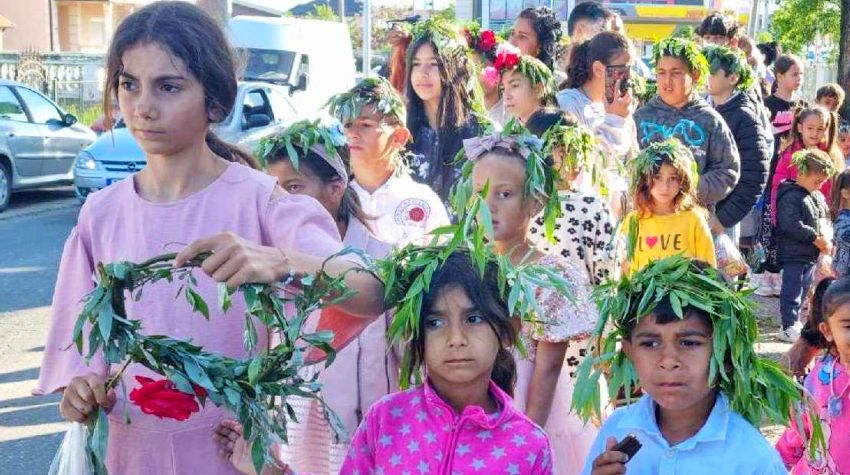
Throughout history, Djurdjevdan has held special significance for Roma people, symbolizing a time when they could set out on long journeys with their caravans and freely spend nights in nature.
Customs also include bathing children in water
infused with shells from red-dyed eggs, a ritual believed to bring health and
progress. Early in the morning, families decorate eggs, while girls and women
gather under willow trees to trim their hair, reciting the phrase: “As the
willow cracks, the hair grows,” symbolizing renewal and growth. Willow wreaths
are then woven and cast into the water as part of the celebration.
Almin Hidanović, coordinator at the Otaharin
Day Center, described Djurdjevdan as the most joyful Roma holiday. He
emphasized the importance of preserving Roma culture and passing traditions on
to younger generations. However, he also pointed out that young Roma people
face significant challenges in finding employment, stressing that education
remains crucial for their future.
EDUCATION AND EMPLOYMENT KEY FOR YOUTH
Fadil Krasić, a representative of the Roma
Association from Slovenia, expressed his satisfaction at attending the
celebration in Bijeljina. He noted that young Roma people are actively seeking
employment to gain work experience and develop professional habits. According
to him, Slovenia places strong emphasis on Roma education and employment, and
those who secure jobs can positively influence their families and communities.
He highlighted the need for stronger state support, particularly through the
creation of production facilities and new job opportunities.
Dragan Joković, executive director of the Roma
Association “Otaharin,” extended Djurdjevdan greetings to all who celebrate. He
stated that Roma communities generally face difficult living conditions due to
high unemployment rates. Joković called on institutions to take greater
responsibility in improving the position of Roma people, including the
establishment of shelters for children. He stressed the importance of
understanding and tolerance, noting that Roma have lived in the region for
centuries.
According to Joković, around 170 Roma families
are registered in Bijeljina, although the number fluctuates due to many working
in European Union countries. He also identified begging as an ongoing issue,
adding that efforts are being made to address and prevent it.

Join our
Viber Community








 The situation at the border crossings