"20 NOVELS BY SERBIAN WRITERS EVERYONE SHOULD READ AT LEAST ONCE
Besides spending time with loved ones, the holidays are the perfect time to dedicate yourself to quality written words and reading.

Recently, the portal Opanak.rs compiled a list of 20 novels by Serbian authors that are among the most beautiful and valuable works of our literature. If you haven't read them yet, recommendations are provided below.
Ivo Andrić – The Bridge on the Drina
The greatest jewel of our literature. A novel in which the bridge is a symbol - the backbone around which various human destinies intertwine, with the author chronicling the town of Višegrad and its inhabitants over four centuries. We would also add the indispensable "The Damned Yard", but it is worth noting that all of Andrić's works are equally valuable and deserve to be read and interpreted. After all, he is our only Nobel laureate. We must know him beyond mandatory reading!
Miloš Crnjanski – Migrations
A novel that describes the sufferings of Serbs in Vojvodina in the 18th century, but through the events of the Isaković family, i.e., through the triangle of their family relationships (Vuk - a historical figure, Aranđel, and Vuk's wife Dafina).
Mihajlo Pupin – From the Farm to the Scientist
This book is essential reading for young people, a kind of model for the upbringing of every child and young person. It has never become part of our curriculum, although the largest countries in the world used it in their education, even during Pupin's lifetime.
Meša Selimović – Death and the Dervish
Forty-year-old dervish Ahmed Nurudin tells us his confession from the moment he learns that his brother is innocently imprisoned in the fortress. Full of introspection, this psychological-philosophical novel is a kind of search for the meaning of life and whether we are at a loss if that meaning cannot be achieved.
Borisav Stanković – Impure Blood
This is one of Bora Stanković's most famous works. The main character is Sofka, the last descendant of a once prominent family from Vranje. Speaking of her, Bora is actually talking about the rise, degeneration, and extinction of a family, about the moral corruption of its members, the misfortune that befalls Sofka, and is passed on to her descendants.
Danilo Kiš – Garden, Ashes/Early Sorrows/The Hourglass
A trilogy of a family cycle of novels by this writer. Andreas Sam, the main character, through all three works, first tells us about his father, about childhood, his sorrows... until the last part, through the fate of the father of one family, depicts the camp history of the 20th century. They can be read separately. Whichever book you choose, you won't go wrong.
Aleksandar Tišma – The Use of Man
In a masterful way, the writer portrays the issues of contemporary humanity, which is putting man in the service of an idea, manipulating man for someone else's goals and motives. Through the prism of three families, which touch each other, it is described how primarily war, and then low instinctual passions in people can be directed towards the use of man.
Borislav Pekić – Time of Miracles
The framework of this Pekić's masterful novel, composed of stories, consists of biblical motifs of Jesus' miracles in Judea. It describes the relationship of man to the world and the world to man. It emphasizes the absurdity of any dogma and uncompromising ideology, which puts the welfare of society before the individual's welfare. It is a time of miracles in which miracles are turned against man.
Dragoslav Mihajlović – When Pumpkins Bloomed
This short novel tells the story of Belgrade (Dušan's) boxer Ljuba Sretenović (also known as 'Champion' and 'Ljuba Vrapče') - a novel about emigration, about nostalgia, a political novel, a thriller with murder, a book about growing up and urbanism, a novel about boxing...
Dobrica Ćosić – Roots
The novel that first received the NIN Award. It falls into the socio-historical novel category and shows the events in the Katić family, as well as the economic and political conditions of Serbia at the end of the 19th century, i.e., the life of all families in Serbia at that time. The novel begins with a chronicle entry, or rather a prologue by Nikola - Aćim Katić's servant who narrates.
Milorad Pavić – Landscape Painted with Tea
The novel has a very unusual form, as it is written in the form of crossed words that are filled in, i.e., read, horizontally and vertically. It also tells the story of the most unusual history of a country that no longer exists, about the lives of people caught between a past they cannot master and "Titoism" from which they cannot escape.
Goran Petrović – The Lottery Ticket 'At the Lucky Hand'
The novel is dedicated to the phenomenon of reading. The protagonists in the novel are none other than readers who meet each other through the common reading of a rare copy of a book. Over time, they become more involved in its world and unknowingly replace their lives with the reality of a literary work.
Isidora Sekulić – Letters from Norway
Our writer wanted to get to know foreign cultures and peoples, writers and artists, to see how they solve the conflicts that troubled her. The result of such a journey is the book Letters from Norway. The harsh Norwegian landscape found an extraordinary painter in Isidora.
David Albahari – The Bait
The book won the NIN Award in 1996. It speaks about emptiness, loss of fullness and any sense... The protagonist of the novel tries to tell his life story, which only confirms the thesis that man is alone in the world and that nothing can change that. It is a story of going into exile, breaking ties with roots, losing national and personal identity.
Slobodan Selenić – Premeditated Murder
Selenić turns to the consequences of the collapse of Yugoslavia and the wars of the 1990s. The story is told from today's perspective, with the action set in the early post-war years.
Vladimir Arsenijević - "U potpalublju"
Another recipient of the NIN Award. We'll describe it in the words of Teofil Pančić, who wrote the preface for this novel: "When I think of 'U potpalublju' today, I think of that metallic gut feeling with which we survived - that is, if we survived - in 1991 and the years that followed, a feeling that Arsenijević brilliantly sublimated in this short novel, therapeutically compressed like some sort of tranquilizer."
Dragan Velikić - "Russian Window"
Velikić follows the encounter of the main character with the historical events of the late 20th century, his journey from a small town in Vojvodina, through Belgrade and Budapest, to other cities in Eastern and Central Europe. The novel consists of three stories that gradually intersect and ultimately merge into one narrative.
Grozdana Olujić - "Voices in the Wind"
Recipient of the 2009 NIN Award. The main character is Danilo Aracki, a middle-aged disgraced Serbian psychiatrist. In the darkness of a New York hotel room, he sifts through the sleeves of his family's turbulent history. Next to him is an unknown woman, suicides fall from the hotel roof, and the room is filled with the ghosts of his ancestors, all of whom met violent or strange deaths. It speaks of self-exile in the form of a family-social chronicle that spans several generations.
Svetislav Basara - "Fame of the Cyclists"
It tells the story of the secret society "Evangelical Cyclists of the Rose Cross". It describes conspiracies, reveals hidden messages... Letters, texts, and scraps with notes that reveal the history and current activities of the society alternate. Real and imaginary characters mix, so characters in the novel include Sigmund Freud and Sherlock Holmes. It satirizes the idea of the collapse of Yugoslavia, noting that the book was written before 1988.
Gordana Ćirjanić - "What You've Always Wanted"
The novel focuses on the relationship between two brothers
and forbidden love within the family circle. The main character of the novel is
a former producer of popular reality shows, now a retired middle-aged gentleman
who escapes from his life into the virtual world of television, specifically
into forensic crime series. The book portrays the state of today's television
audience, for whom nothing they see on the screen can be shocking enough.

Join our
Viber Community
TRAVELING BY CAMPERVAN FOR THE FIRST TIME? HERE’S WHAT YOU SHOULD KNOW BEFORE YOU GO
NEW RAIL LINK BETWEEN REPUBLIKA SRPSKA AND SERBIA: DAILY TRAIN SERVICE FROM ZVORNIK TO BELGRADE
‘DRŽAVNI POSAO’ CREW FILMS NEW PROJECT IN TREBINJE
SEE SRPSKA RECEIVES CHARTER FROM BANJA LUKA TOURIST ORGANIZATION
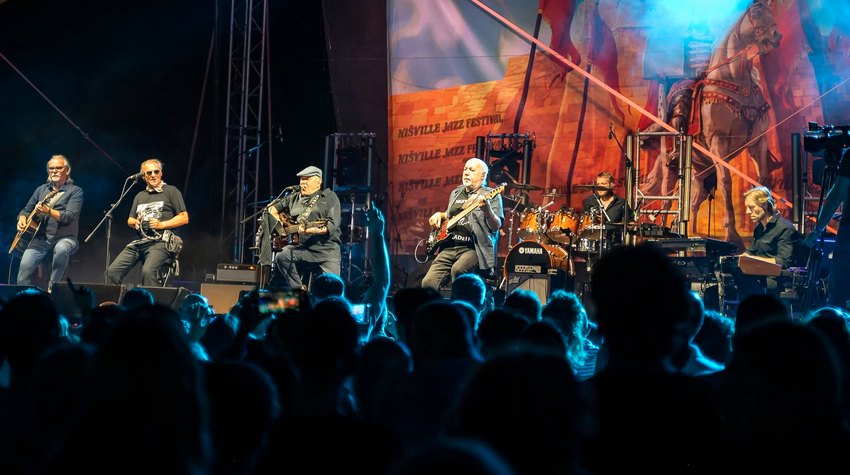
GALIJA TO CELEBRATE MAJOR ANNIVERSARY IN BANJA LUKA
NEW RAIL LINK BETWEEN REPUBLIKA SRPSKA AND SERBIA: DAILY TRAIN SERVICE FROM ZVORNIK TO BELGRADE
SEE SRPSKA RECEIVES CHARTER FROM BANJA LUKA TOURIST ORGANIZATION
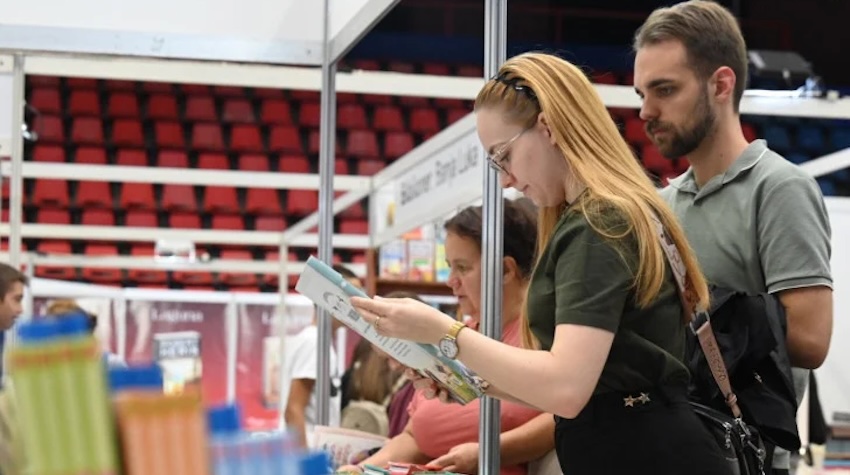
BANJA LUKA BOOK FAIR 2026 OPENS TODAY
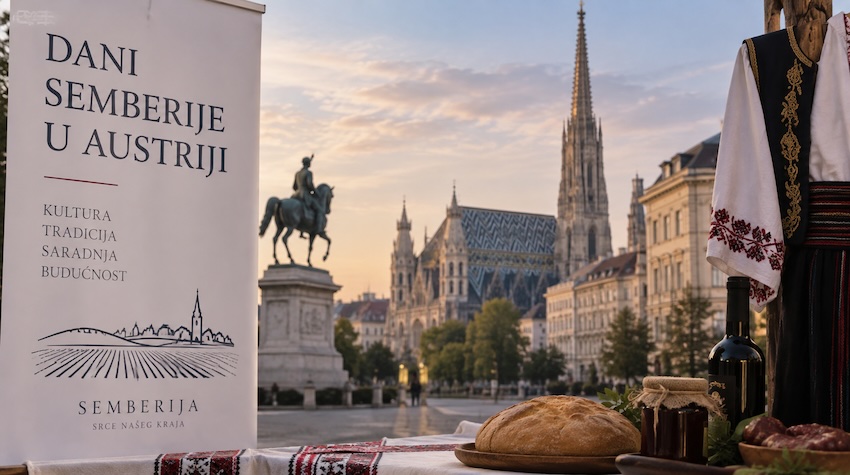
DAYS OF SEMBERIJA IN AUSTRIA: CULTURE, TRADITION AND LOCAL PRODUCTS PRESENTED TO AUSTRIAN AUDIENCES
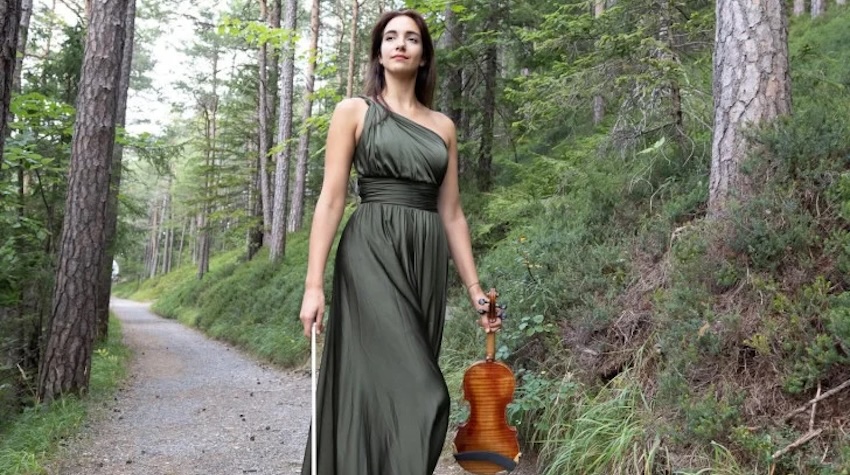
FROM EUROPEAN STAGES TO HER HOMETOWN: JOVANA RALJIĆ BRINGS VIVALDI TO BANJALUKA


 The situation at the border crossings