THE PEOPLE PROTECTED THE SACRED ICON, BELIEVING IT WAS PROTECTING THEM: THE STORY OF THE ČAJNIČE KRASNICA
The Čajniče Krasnica, the miraculous icon of the Most Holy Mother of God, has been one of the most revered sacred treasures of this region for centuries. One of the most dramatic chapters in its history unfolded during the Second World War, when people from the areas of Čajniče, Pljevlja and Foča hid and protected the icon, often risking their own lives.
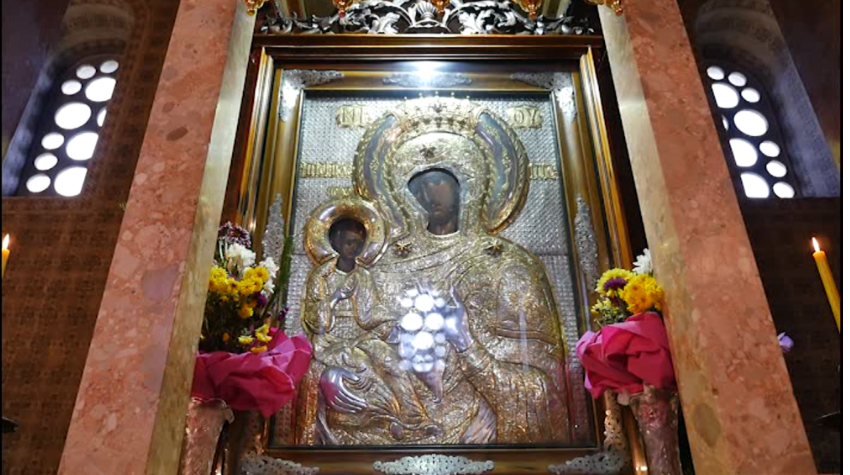
According to tradition, the icon was brought from Jerusalem to Serbia by King Milutin of the Nemanjić dynasty, who presented it to the Banja Monastery near Priboj. After the area fell under Ottoman rule, it was transferred to Čajniče, where it has been preserved for centuries.
THE ICON SURVIVED THE DESTRUCTION OF THE CHURCHES
A particularly dramatic period began during the Second World War.
On the night between April 11 and 12, 1943, Italian occupation forces mined two churches in Čajniče. The Čajniče Krasnica remained undamaged, marking the beginning of its long and dangerous wartime journey.
According to preserved accounts, an important role in saving the icon was played by Vehbija Ćehajić, a Muslim from Čajniče, who warned Orthodox priest Jovan Jovanović that the icon should be hidden because Ustaša forces were approaching.
The sacred icon was then removed from Čajniče and taken to safety.
HIDDEN FOR THREE AND A HALF YEARS
Over the following three and a half years, the icon was moved and hidden in different locations across the areas of Čajniče, Pljevlja and Foča.
The Popović and Mašić families played a particularly important role in protecting it. Although there was an opportunity to take the icon to Belgrade, where it could have remained until the end of the war, the local people decided that the sacred treasure should stay with them.
In September 1943, the icon was kept in the village of Strečanje near Pljevlja before being transferred to the Foča area.
It was kept in the Church of Saints Constantine and Helen in Okolišta, in the Slatina area near Foča, and was later moved to the nearby Zlataja Cave.
HIDDEN INSIDE A BEECH TREE
One of the most remarkable episodes in the wartime journey of the Čajniče Krasnica took place in the hamlet of Bać near Slatina.
For a time, the icon was hidden inside a large beech tree. According to preserved testimonies, a fire swept through the surrounding forest, but the tree in which the icon had been hidden remained untouched.
During this period, the icon was protected by members of the Đorđević, Vilotić, Radović, Pljevaljčić, Mihajlović and Ivanović families.
For those who carried it from one hiding place to another, protecting the icon was much more than safeguarding a valuable object. It was a sacred treasure they were prepared to defend even when doing so put their own lives and families at risk.
THREE YEARS IN TRPINJE CAVE
The Čajniče Krasnica spent the longest period of its wartime journey hidden in Trpinje Cave, high in the cliffs above the village of Trpinje near Čajniče.
The icon remained there for around three years. Local residents organized shifts and guarded it day and night until March 1946, when it was finally returned to the Church of the Dormition of the Most Holy Mother of God in Čajniče.
Among those who protected the icon during the war, a belief endured that it was not they who had saved the Čajniče Krasnica, but rather the icon that had protected them and their families throughout those difficult years.
THE CAVE BECAME A CHAPEL
After the war, Trpinje Cave gradually faded from public memory.
Decades later, a group of young people from Čajniče restored the site where the icon had once been hidden. They created an access path, removed large quantities of earth from the cave, paved the floor with stone and installed a Holy Table.
With the blessing of Metropolitan Hrizostom of Dabar-Bosnia, the cave became a chapel dedicated to the Mother of God in 2021.
The place that once served as a secret wartime shelter for one of the region’s most revered sacred treasures now preserves the memory of its extraordinary journey – and of the people who carried, hid and protected it through some of the most difficult years in their history.

Join our
Viber Community
THE PEOPLE PROTECTED THE SACRED ICON, BELIEVING IT WAS PROTECTING THEM: THE STORY OF THE ČAJNIČE KRASNICA

APPEAL FOR HELP: BLOOD DONORS URGENTLY NEEDED FOR NATAŠA ĆEJIĆ IN BANJA LUKA

NEW GENERATION OF STUDENT THEATRE MEMBERS TAKES THE STAGE

AUTUMN FRUITS AND HONEY FESTIVAL COMES TO BANJALUKA

DEJAN KOKANOVIĆ CONQUERS 336 KM THROUGH THE ITALIAN ALPS
DEJAN KOKANOVIĆ CONQUERS 336 KM THROUGH THE ITALIAN ALPS

DERVENTA BRINGS ITS PAST TO LIFE: 3D FORTRESS AND VIRTUAL TOUR OF THE CITY

OKTOBERFEST KICKS OFF IN MUNICH, EXPECTING 6.5 MILLION VISITORS
SPANISH TRAVEL WRITER DISCOVERS THE GREEN SIDE OF BANJA LUKA
AUTUMN FRUITS AND HONEY FESTIVAL COMES TO BANJALUKA


 The situation at the border crossings