FROM A SMALL OWL TO A LIFE-SAVING CHANGE: MAKING THE BANJA LUKA CAMPUS SAFER FOR BIRDS
It all began with a small owl found lying in the grass on the university campus, and ended with a change that has saved the lives of many birds in Banja Luka.
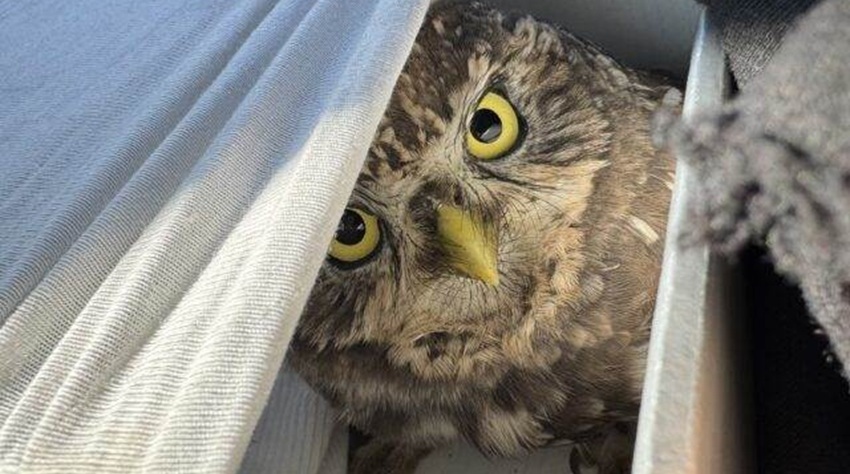
Cooperation between the Faculty of Architecture, Civil Engineering and Geodesy of the University of Banja Luka, the Ornithological Society “Naše ptice,” and the WagWag Citizens’ Association resulted in a concrete solution that has made the campus safer for numerous protected bird species living and passing through the area.
The story started nearly a year ago, when a message arrived in the inbox of WagWag—unfortunately, one of many such reports. A small owl had been found lying in the grass on campus. Students placed it in an improvised cardboard box, but did not know how to help it further.
Members of WagWag reacted according to standard procedure. The owl was taken to the BL Vet veterinary clinic, after which Draško Adamović from the Ornithological Society “Naše ptice” was contacted, as he had previously assisted in similar situations.
This time, along with the swift response, a concerning piece of information emerged: bird injuries on campus had become more frequent after the construction of the new building of the Faculty of Architecture, Civil Engineering and Geodesy. Large glass surfaces posed a serious risk, as birds in flight do not recognize glass as an obstacle, often leading to fatal collisions.
The solution was already known. Long-standing practice and examples from the region and around the world have shown that protective stickers on glass surfaces significantly reduce the number of collisions. The Ornithological Society “Naše ptice” also had a proven visual solution—a silhouette of a bird of prey that serves as an effective warning to birds.
What remained was to secure funding and obtain the faculty’s approval.
Unlike the common experience of animal protection organizations, which often face institutional indifference, this time the response was different. The Dean of the Faculty of Architecture, Civil Engineering and Geodesy, Saša Čvoro, reacted without hesitation.
“What can we do to prevent this from happening?” was his first question after the problem was presented. Instead of focusing on aesthetics or the appearance of the building, the priority was immediately placed on protecting life and preventing further injuries to birds.
A key step toward implementing the project was the “CCA Global Animal Rescue Fund” grant, awarded by the organization Catholic Concern for Animals. The funds were secured at the right moment, and although administrative procedures took the most time, the project was completed on schedule—just ahead of the period when bird collisions with glass surfaces most often occur, especially during the New Year holidays and the use of pyrotechnics.
By installing protective stickers on the glass surfaces, the risk of collisions was significantly reduced, protecting numerous birds that inhabit or pass through the campus.
The owl that started it all has since fully recovered. Its story, however, left a lasting impact—it showed that quick action, expertise, and goodwill can lead to systemic solutions.
This is a clear example of how cooperation between institutions and the civil sector can produce real, measurable results, and how care for animals can go beyond good intentions.

Join our
Viber Community
TRAVELING BY CAMPERVAN FOR THE FIRST TIME? HERE’S WHAT YOU SHOULD KNOW BEFORE YOU GO

NEW RAIL LINK BETWEEN REPUBLIKA SRPSKA AND SERBIA: DAILY TRAIN SERVICE FROM ZVORNIK TO BELGRADE
‘DRŽAVNI POSAO’ CREW FILMS NEW PROJECT IN TREBINJE

SEE SRPSKA RECEIVES CHARTER FROM BANJA LUKA TOURIST ORGANIZATION

GALIJA TO CELEBRATE MAJOR ANNIVERSARY IN BANJA LUKA
NEW RAIL LINK BETWEEN REPUBLIKA SRPSKA AND SERBIA: DAILY TRAIN SERVICE FROM ZVORNIK TO BELGRADE
SEE SRPSKA RECEIVES CHARTER FROM BANJA LUKA TOURIST ORGANIZATION

BANJA LUKA BOOK FAIR 2026 OPENS TODAY

DAYS OF SEMBERIJA IN AUSTRIA: CULTURE, TRADITION AND LOCAL PRODUCTS PRESENTED TO AUSTRIAN AUDIENCES

FROM EUROPEAN STAGES TO HER HOMETOWN: JOVANA RALJIĆ BRINGS VIVALDI TO BANJALUKA


 The situation at the border crossings