ARE ELECTRIC BIKES AND SCOOTERS BECOMING AN ALTERNATIVE TO CARS?
Rising fuel prices, increasing traffic congestion, and a growing lack of time are pushing citizens to seek alternative modes of transportation. As a result, demand for electric bikes and scooters is on the rise—although their prices are no longer negligible.
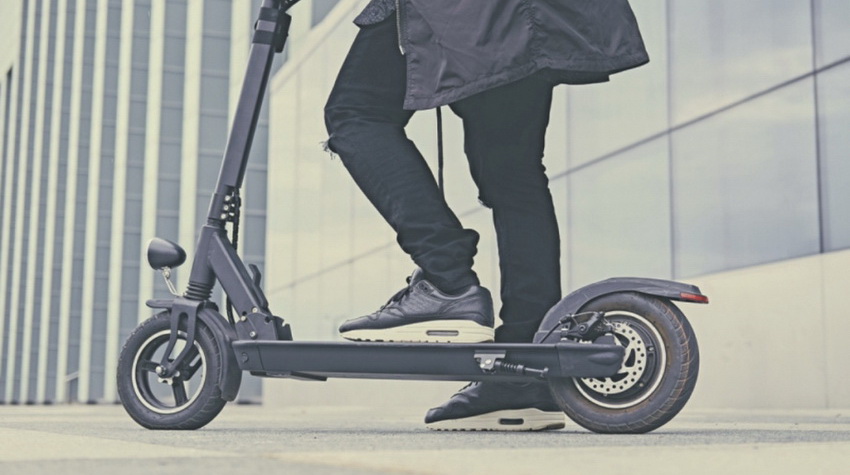
At first glance, the financial calculation may
seem straightforward, but in practice, the decision is often more complex. This
is illustrated by the example of a resident of Banja Luka who decided to leave
his car in the garage but ultimately gave up on buying an electric bike due to
rising costs.
“I decided to redirect the money I spend on
fuel into purchasing an electric scooter or bike. About two months ago, I paid
around 1,700 KM for a scooter. Now, similar models are 100 marks more
expensive,” said the Banja Luka resident, who wished to remain anonymous.
He also planned to purchase an electric bike,
but while comparing models and prices, he encountered an unpleasant surprise.
“They went up by more than 100 euros in just
one month—both here and on international online stores. That’s why I gave up on
the purchase,” he added.
Demand Growing, But Not for New Models
Some retailers confirm that interest in
electric two-wheelers is increasing, with more citizens opting for this type of
transport due to high fuel prices. However, this does not necessarily translate
into increased sales of new models.
According to Nikola Soković from the Banja
Luka shop “M-Bajk,” people are looking for more affordable solutions.
“Bikes and scooters are increasingly in circulation,
but sales of new electric bikes remain relatively low. Those trying to save on
fuel usually opt for used bicycles or take old ones out of storage and make
minimal repairs to get them roadworthy,” Soković told Glas.
He noted that service centers are seeing more
electric bikes, mostly second-hand, while younger people are increasingly using
traditional bicycles and scooters.
Market Offer Changing
“When it comes to prices, cheaper scooters
have almost disappeared. Models that used to cost between 600 and 800 KM are no
longer available. The most affordable ones now start at around 1,400 to 1,500
KM. The market is dominated by more powerful and better-equipped models, which
are also in higher demand,” Soković explained.
He added that sales of traditional bicycles
have surged this season, with demand in March surpassing all previous records.
“Children’s and teenage models are the most
popular, while electric bikes are mainly intended for off-road use,” he
concluded.
Growing Interest in Southern Regions
In the southern part of Republika Srpska,
sales of electric two-wheelers are booming. A retailer from Trebinje,
“TehnoPlus,” reports a sharp increase in demand, driven by both high fuel
prices and traffic congestion.
“People working in Dubrovnik leave for work as
early as four or five in the morning and often wait for hours at border
crossings. That’s why they choose to buy a bike or scooter—to avoid wasting
time,” the retailer told Glas.
Interestingly, prices in this region have not
increased—in fact, they have dropped.
“An average electric scooter can be found for
around 550 KM, while electric bikes cost about 1,050 KM after discounts,” they
said, adding that younger workers are the most common buyers, motivated by both
fuel savings and time efficiency.
Doboj Shows Little Interest
On the other hand, in Doboj, interest in
electric two-wheelers remains minimal. A representative from the shop “King”
says demand is almost nonexistent.
“Currently, there is no real demand for
electric bikes or scooters. People are used to driving everywhere and find it
hard to change those habits,” they said.
They added that high fuel prices have not yet
significantly influenced consumer behavior in the area.
“In cities like Sarajevo or Tuzla, there may
be more interest, but here it’s weak. We’ve sold only a few scooters, and there
are almost no inquiries for bikes,” the retailer noted.
Hybrid Vehicles on the Rise
Extremely high fuel prices have also led to
increased demand for hybrid vehicles on the domestic market. Companies, in
particular, are rapidly renewing their fleets with hybrid models to reduce
costs.
According to previous data from the Indirect
Taxation Authority, last year saw 1,335 more hybrid vehicles imported compared
to 2024, when 2,408 units entered the market. The total value of these vehicles
exceeded 216 million KM, marking an increase of around 87 million KM compared
to the previous year.

Join our
Viber Community
TRAVELING BY CAMPERVAN FOR THE FIRST TIME? HERE’S WHAT YOU SHOULD KNOW BEFORE YOU GO
NEW RAIL LINK BETWEEN REPUBLIKA SRPSKA AND SERBIA: DAILY TRAIN SERVICE FROM ZVORNIK TO BELGRADE
‘DRŽAVNI POSAO’ CREW FILMS NEW PROJECT IN TREBINJE

SEE SRPSKA RECEIVES CHARTER FROM BANJA LUKA TOURIST ORGANIZATION
GALIJA TO CELEBRATE MAJOR ANNIVERSARY IN BANJA LUKA
NEW RAIL LINK BETWEEN REPUBLIKA SRPSKA AND SERBIA: DAILY TRAIN SERVICE FROM ZVORNIK TO BELGRADE
SEE SRPSKA RECEIVES CHARTER FROM BANJA LUKA TOURIST ORGANIZATION
BANJA LUKA BOOK FAIR 2026 OPENS TODAY

DAYS OF SEMBERIJA IN AUSTRIA: CULTURE, TRADITION AND LOCAL PRODUCTS PRESENTED TO AUSTRIAN AUDIENCES
FROM EUROPEAN STAGES TO HER HOMETOWN: JOVANA RALJIĆ BRINGS VIVALDI TO BANJALUKA

 The situation at the border crossings