WHAT DID HERZEGOVINIANS EAT THROUGH THE CENTURIES?
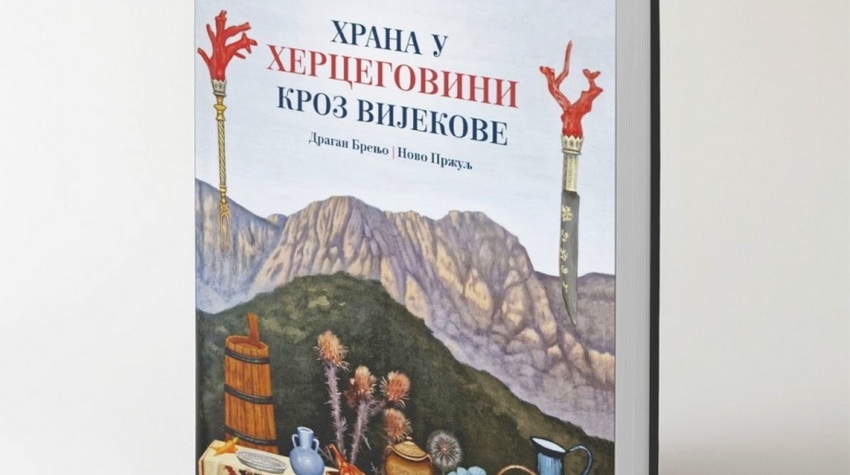
In an interview with Euronews, Dragan Brenjo, one of the authors of the monograph "Food in Herzegovina Through the Centuries", discussed the eating habits, customs, and food history of this unique region.
In
Herzegovina, food has never been just a daily necessity – throughout the
centuries, it has served as a reflection of culture, social class, and
historical context. This is precisely what the monograph "Food in
Herzegovina Through the Centuries", co-authored by Dr. Dragan Brenjo and
academician Nova Pržulj, seeks to explore. The book acts as a culinary
chronicle of the region’s diet over the past 800 years.
“It
all began during the commemoration of 800 years of the Eparchy of
Zahumlje-Herzegovina and the Littoral. Mostar parish priest Radivoje Krulj
suggested we focus on food, and the blessing of the late Bishop Atanasije gave
the project a special weight and responsibility,” recalls Dr. Brenjo for
Euronews.ba.
The
book aims to present food not merely as a culinary phenomenon but as part of a
complex cultural system. “Diet was directly influenced by social structures and
class divisions — the menus of the nobility, clergy, peasants, and soldiers
never overlapped, but they did influence each other,” the author explains.
According to Brenjo, many dietary customs trace their roots back to the late Middle Ages. Later influences — from the Ottoman conquests and Columbus’s discoveries to Germanic and Austro-Hungarian cuisine — only enriched this medieval foundation.
The
main ingredients in the Herzegovinian diet were grains — millet, barley, wheat,
rye, and oats. “Millet and barley were consumed as porridge or bread. Common
vegetables included onions (both black and white), cabbage, turnips, lentils,
and broad beans. Meat was rare and usually reserved for special occasions, with
lamb being the most common. Pork was less frequent, and beef was virtually
unknown. Wild game was rarely eaten, while fish was relatively common,”
explains Brenjo.
Among
the most fascinating aspects of the book are recipes such as “kneževa
jagnjetina u mlijeku” — lamb in milk, a favorite dish of the 12th-century Hum
prince Miroslav — or chicken in sauce from the same era. The book also features
a description of 15th-century cutlery belonging to Stefan Vukčić Kosača: forks
made of silver, coral, and rock crystal.
“People
today don’t think about food the way our ancestors did. For them, food was
often divine — it meant life and survival. That sense of wonder is woven into
our tradition and DNA, especially in Herzegovina,” says Dr. Brenjo.
He adds that during times of hunger, people approached food with gratitude and reverence, unlike today’s culture of abundance.
The
geographical and climatic features of Herzegovina — with its karst fields and
highlands — significantly shaped its agriculture and nutrition.
“Herzegovina
is a land of stone. Traditional stone houses, built since the Middle Ages,
confirm the strength of local identity. In remote villages, these houses are
still built today according to ancient customs,” the author notes.
The
monograph concludes with an intriguing look at phrases and idioms related to
food, especially bread, which in local speech symbolizes life and existence.
“Through
language, we can clearly see how deeply food is rooted in the collective
consciousness of the people,” Dr. Brenjo concludes.

Join our
Viber Community
TRAVELING BY CAMPERVAN FOR THE FIRST TIME? HERE’S WHAT YOU SHOULD KNOW BEFORE YOU GO

NEW RAIL LINK BETWEEN REPUBLIKA SRPSKA AND SERBIA: DAILY TRAIN SERVICE FROM ZVORNIK TO BELGRADE
‘DRŽAVNI POSAO’ CREW FILMS NEW PROJECT IN TREBINJE
SEE SRPSKA RECEIVES CHARTER FROM BANJA LUKA TOURIST ORGANIZATION
GALIJA TO CELEBRATE MAJOR ANNIVERSARY IN BANJA LUKA
NEW RAIL LINK BETWEEN REPUBLIKA SRPSKA AND SERBIA: DAILY TRAIN SERVICE FROM ZVORNIK TO BELGRADE
SEE SRPSKA RECEIVES CHARTER FROM BANJA LUKA TOURIST ORGANIZATION
BANJA LUKA BOOK FAIR 2026 OPENS TODAY
DAYS OF SEMBERIJA IN AUSTRIA: CULTURE, TRADITION AND LOCAL PRODUCTS PRESENTED TO AUSTRIAN AUDIENCES
FROM EUROPEAN STAGES TO HER HOMETOWN: JOVANA RALJIĆ BRINGS VIVALDI TO BANJALUKA


 The situation at the border crossings