HOW IS EASTER CELEBRATED? TRADITIONS PRESERVED THROUGH TIME
Easter is the greatest and most significant Christian holiday, embodying the three fundamental pillars of Christianity – faith, hope, and love. This holiday symbolizes Christ’s victory over death and represents the foundation of Christian belief.
Easter is the day when the Resurrection of Christ is celebrated – His spiritual, but also physical return after death. This event guides believers in their everyday lives and strengthens their faith in eternal life and resurrection.
Easter Fast – Preparation for the Greatest Holiday
Believers prepare for Easter through the Easter Fast, the longest fast in Orthodox Christianity, lasting seven weeks. It is also known as the Great Fast.
During this period, believers abstain from rich foods, specifically those of animal origin, while fish is allowed on certain days. Fasting is not only about physical restraint but also about spiritual purification, prayer, and humility.
Dyeing Eggs – A Symbol of New Life
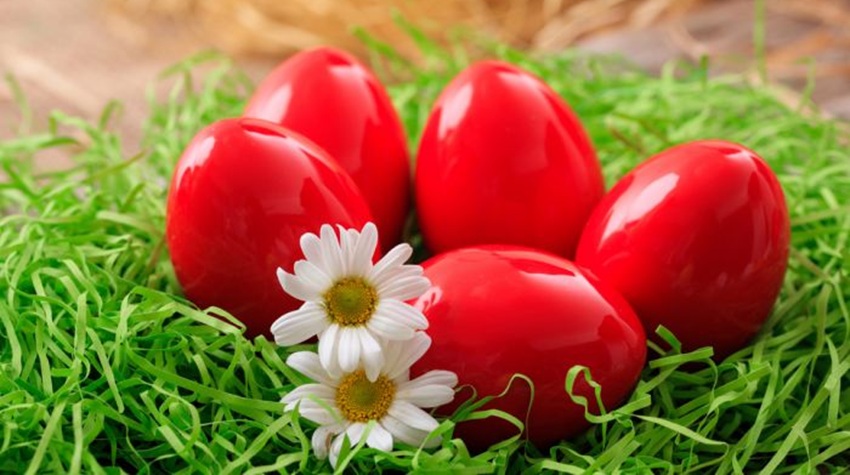
One of the most joyful and recognizable Easter traditions is dyeing eggs. The egg symbolizes resurrection and the birth of new life, which is why it holds a special place in the celebration of this holiday.
Eggs are traditionally dyed on Good Friday, the day before Easter. The most important color is red, symbolizing Christ’s blood.
Traditions Passed Down Through Generations
The process of dyeing eggs is accompanied by many beautiful customs. The housewife wakes up early to prepare water and dyes before sunrise. The first dyed egg, always red, has special significance and is called “Čuvarkuća” (the “House Protector”).
This egg is kept until the next Easter, and it is believed to bring peace, prosperity, protection to the household, and enough food for the entire year.
In the past, eggs were dyed exclusively with natural colors, and before dyeing, they were decorated with wax. The most common motifs were the initials “Christ is Risen – Truly He is Risen,” which remains the traditional greeting among believers during the holiday.
Today, modern edible dyes and various decorating techniques are used, so wax is no longer present in every household, but the tradition and symbolism remain the same.
Liturgy and the Easter Table
During the Easter liturgy in churches, believers are given previously dyed eggs. These eggs represent the first food after fasting and symbolize unity and joy.
Easter is a time for family gatherings, happiness, and hope, when eggs, greetings, and warm wishes are shared.
When Is Easter Celebrated?
Easter is a movable holiday, meaning its date changes every year. It can occur as early as March 22 to April 4, and as late as April 25 to May 5.
Interestingly, Orthodox believers in some regions, such as Serbia, also refer to this holiday as “Uskrs,” while the term “Vaskrs” is primarily used in Bosnia and Herzegovina.

Join our
Viber Community









 The situation at the border crossings