A CENTURY SINCE THE FIRST GUSLE COMPETITION IN SARAJEVO COMMEMORATED WITH A GRAND CONCERT
A ceremonial gusle concert was held at the National Theatre in East Sarajevo to mark the 100th anniversary of the first-ever gusle competition in Sarajevo. The event also formed part of the celebration of East Sarajevo’s City Day and its patron saint, St. Petar of Dabrobosna.

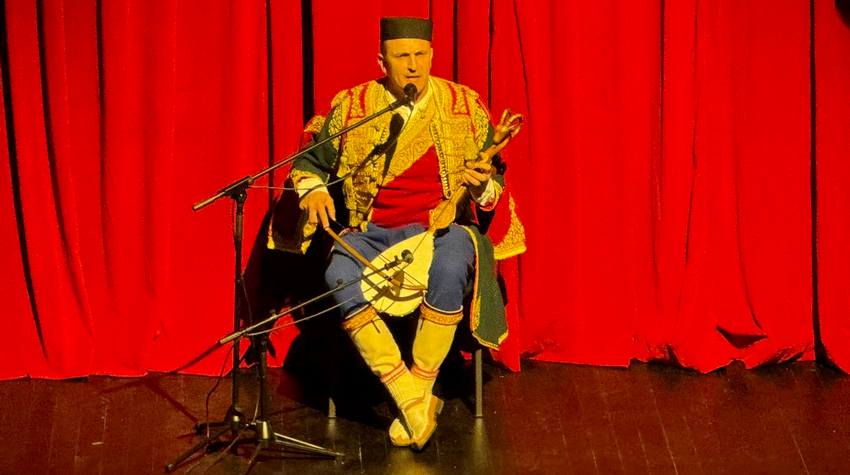
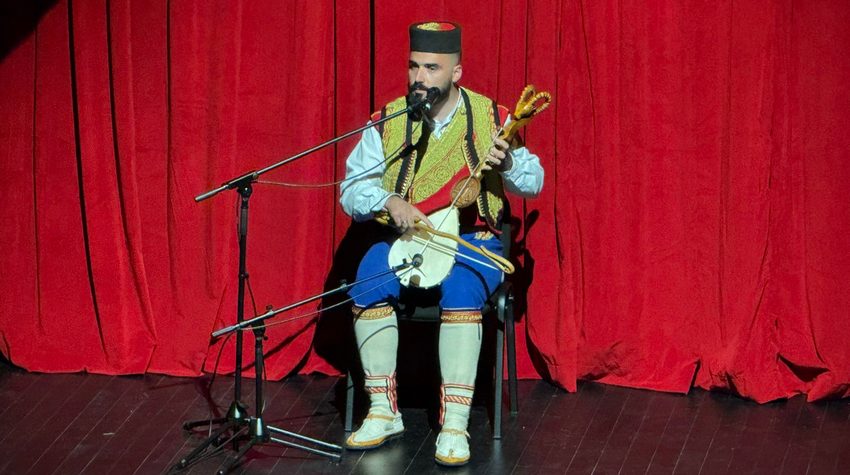
The concert was officially opened by East Sarajevo Mayor Ljubiša Ćosić, who described the occasion as a wonderful opportunity to remember the historic competition held a century ago. He emphasized the importance of preserving the tradition of the gusle and announced that similar events would continue to be organized in the coming years.
"The competition that took place a hundred years ago was a precursor to today’s festivals. The sound of the gusle must never be forgotten or neglected. It is our duty to ensure that the younger generations continue this tradition," Ćosić said.
Montenegrin guslar Maksim Vojvodić noted that although gusle performances are now widely accepted, this was not always the case.
"One hundred years ago, prominent individuals worked hard to elevate the gusle to a higher cultural level. Today, we are continuing that mission. We are on an upward path, and we owe gratitude to everyone who recognizes the importance of what we’re doing," Vojvodić stated.
He expressed his gratitude to the City of East Sarajevo and Mayor Ćosić for the opportunity to organize such a meaningful event, calling it a source of pride not only for the city and the country but also for the world of gusle music.
"It is our responsibility to commemorate this moment, and I believe there is no better way to do it than here — in the very city where the first competition was held a century ago," he added.
Vojvodić announced that he would perform the song “Lazar Mutap i Arapin”, taken from Vuk Karadžić’s collection of epic poetry. This was the same piece performed by guslar Jevgdan Ušćumlić from Piva, who won the original competition in 1924.
Fellow guslar Dušan Pejić explained that the performers included leading artists from the younger and middle generations.
"The significance of this centenary is immense. It’s a beautiful and major anniversary that reminds us of the deep-rooted traditions of Serbian Sarajevo. It was right here that the first gusle competition was organized, and tonight we honor that memory with this program," said Pejić.
He also noted that the evening’s repertoire was specially prepared for the occasion, featuring songs performed at the original competition — pieces once documented by Miloš Crnjanski, who covered the 1924 event as a reporter.
Srđan Avdalović, president of the "Gusle" Association from Belgrade, revealed that efforts are underway to establish a new umbrella association under the same name. The aim is to unite gusle organizations from Serbia, Montenegro, and Republika Srpska.
"We already have branches in Belgrade and Podgorica, and by the end of the year, we plan to establish one in Republika Srpska as well. Our goal is to gather young and middle-aged guslars and to bring gusle music back to the place it once held in Sarajevo before the war," said Avdalović.
He recalled that in the late 1980s, gusle concerts would fill the largest halls in Sarajevo, such as Skenderija and Zetra. “In 1989, 9,000 people packed into Skenderija, and 3,000 more had to be turned away,” he said.
The historical importance of the first gusle competition in the former Kingdom of Serbs, Croats, and Slovenes is best illustrated by the fact that it attracted performers from across the country, with celebrated writer Miloš Crnjanski reporting on the event for the Belgrade-based newspaper Vreme. His accounts remain a testament to Sarajevo’s once-central role in the gusle tradition.
East Sarajevo continues to nurture this heritage as a key element of Serbian national identity. The overwhelming public interest in the anniversary concert — which left many unable to find a seat in the packed theater — has led some to suggest that future events should be held in a sports arena to accommodate the growing audience for gusle music.
The message was clear: the sound of the gusle still echoes powerfully through time — a symbol of heritage, identity, and unity.

Join our
Viber Community
TRAVELING BY CAMPERVAN FOR THE FIRST TIME? HERE’S WHAT YOU SHOULD KNOW BEFORE YOU GO

NEW RAIL LINK BETWEEN REPUBLIKA SRPSKA AND SERBIA: DAILY TRAIN SERVICE FROM ZVORNIK TO BELGRADE
‘DRŽAVNI POSAO’ CREW FILMS NEW PROJECT IN TREBINJE

SEE SRPSKA RECEIVES CHARTER FROM BANJA LUKA TOURIST ORGANIZATION
GALIJA TO CELEBRATE MAJOR ANNIVERSARY IN BANJA LUKA
NEW RAIL LINK BETWEEN REPUBLIKA SRPSKA AND SERBIA: DAILY TRAIN SERVICE FROM ZVORNIK TO BELGRADE
SEE SRPSKA RECEIVES CHARTER FROM BANJA LUKA TOURIST ORGANIZATION

BANJA LUKA BOOK FAIR 2026 OPENS TODAY

DAYS OF SEMBERIJA IN AUSTRIA: CULTURE, TRADITION AND LOCAL PRODUCTS PRESENTED TO AUSTRIAN AUDIENCES
FROM EUROPEAN STAGES TO HER HOMETOWN: JOVANA RALJIĆ BRINGS VIVALDI TO BANJALUKA


 The situation at the border crossings