NEW DEVELOPMENTS AT “VUČIJAK” STUD FARM: GENETIC REFRESH AND TOURISM EXPANSION
By improving its genetic pool with new stallions from Slovenia, doubling arable land for its own feed production, and ambitiously expanding tourism facilities, the Vučijak Stud Farm in Prnjavor is opening a new chapter aimed at full business self-sustainability.
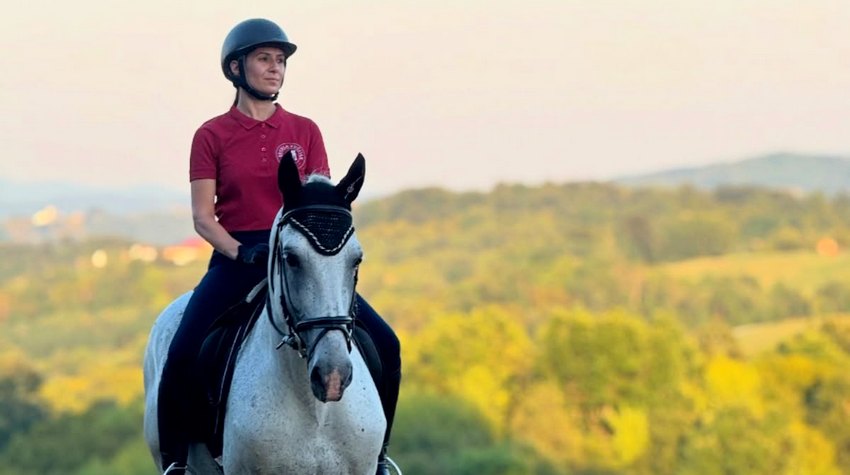
Acting director Ranko Grubešić told Glas that after years of challenges, the Vučijak Stud Farm is now operating steadily and showing gradual progress.
He recalled that after privatization in the 1990s, the stud farm faced serious difficulties. A turning point came in 2009, when the Government of Republika Srpska took over management again. However, due to property disputes, full control was only achieved in 2015, when a public institution was established as the legal successor of the bankrupt company.
“Since then, continuous efforts have been made to improve breeding and correct earlier shortcomings. The situation today is significantly more stable,” Grubešić said.
New stallions
One of the key steps in improving breeding is the arrival of new horses—three stallions from the renowned Conversano, Maestoso, and Siglavy lines, donated by the Lipica Stud Farm in Slovenia.
As he explained, long-term breeding within the same lines had led to a high level of inbreeding, which is undesirable in horse breeding. After 20 years, new acquisitions were made again, following the earlier arrival of two horses from the same stud.
The new stallions will refresh the genetic potential and improve breeding quality.
“We can now breed around 40 mares that we previously could not adequately include in reproduction, which is a significant step forward,” he emphasized.
Government support
Financially, the stud farm still largely relies on support from the Government of Republika Srpska, while simultaneously working to strengthen its own revenues. The primary focus, Grubešić added, is agricultural production, especially growing feed for horses.
“Last year we cultivated 30 hectares, this year 60, and we plan further expansion. The goal is full self-sufficiency in feed production,” he said.
The stud farm currently has 116 horses, with an expected increase of seven foals by the end of summer.
“Some horses not needed for breeding will be offered on the market through auctions this year, providing an additional source of income,” Grubešić added.
Tourism plans
He noted that special emphasis will be placed on developing tourism in the coming period.
“The stud farm is already seeing significant visitor numbers. Last year alone, around 4,000 children visited through organized school trips,” he said.
Plans include introducing tourist horseback riding and developing trails about 10 kilometers long, offering a unique attraction in the region. In the long term, the establishment of a riding school is also planned, along with necessary infrastructure investments.
Future outlook
Regarding the workforce, Grubešić acknowledged ongoing challenges but noted that they currently manage to secure a sufficient number of workers.
Looking ahead, the goal is to position the stud farm as a recognizable center for both tourism and horse breeding.
“I see it as a place that will attract more and more visitors. It is not just a space for horses—its location, near the highway and regional centers, gives it great development potential,” Grubešić concluded.

Join our
Viber Community
AUTUMN ADVENTURE NEAR BRATUNAC: FREE HIKING TOUR TO BIJELI KAMEN
HELP RANKA FROM SRBAC WALK WITHOUT PAIN AGAIN

SAFECLICK, A FREE EDUCATIONAL GAME THAT TEACHES CHILDREN HOW TO STAY SAFE ONLINE

CHINESE CULTURE AND TRADITIONS COME TO LIFE IN FOČA
FREE DOG TRAINING CLASSES IN BANJA LUKA: LEARN TO UNDERSTAND YOUR PET BETTER
WELL-KNOWN ACTORS ARRIVE IN PECKA AS PREPARATIONS BEGIN FOR FILM “BJESNILO”
SAFECLICK, A FREE EDUCATIONAL GAME THAT TEACHES CHILDREN HOW TO STAY SAFE ONLINE
A LITTLE JERUSALEM IN THE HEART OF SARAJEVO: A SACRED PLACE PRESERVING CENTURIES OF HISTORY
FREE DOG TRAINING CLASSES IN BANJA LUKA: LEARN TO UNDERSTAND YOUR PET BETTER
HELP RANKA FROM SRBAC WALK WITHOUT PAIN AGAIN


 The situation at the border crossings