TEMPLE, LIBRARY, AND EPISCOPAL PALACE STAND AS TESTAMENTS TO THE SERBIAN PRESENCE IN SLAVONIA
The restoration of the Cathedral of the Holy Trinity, the Diocesan Library, and the Episcopal Palace in Pakrac is of great importance for the Serbian Orthodox Church and Orthodox Christianity as a whole, serving as a powerful witness to the historical and spiritual continuity of the Serbian people in Slavonia, said Bishop Jovan of the Pakrac-Slavonia Diocese in an interview with SRNA.


According to Bishop Jovan, the Pakrac Library—housed within the Episcopal Palace—and the entire Pakrac Diocese, which dates back to the 16th century and the restoration of the Patriarchate of Peć, have played a critical role in preserving Serbian heritage.
"They are a living testament to the continuous presence of the Church, the spirit, intellect, and people. That’s their highest value—they connect us vertically through time and horizontally across borders," Bishop Jovan explained.
Earlier this month, the newly restored Cathedral of the Holy Trinity was consecrated in a grand liturgy led by His Holiness Serbian Patriarch Porfirije, with bishops attending from around the globe. Among them were representatives of the Jerusalem Patriarchate, the Archbishop of Athens, and bishops from the Czech and Slovak Orthodox Churches, reflecting the broader significance of this spiritual site.
“For the local Serbian community in Pakrac, the importance of this cathedral is immeasurable. It is a symbol of survival and faith,” Bishop Jovan emphasized.
The consecration also drew a large number of faithful who celebrated with traditional singing, dancing, and communal gatherings—reaffirming cultural customs deeply rooted in Serbian Orthodox tradition.
CALL TO SERBS EVERYWHERE: SUPPORT THE RESTORATION OF THE JASENOVAC CHURCH
Bishop Jovan also highlighted the critical need for further restoration efforts across the Diocese, where 50 churches remain in ruins—some destroyed during World War II, others during the conflicts of the 1990s.
“We had to begin with the most important—the Cathedral of the Holy Trinity. But this is only the beginning,” he stated.
Next in line is the Church of Saints Constantine and Helena in Uštica near Jasenovac, destroyed in World War II. Construction of a new temple began in 1991, designed by Peđa Ristić, one of the foremost Orthodox architects of the 20th century. The foundations, blessed by the late Serbian Patriarch Pavle, marked the first church consecration of his patriarchal service. Construction was halted by war when the walls had only reached three to four meters high.
Another source of joy for the diocese is the restoration of the Church of the Holy Prophet Elijah in the village of Mlaka, Jasenovac. "We are now beginning the interior painting and decoration of the church, and I invite everyone to take part,” Bishop Jovan urged.
He drew a comparison with the Church of Christ the Saviour in Moscow, built after the victory over Napoleon, where every Russian was limited in their donation amount to ensure the entire nation contributed.
“In the same way, we want all our people to contribute—even modestly—to decorate and complete the church in Jasenovac. We speak often of Jasenovac—let our words be followed by action,” he appealed.
THE DIOCESAN LIBRARY: DAMAGED AND RESTORED THROUGH TWO AND A HALF CENTURIES
Despite surviving several wars and repeated destruction, the Diocesan Library in Pakrac has existed for over 250 years.
“During World War II, the Ustasha regime plundered the library extensively. There was no proper inventory of the collection before the war, so we can’t say what exactly was lost. However, many of the books ended up in the private collections of Croatian political and religious leaders,” said Bishop Jovan.
In 1985, some of the library’s treasures were recovered thanks to the efforts of the late Metropolitan Jovan Pavlović of Zagreb and Ljubljana, a native of Slavonia.
However, these items were returned to a crumbling Episcopal Palace that the state had allowed to deteriorate while also stripping the Church of its property, leaving it unable to fund repairs.
Bishop Jovan also recalled that in the 1960s, prominent Serbian art historian Dejan Medaković attempted to assist with the restoration of the Pakrac Monastery, but the socialist authorities in Croatia blocked the effort.
The 1990s brought renewed threats to the library. “Books were removed from the northern wing where they were kept, thrown out into the yard, and many were stolen. We lost four manuscripts and a copy of the ‘Oktoih Prvoglasnik’ by Đurađ Crnojević—the first book ever printed in the Serbian language. Clearly, the thieves knew exactly what they were after,” said the Bishop.
Alongside the books, portraits of former bishops and the iconostasis of the cathedral also disappeared. By 1995, only four walls remained of the Library and Cathedral.
The roof of the cathedral was restored in 2007, the Palace in 2010, and major reconstruction began in 2013–2014.
“This year, the restoration of the cathedral was completed, and in early September it was consecrated by Patriarch Porfirije. At the same time, we reopened the Diocesan Library within the Palace,” Bishop Jovan said.
He also praised Croatian officer Ivan Hiti, who played a key role in saving the books during the war in the 1990s, preventing their planned destruction by Croatian forces. Instead, he safeguarded them and sent them to the National and University Library in Zagreb.
"In 2007, those books were returned to the Metropolitanate of Zagreb-Ljubljana with a complete inventory, and they had been well cared for. In 2017, Patriarch Porfirije, who was then Metropolitan, handed the collection back to us. We placed them in a newly created depository, adapted from the old priest’s house, with climate control to preserve manuscripts and damaged icons under state protection," Bishop Jovan concluded.
A special vault now holds the most valuable pieces—preserving not just books, but centuries of memory and identity of the Serbian people in Slavonia.

Join our
Viber Community
TRAVELING BY CAMPERVAN FOR THE FIRST TIME? HERE’S WHAT YOU SHOULD KNOW BEFORE YOU GO

NEW RAIL LINK BETWEEN REPUBLIKA SRPSKA AND SERBIA: DAILY TRAIN SERVICE FROM ZVORNIK TO BELGRADE
‘DRŽAVNI POSAO’ CREW FILMS NEW PROJECT IN TREBINJE
SEE SRPSKA RECEIVES CHARTER FROM BANJA LUKA TOURIST ORGANIZATION
GALIJA TO CELEBRATE MAJOR ANNIVERSARY IN BANJA LUKA
SEE SRPSKA RECEIVES CHARTER FROM BANJA LUKA TOURIST ORGANIZATION
NEW RAIL LINK BETWEEN REPUBLIKA SRPSKA AND SERBIA: DAILY TRAIN SERVICE FROM ZVORNIK TO BELGRADE
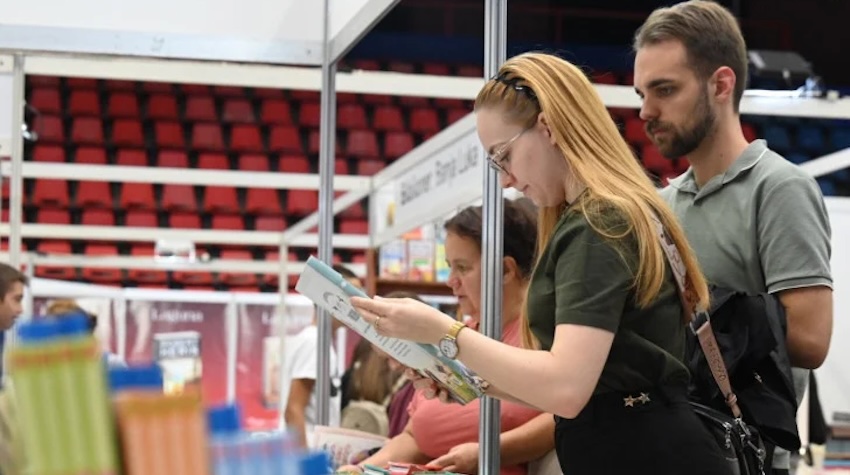
BANJA LUKA BOOK FAIR 2026 OPENS TODAY
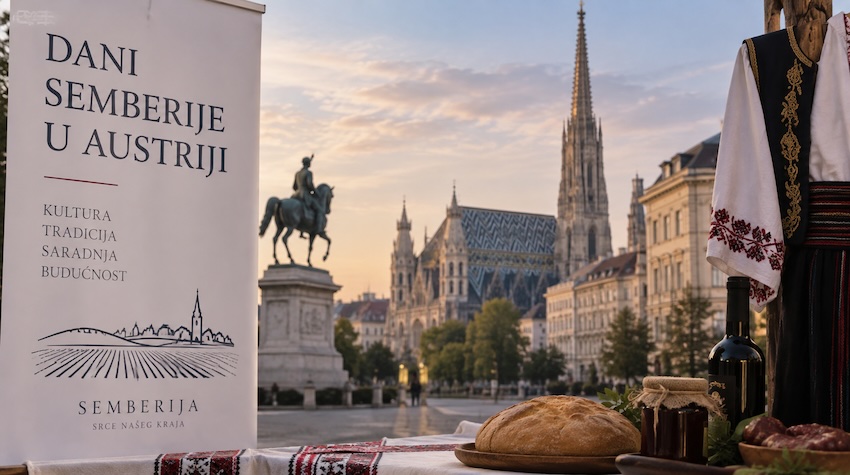
DAYS OF SEMBERIJA IN AUSTRIA: CULTURE, TRADITION AND LOCAL PRODUCTS PRESENTED TO AUSTRIAN AUDIENCES
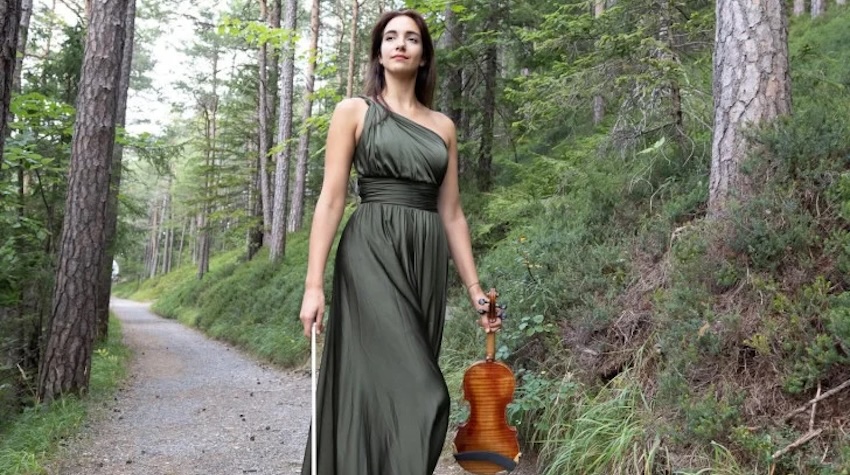
FROM EUROPEAN STAGES TO HER HOMETOWN: JOVANA RALJIĆ BRINGS VIVALDI TO BANJALUKA


 The situation at the border crossings