KRESOJEVIĆ FAMILY – A MODEL OF HOW TO LIVE AND SUCCEED IN RURAL AREAS
At the Kresojević family estate in Kostreš, a new sound has recently become part of everyday life—the hum of a Belarus 952 tractor. For young farmer Stefan Kresojević, this machine represents much more than an investment; it symbolizes a serious and dedicated approach to the work he has embraced since childhood.
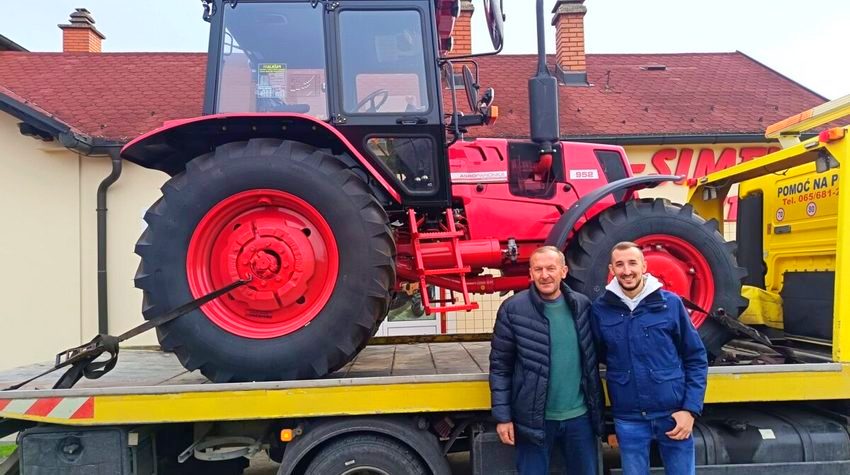
“I decided to buy the tractor to complete tasks faster and with better quality, but also because I simply liked it,” Stefan says with a smile. He adds that he already owns most of the necessary equipment, though an additional trailer with a capacity of five to six tons would significantly ease his daily workload
His
love for agriculture began at an early age. Growing up alongside his parents,
who were engaged in dairy farming until 2012, Stefan experienced both the
rewards and hardships of rural life firsthand. The closure of the family
farm—caused by a surplus of milk on the market at the time—did not discourage
him. On the contrary, it further motivated him to continue working with
livestock.
“That’s
what inspired me to keep raising animals and producing healthy food, primarily
for my own needs and selling the surplus. You have to love village life to stay
here,” Stefan emphasizes.
Alongside his job at an agricultural pharmacy, he dedicates every day to maintaining the family estate.
The farm currently includes around 40 sheep and lambs, five
bulls, and five breeding sows. The level of mechanization is also solid—besides
the new tractor, the household owns a Belarus tractor with 80 horsepower, purchased
by his father in 2011, as well as a smaller 40 HP tractor for lighter tasks.
The
family cultivates approximately 20 hectares of land. Around 10 hectares are
used for crops such as corn, wheat, soybeans, and barley, while the remaining
land is covered with grass. However, as Stefan points out, rural life comes
with numerous challenges.
“There
are many difficulties. Weather conditions are unpredictable, and wild boars
often cause significant damage. Market fluctuations are another issue—prices
for cattle are currently good, but we don’t know for how long, while piglet
prices are quite low. Global developments also affect us through fuel and
fertilizer costs,” Stefan explains.
Despite
all the obstacles, giving up is not an option. His plans are clear—expanding
the sheep herd, fencing an additional two hectares of pasture, and increasing
crop production. As early as this autumn, he intends to sow larger areas with
wheat, continuing to build a sustainable future on the land.

Join our
Viber Community
HELP RANKA FROM SRBAC WALK WITHOUT PAIN AGAIN
SAFECLICK, A FREE EDUCATIONAL GAME THAT TEACHES CHILDREN HOW TO STAY SAFE ONLINE
CHINESE CULTURE AND TRADITIONS COME TO LIFE IN FOČA
FREE DOG TRAINING CLASSES IN BANJA LUKA: LEARN TO UNDERSTAND YOUR PET BETTER
A LITTLE JERUSALEM IN THE HEART OF SARAJEVO: A SACRED PLACE PRESERVING CENTURIES OF HISTORY
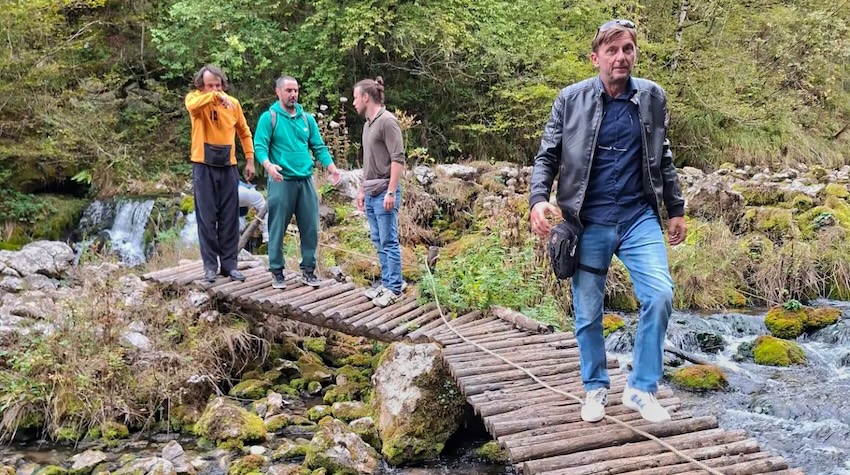
WELL-KNOWN ACTORS ARRIVE IN PECKA AS PREPARATIONS BEGIN FOR FILM “BJESNILO”
A LITTLE JERUSALEM IN THE HEART OF SARAJEVO: A SACRED PLACE PRESERVING CENTURIES OF HISTORY
SAFECLICK, A FREE EDUCATIONAL GAME THAT TEACHES CHILDREN HOW TO STAY SAFE ONLINE
FREE DOG TRAINING CLASSES IN BANJA LUKA: LEARN TO UNDERSTAND YOUR PET BETTER

OCTOBER TRAVEL AND DAY TRIPS: INDIAN SUMMER GIVES WAY TO TRUE AUTUMN

 The situation at the border crossings