IN HONOR OF TWO POETS: BORO KAPETANOVIĆ POSTHUMOUSLY RECEIVES THE “DUŠKO TRIFUNOVIĆ” AWARD
Poet and writer Boro Kapetanović has been posthumously awarded the “Duško Trifunović” Award, presented for outstanding contributions to the promotion of Serbian culture and literature.
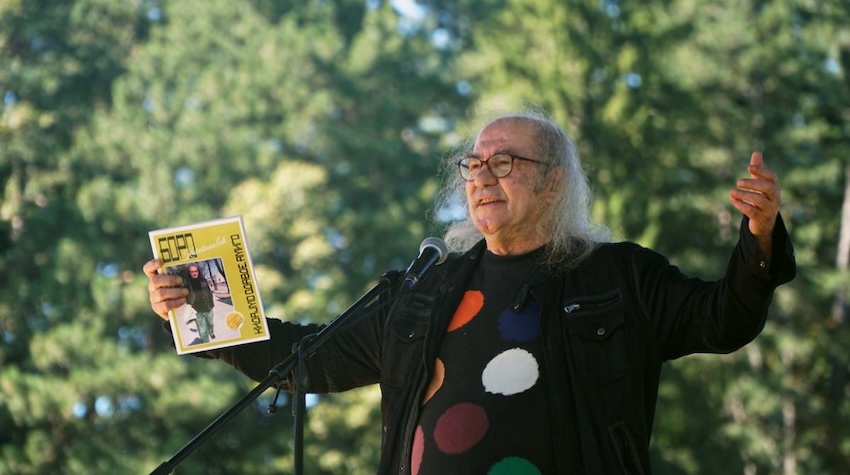
The award was presented in Pale during a literary and poetry evening held as part of the jubilee 20th edition of “Duško Trifunović Days”, an event dedicated to preserving the memory and legacy of one of the region’s most renowned poets.
The award was accepted on Boro Kapetanović’s behalf by his brother Duško, who said that the recognition holds special significance for the family.
“Boro was very happy when he learned that he was the recipient of Duško’s award, because he had tremendous respect for him and they were good friends. I am sorry that he is not here with us today, but such is life,” Kapetanović said.
He also recalled that Duško Trifunović frequently visited their hometown of Sanski Most during the 1970s.
DUŠKO TRIFUNOVIĆ – A POET WHOSE VERSES ARE STILL SUNG TODAY
Professor Miloš Kovačević emphasized the great importance of “Duško Trifunović Days”, noting that Trifunović was one of the rare poets whose verses people not only know, but have sung for decades and embraced as their own.
“If there is such a thing as a people’s poet, a poet everyone knows and whose poems are sung more often than they are read, then it is Duško Trifunović. Who has not heard of ‘Tajna veza’, ‘Ti si bila u svemu naj, naj, naj’ and numerous other songs that became musical hits but were, in fact, based on Trifunović’s verses?” Kovačević said.
According to him, it is precisely the immense popularity of Trifunović’s verses that makes him a unique figure in Serbian poetry and culture.
Kovačević also pointed to a certain paradox: while Trifunović’s verses are widely known and sung by the public, his literary work has not always received the attention it deserves from literary scholars and critics.
For this reason, he stressed the importance of the work carried out by the Pale Cultural and Sports Center, which brings Trifunović’s legacy closer to new generations through the festival, roundtable discussions and the “Duško Trifunović” Award.
FIRST ROUNDTABLE DEDICATED TO DUŠKO TRIFUNOVIĆ’S LITERARY WORK
Poet Blagoje Baković said that Duško Trifunović continues to live on in Pale and among his people, adding that those who receive an award bearing his name, in a symbolic sense, “receive Duško as well”, as the recognition becomes a permanent part of their biographies and bibliographies.
This year’s event also featured the first roundtable discussion dedicated specifically to Duško Trifunović’s literary work.
“Duško was never unrecognized, but the time has come for his work to receive the recognition it deserves from an academic perspective as well. Once the papers from this roundtable are published in a collection, they will become important material for future researchers studying his work,” Baković said.
TWO DECADES OF “DUŠKO TRIFUNOVIĆ DAYS” IN PALE
The event is organized by the Pale Cultural and Sports Center, whose director, Slavka Brezo, emphasized that this year’s edition is particularly significant as it marks 20 years of “Duško Trifunović Days.”
The three-day program has retained the same fundamental goal throughout the years – to preserve the memory of the great poet and his rich body of work.
“In this way, we keep Duško from being forgotten. We pass on his love of poetry and creativity, as well as our love for him, to future generations,” Brezo said.
FROM POETRY TO BIJELO DUGME, INDEKSI AND ZDRAVKO ČOLIĆ
Duško Trifunović was born in 1933 in Sijekovac near Brod. He published his first book at the age of 25, after moving to Sarajevo.
During his prolific literary career, he wrote around 20 books of poetry, four novels and several plays. He is also considered one of the figures who made a significant contribution to the emergence of Sarajevo’s distinctive rock music scene.
His verses became part of popular culture through collaborations with some of the biggest names in the music scene of the former Yugoslavia, including Bijelo Dugme, Indeksi, Zdravko Čolić and Arsen Dedić.
He is also remembered as the author of the cult Sarajevo Television program “Šta djeca znaju o zavičaju” (“What Children Know About Their Homeland”).
Following the outbreak of the war in Bosnia and Herzegovina in 1992, Trifunović moved to Novi Sad, where he died in 2006. He was buried in Sremski Karlovci.
Two decades of the festival in Pale show that Trifunović’s verses continue to resonate with audiences today – both with those who grew up with them and with new generations just discovering the work and legacy of Duško Trifunović.

Join our
Viber Community
IN HONOR OF TWO POETS: BORO KAPETANOVIĆ POSTHUMOUSLY RECEIVES THE “DUŠKO TRIFUNOVIĆ” AWARD
GALERIJA PLUS CELEBRATES TEN YEARS WITH A NEW EXHIBITION FEATURING 75 ARTISTS

WINEMAKERS DELIGHTED WITH THIS YEAR’S HARVEST: GRAPES PROMISE EXCEPTIONAL WINES

SEMBERIJA CELEBRATES AGRICULTURE: INTERAGRO BRINGS TOGETHER MORE THAN 250 EXHIBITORS
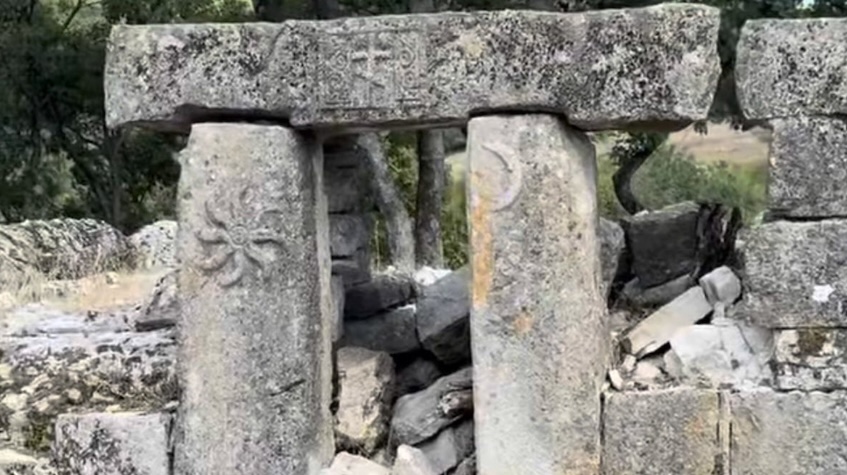
PREDOJEVIĆ CHURCH NEAR BILEĆA: A LEGEND OF A MOTHER, A SON, AND A RETURN TO ONE’S HOMELAND

REPUBLIC OF SRPSKA GETS A NEW NATURE PARK
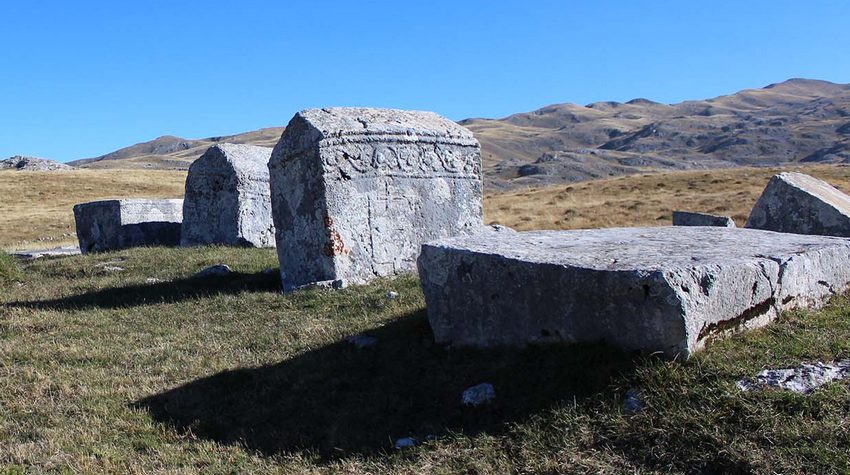
ČENGIĆA BARA – MEDIEVAL STEĆCI IN THE HIGHLANDS OF KALINOVIK
PREDOJEVIĆ CHURCH NEAR BILEĆA: A LEGEND OF A MOTHER, A SON, AND A RETURN TO ONE’S HOMELAND
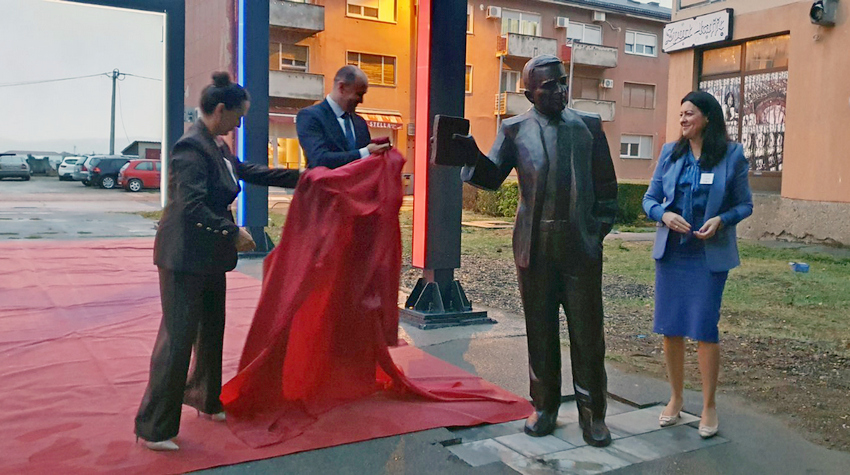
SUMMER STAGE AND SCULPTURE DEDICATED TO DUŠKO TRIFUNOVIĆ UNVEILED IN BROD
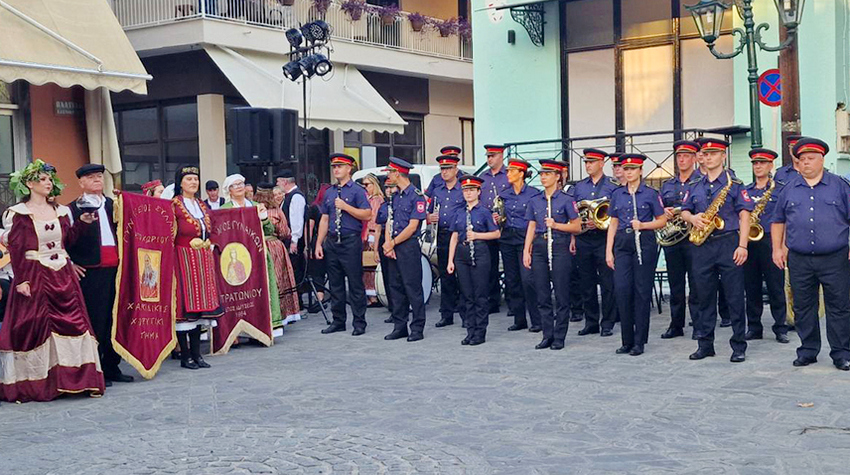
POLICE ORCHESTRA OF REPUBLIKA SRPSKA PERFORMS AT “MEGALI PANAGIA AMPELONAS” FESTIVAL IN GREECE


 The situation at the border crossings