NOSTALGIA FADES, BUT EMOTION ENDURES
There was a time when the sound of a doorbell, the footsteps of a postman, or the creak of an old mailbox could make hearts beat faster. Life would pause, if only for a moment. An envelope left at the doorstep or inside a mailbox could carry hope, fear, love poetry, or simply a sentence that meant everything was alright.
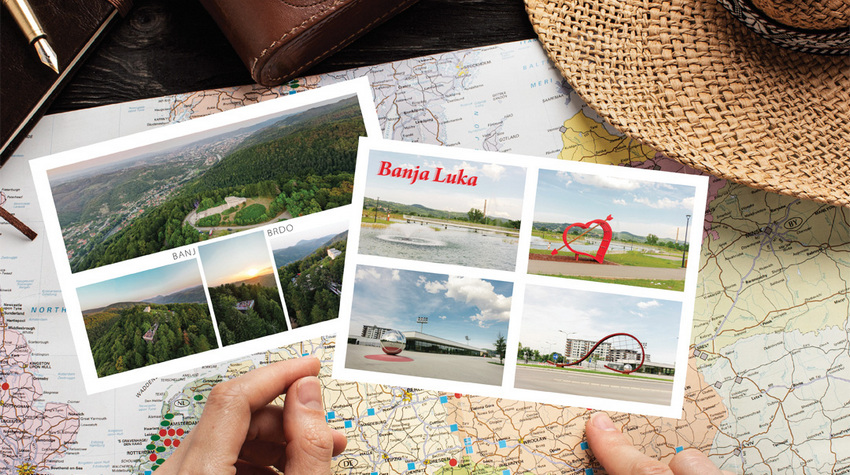
Words
once traveled slowly, yet they arrived straight to the heart. Today, they
travel instantly—but often pass by without leaving a deeper mark.
Speed That Changes Everything
Before
the era of the internet and social media, letters and postcards were the only
thread connecting people separated by distance, borders, or even war. Mothers
waited days for news from their sons, wives from their husbands, young women
from their loved ones.
Every
letter was more than paper—it was proof of life, thought, and love.
Even
today, yellowed envelopes with faded names and addresses preserve those
stories. Somewhere in drawers or forgotten boxes, handwritten letters and
postcards still exist, reminding us of a time when love was not measured by the
number of messages, calls, or emojis, but by the patience to wait for a reply.
Modern
generations, unfortunately, no longer know the feeling of waiting for weeks or
even months. Messages now arrive in seconds, conversations unfold in real time,
and the silence between two sentences lasts only as long as an internet
connection allows.
This
very speed, according to data from postal services, has left a visible mark on
traditional written communication.
In
2025, the number of letters sent by individuals declined compared to the
previous year, with a drop of around seven percent—over 60,000 fewer letters.
This trend reflects both domestic and international mail flows. Over the past
decade, technological progress has steadily reduced the number of letters and
postcards being sent.
More
and more people rely on email and messaging apps like Viber and WhatsApp for
daily communication, enabling instant exchange of information, photos, and
messages. However, the decline is mostly seen in personal correspondence, while
business and administrative mail remains relatively stable, even showing slight
growth in some areas.
Due to
privacy protections, it is impossible to determine the exact number of
“classic” personal letters, as postal records cannot reveal whether an envelope
contains a private message, greeting card, document, or something else.
Postcards Still Hold On
While
letters are declining, postcards are proving more resilient. In fact, their
numbers have slightly increased—by about six percent in 2025 compared to the
previous year.
Though
they make up a smaller share of total postal traffic, postcards still have a
place in communication. They are most often tied to tourism and special
occasions, sent as travel mementos or tokens of affection.
The
highest number of postcards was recorded in August, particularly in Banja Luka,
due to increased tourist activity during the summer months. In contrast, winter
months—outside of holiday periods—see a lower volume.
Internationally,
letters and postcards most often arrive from countries such as Serbia, Croatia,
Slovenia, Germany, Austria, Switzerland, and the United States. Citizens, on
the other hand, most frequently send mail to Serbia, followed by several European
countries and the U.S., reflecting strong family, cultural, and business ties.
Despite
the decline, postal services emphasize that the written word still holds
special value. Efforts are ongoing to preserve traditional mail services and
introduce younger generations to this form of communication through educational
and promotional activities.
The Lost Moment of Anticipation
Sociologists
note that digital tools have fundamentally transformed communication. Sending a
letter was once slow, thoughtful, and often the only way to stay in touch.
Today, messages are instant, brief, and always accessible—shifting
communication from anticipation to immediacy.
What
was once a ritual has become continuous and often superficial, resembling a
stream of thoughts rather than a carefully crafted act.
With
fewer letters and postcards being sent, society has lost the magical moment of
anticipation. Mailboxes were once small windows to the world; today, they are
mostly filled with bills and advertisements. The joy of receiving a letter has
been replaced by phone notifications—practical, yet lacking romance and soul.
Ironically,
this very loss has made the rare letter feel like a small celebration.
Digital
communication, while efficient, often lacks depth. A GIF, sticker, or “like”
can convey emotion, but cannot replace a carefully written sentence. Letters
carried personality—the handwriting, the texture and even the scent of paper,
the imperfections, the time and effort invested by the sender.
Modern
messages, in contrast, can feel sterile and fleeting.
Younger
generations, raised on social media, rarely experience the anticipation of
waiting for a letter. For many, it feels more like a museum artifact than a
real practice. Yet when they receive one, they are often surprised by its
“weight”—the realization that someone invested time, energy, and thought into
it.
Today,
letters and postcards are rare, but their emotional value has grown. A single
postcard can outweigh dozens of digital messages. Their rarity transforms them
into precious symbols of attention, with each handwritten sentence becoming a
kind of keepsake.
Writing for the Future
To
preserve this tradition, postal services are organizing initiatives aimed at
younger audiences. In collaboration with international partners, a global
letter-writing competition will be held for youth.
This
year’s theme invites participants to write a letter to a friend about why human
connection matters in the digital world.
Such
initiatives serve as a reminder that, despite rapid technological advancement,
the written word still carries a unique power—to convey emotion and connect
people across distances.
In
that enduring ability lies the true value of traditional mail: even in a
digital age, it remains a meaningful bridge between people.

Join our
Viber Community
DAYS OF SEMBERIJA IN AUSTRIA: CULTURE, TRADITION AND LOCAL PRODUCTS PRESENTED TO AUSTRIAN AUDIENCES
BANJA LUKA BOOK FAIR 2026 OPENS TODAY
THE PEOPLE PROTECTED THE SACRED ICON, BELIEVING IT WAS PROTECTING THEM: THE STORY OF THE ČAJNIČE KRASNICA

APPEAL FOR HELP: BLOOD DONORS URGENTLY NEEDED FOR NATAŠA ĆEJIĆ IN BANJA LUKA
NEW GENERATION OF STUDENT THEATRE MEMBERS TAKES THE STAGE
APPEAL FOR HELP: BLOOD DONORS URGENTLY NEEDED FOR NATAŠA ĆEJIĆ IN BANJA LUKA

DEJAN KOKANOVIĆ CONQUERS 336 KM THROUGH THE ITALIAN ALPS

OKTOBERFEST KICKS OFF IN MUNICH, EXPECTING 6.5 MILLION VISITORS
DAYS OF SEMBERIJA IN AUSTRIA: CULTURE, TRADITION AND LOCAL PRODUCTS PRESENTED TO AUSTRIAN AUDIENCES

AUTUMN FRUITS AND HONEY FESTIVAL COMES TO BANJALUKA

 The situation at the border crossings