LABOUR MARKET IN BOSNIA AND HERZEGOVINA IS CHANGING: DEMAND FOR FOREIGN WORKERS GROWS
It is estimated that slightly more than 7,000 foreign workers are currently employed in Bosnia and Herzegovina. Among the most sought-after professions are waiters, cooks, cleaners, carpenters, as well as steel fixers, bricklayers and joiners, the employment agency UNIDAD confirmed.

Given the continuous shortage of labour in certain sectors, the agency notes that the demand for foreign workers is expected to grow further in the coming years.
According to available data, a total of 5,798 work permits were issued to foreign workers in 2024. In 2025, according to data from the Labour Agency of Bosnia and Herzegovina, a total of 6,702 permits were issued, including 3,588 in the Federation of Bosnia and Herzegovina, 2,789 in Republika Srpska and 325 in the Brčko District.
UNIDAD also points out that certain categories of foreigners are not required by law to have work permits, meaning that the actual number of employed foreign workers in Bosnia and Herzegovina is likely somewhat higher.
“The need for foreign workers in Bosnia and Herzegovina is indeed significant and continues to grow. As an agency dealing with the employment of foreign workers, we notice that the number of employers contacting us increases year after year. Currently, the highest demand is for professions such as waiters, cooks, cleaners, carpenters, steel fixers, bricklayers, production workers, joiners, as well as other auxiliary and skilled workers,” they said.
According to UNIDAD, foreign workers in Bosnia and Herzegovina come from various countries, with the largest number currently arriving from India, followed by Turkey, Nepal and Bangladesh, as well as from neighbouring countries such as Serbia and Croatia.
The biggest labour shortages are currently in the construction sector, hospitality and the manufacturing industry. Companies from these sectors most often hire foreign workers in order to maintain business continuity.
They also point out that the tourism and hospitality sector faces an increased demand for workers every year ahead of the tourist season. Employers in this sector are already preparing and some are trying to secure workers in advance, including foreign employees, in order to avoid staff shortages during the busiest part of the season.
However, the agency emphasises that procedures for employing foreign workers are still quite complex and lengthy.
“In recent months, certain changes have been introduced with the aim of speeding up the process, particularly through the Protocol between the Service for Foreigners’ Affairs of Bosnia and Herzegovina and the Ministry of Foreign Affairs signed in August 2025. This step has somewhat simplified the procedure, but in practice the process can still be slow,” UNIDAD said.
They stress that the process of employing foreign workers is administratively quite complex and requires compliance with several procedures and regulations.
“As an agency, we conduct all processes strictly in accordance with the law in order to avoid any irregularities. For that reason, we often advise employers to involve agencies that have experience in employing foreign workers. Such an approach helps ensure that all necessary documentation is properly prepared and submitted, significantly reducing the possibility of mistakes and potential problems in practice,” they said.
They also note that domestic workers have priority in employment.
“The law itself is structured so that a foreign worker cannot be employed if there are domestic citizens registered as unemployed who meet the requirements for the position. In addition, employing domestic workers is simpler, faster and financially more favourable for employers,” UNIDAD concluded, as reported by N1.

Join our
Viber Community

NEW GENERATION OF STUDENT THEATRE MEMBERS TAKES THE STAGE

AUTUMN FRUITS AND HONEY FESTIVAL COMES TO BANJALUKA

DEJAN KOKANOVIĆ CONQUERS 336 KM THROUGH THE ITALIAN ALPS

HOMEMADE AJVAR - A TASTE OF TRADITION

OKTOBERFEST KICKS OFF IN MUNICH, EXPECTING 6.5 MILLION VISITORS
DEJAN KOKANOVIĆ CONQUERS 336 KM THROUGH THE ITALIAN ALPS

DERVENTA BRINGS ITS PAST TO LIFE: 3D FORTRESS AND VIRTUAL TOUR OF THE CITY
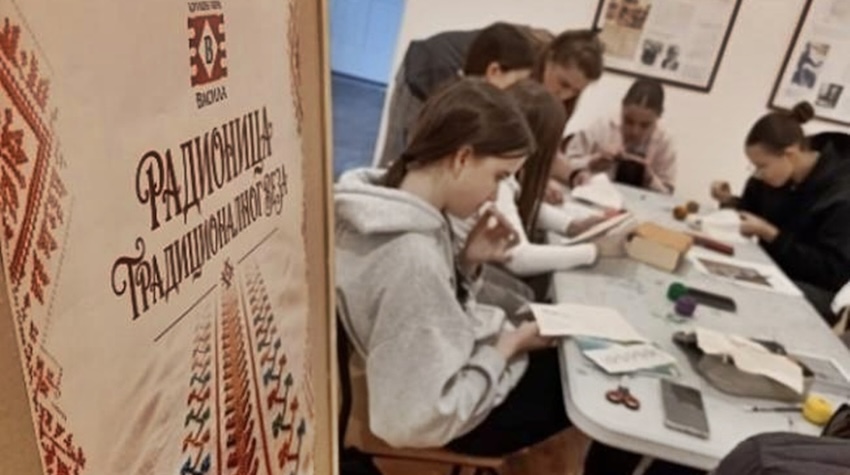
HERZEGOVINIAN EMBROIDERY IN THE HANDS OF NEW GENERATIONS
OKTOBERFEST KICKS OFF IN MUNICH, EXPECTING 6.5 MILLION VISITORS

SPANISH TRAVEL WRITER DISCOVERS THE GREEN SIDE OF BANJA LUKA

 The situation at the border crossings