HEDONIST: WHY WE ARE RETURNING TO SMALL CAFÉS
At a time when almost every city is beginning to resemble the next, it is the small things that matter most. While major coffee chains offer the safety of familiar flavors and recognizable interiors, more and more people are once again choosing small, independent cafés — places with character, a story, and a human face.
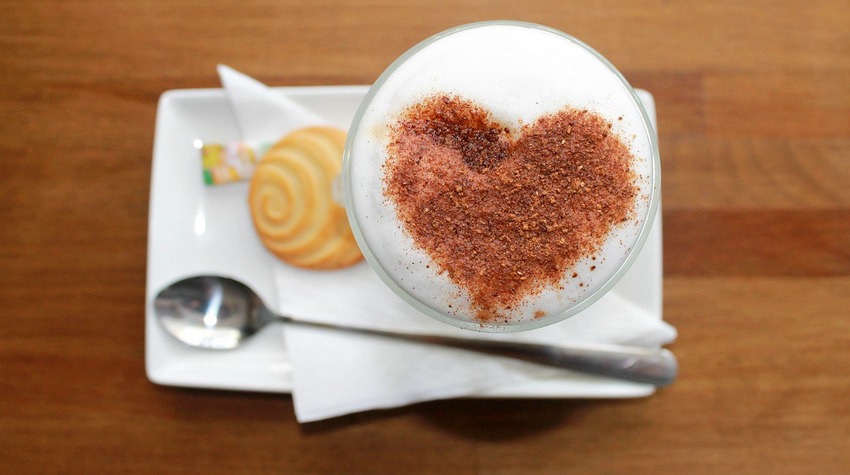
Largechains operate on the principle of perfect replication. The same tables, the
same lighting, the same menu — whether you are in Vienna, Ljubljana, or
Sarajevo. That predictability, once seen as an advantage, is increasingly
becoming a source of fatigue.
Small
cafés are born differently. They grow organically, shaped by the taste of their
owners, the neighborhood they belong to, and the people who visit them daily.
Their walls often carry traces of time, the music is not part of a corporate
playlist, and the interior feels like an extension of someone’s home.
These
places do not strive to be perfect — they strive to be authentic.
The People Who Create the Place
In
small cafés, the waiter is not an anonymous part of a system. They remember
what you drink, know when you prefer silence and when you feel like talking.
Over time, a relationship forms that goes beyond ordinary service.
A
guest stops being just a guest and becomes part of the space.
It is
precisely this human dimension that restores the sense of community slowly
fading in modern cities. Small cafés become micro-worlds where neighbors,
creatives, travelers, and passersby meet.
And in
that process, the city regains its face.
The Ritual of Coffee
Coffee eased to be just a beverage that wakes us up. It is a pause, a
transition between obligations, a small moment of privacy in the middle of the
day.
In
large chains, coffee is often consumed on the go — taken away between meetings,
without lingering. In small cafés, time slows down. The cup remains on the
table longer than necessary, conversations unfold without urgency, and phones
increasingly stay face down.
The
ritual returns to where it belongs — to experience, not speed.
The Identity of a City in a Single Cup
The
best way to understand a city is not through its landmarks, but through the
places where people truly spend their time. Small cafés reveal the rhythm of a
city better than any tourist guide.
They
show how a city breathes: whether it is loud or calm, artistic or
business-driven, Mediterranean and relaxed or northern and fast-paced. Every
neighborhood has its gathering spot, and each of those spots becomes a subtle
symbol of local identity.
That
is why travelers increasingly seek out such spaces — not perfectly designed,
but sincere.
A Return to Simplicity
Perhaps
we are not returning to small cafés out of nostalgia. Perhaps we are returning
because we are tired of uniformity.
In a world
of algorithms, recommendations, and standardized experiences, authenticity
becomes a luxury. Small cafés offer exactly that — the feeling of being
somewhere that was not made for everyone, but for someone.
And
sometimes it is enough to find your place at a table, order a coffee, and let
the city move a little slower. Because hedonism often begins right there — in a
simple moment that does not try to be anything more than what it is.

Join our
Viber Community









 The situation at the border crossings