TITO’S CAVE CONTINUES TO ATTRACT VISITORS TO DRVAR
The Memorial Complex Museum “May 25” in Drvar is recording an increase in visitor numbers this year, with foreign tourists showing the greatest interest. They currently account for between 70 and 80 percent of the complex’s total visitors.
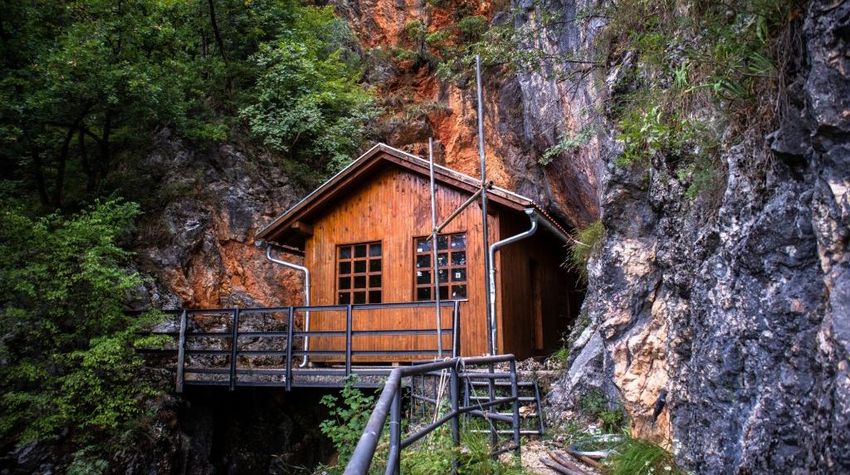
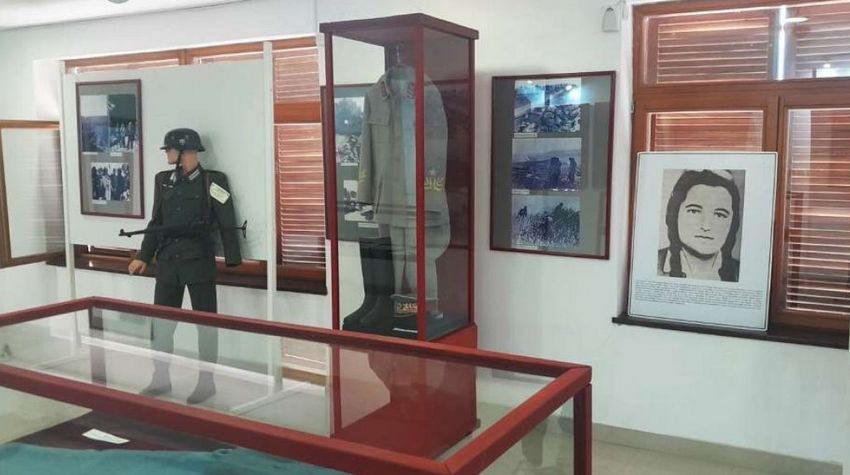
Throughout 2025, the complex welcomed between
3,500 and 4,000 visitors. However, around 2,000 visitors were recorded between
July 8 and August 18 this year alone, according to Dušan Dragoš, a history
professor engaged by the Municipality of Drvar to work at the “May 25” Museum.
Visitors from Slovenia are the most numerous,
accounting for around 40 percent of the total. Tourists also arrive from
Serbia, Croatia, Germany, the Czech Republic, Slovakia, Italy, France and
Hungary.
“Organised visits from the countries of the
former Yugoslavia are not particularly frequent, but they do occur from time to
time,” Dragoš said.
A COMPLEX RICH IN HISTORY
The Memorial Complex Museum “May 25” was
declared a national monument of Bosnia and Herzegovina in 2011.
The complex includes the main “May 25” Museum
building, also known as the Historical Museum, Tito’s Villa, the building where
the State Security Administration (OZNA) was established, which today houses
the Ethnographic Museum, as well as the area surrounding Tito’s Cave.
Visitors can explore the Historical and
Ethnographic Museum exhibitions and enter Tito’s Cave, while Dragoš provides an
insight into the historical context of the entire complex.
TITOV CAVE – A FORMER TOURIST HOTSPOT
During the period of the former Yugoslavia,
Tito’s Cave was one of the country’s best-known tourist attractions, drawing
visitors interested in the history of Yugoslavia and the wartime events
connected with Josip Broz Tito.
Today, the site continues to attract visitors
from across Europe, with international tourists making up the overwhelming
majority of guests.
The complex offers visitors an opportunity to
learn about one of the most significant periods of the region’s 20th-century
history while exploring the locations connected with Tito and the Partisan
movement during the Second World War.
MODEST INVESTMENTS AND AFFORDABLE TICKETS
According to Dragoš, the buildings are
generally in relatively good condition, although some areas require minor
repairs and maintenance.
Investment in the complex has been limited in
recent years and has mainly been financed through the museum’s own revenues,
primarily ticket sales.
The standard admission fee is five Bosnian
marks, while organised groups pay four marks per person. Tickets for children
aged seven to 18 cost three marks, while organised school excursions pay 2.50
marks per visitor.
Dragoš noted that these prices are among the
lowest in the Federation of Bosnia and Herzegovina.
With its combination of historical
significance, preserved sites and growing interest from international visitors,
the Memorial Complex Museum “May 25” remains an important attraction in Drvar
and a destination for travellers seeking to explore the turbulent history of
the region.

Join our
Viber Community

FIVE AUTUMN ACTIVITIES FOR THE WHOLE FAMILY

GRADIŠKA INNOVATOR RECEIVES OFFICIAL SUPPORT FOR INNOVATIVE DIGITAL PROJECT

BANJA LUKA’S YOUNGEST RESIDENTS SHOW THAT KINDNESS HAS NO AGE
“ANCHOR AND SAILS IN LOVE”: NENAD GUGL ON THE POWER OF LOVE AND THE MEANING OF LIFE
.jpg)
WHAT IS BEING BUILT IN SUTJESKA NATIONAL PARK?
GAT NEAR GACKO EMERGES AS A NEW TOURIST ATTRACTION: NEW TRAILS, VIEWPOINTS AND REST AREAS
WHAT IS BEING BUILT IN SUTJESKA NATIONAL PARK?

EVERYONE IS INVITED: CHARITY HIKE ON KOZARA MOUNTAIN IN SUPPORT OF JELENA
GRADIŠKA INNOVATOR RECEIVES OFFICIAL SUPPORT FOR INNOVATIVE DIGITAL PROJECT
BANJA LUKA’S YOUNGEST RESIDENTS SHOW THAT KINDNESS HAS NO AGE


 The situation at the border crossings