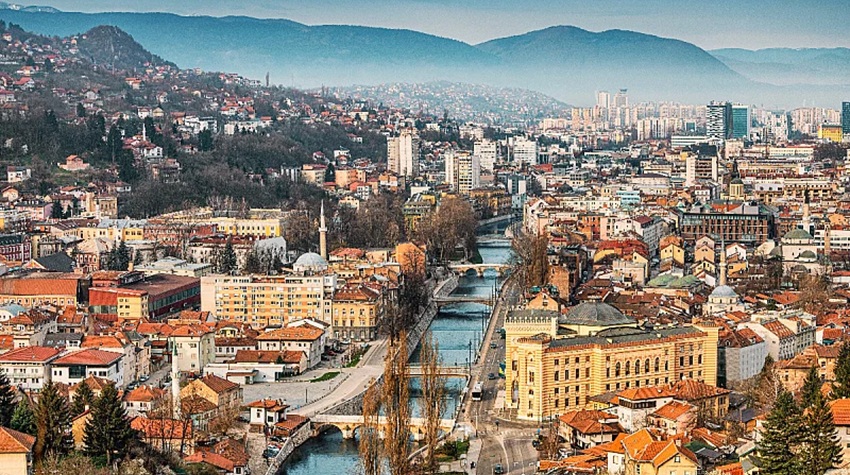
HAPPIEST COUNTRIES IN THE WORLD: HOW DOES THE REGION RANK? WHERE IS BOSNIA AND HERZEGOVINA?
The new World Happiness Report for 2026 has been released, and Finland has once again taken the top spot. This marks the ninth consecutive year that the country has been ranked as the happiest in the world, reinforcing its reputation as a model for quality of life.
Each year, the report attracts significant attention from both the public and experts ცდილ who aim to understand what truly makes people happy. The research is conducted by the Oxford Wellbeing Research Centre in collaboration with Gallup and the United Nations.
The results are based on a simple principle: citizens from around 140 countries rate their own lives on a scale from the worst possible to the best possible. This method, known as the Cantril ladder, allows individuals to evaluate their quality of life regardless of culture or personal circumstances.
FINLAND ON TOP, FOLLOWED BY ICELAND AND DENMARK
Finland once again secured first place with a score of 7.7. While happiness is often linked to economic performance, this Nordic country shows that other factors play a crucial role.
High trust in institutions, a strong social welfare system, quality education, a healthy work-life balance, and close connection to nature are frequently cited as key reasons why Finns consistently lead the rankings.
Iceland and Denmark placed second and third, switching positions compared to last year. Costa Rica made a notable breakthrough by entering the top five for the first time, while Sweden ranked fifth.
HOW DOES THE REGION COMPARE?
The results in the region reveal significant differences in perceived quality of life. The highest-ranked is Kosovo, which placed 16th, making it one of the biggest surprises in this year’s report.
Slovenia follows closely in 18th place, while Serbia ranks 30th. Bosnia and Herzegovina is positioned 47th, Montenegro 60th, and Croatia is ranked 70th on the global list.
HAPPINESS IS NOT JUST ABOUT MONEY
The World Happiness Report consistently shows that happiness is not solely tied to material wealth. Key factors include social relationships, trust, personal freedom, and a sense of purpose.
For this reason, the report is more than just statistics—it offers valuable insight into how people around the world truly experience their lives.

Join our
Viber Community









 The situation at the border crossings