WHY HANDCRAFTED FURNITURE IS BECOMING MORE VALUABLE IN MODERN INTERIORS
There was a time when almost every piece of furniture was made in a carpenter's workshop. Today, the situation is completely different. Most homes are furnished with mass-produced furniture that is readily available, arrives in flat-pack boxes and can be assembled within just a few hours.
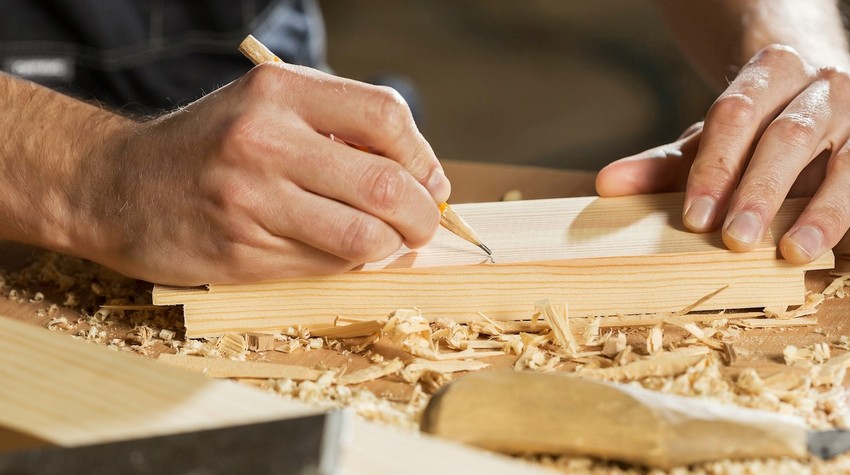
Yet in
recent years, an interesting trend has emerged. More and more people are
willing to wait several weeks or even months to receive a piece of furniture
made specifically for their space, lifestyle and everyday needs.
The
reason is not simply nostalgia or a desire to make an interior look more
luxurious. Instead, there is growing awareness that quality, durability and
functionality can often be more valuable than the speed of purchase.
This
is why handcrafted and custom-made furniture is once again attracting
attention. When choosing a piece that is expected to last for years, look good
and function perfectly every day, waiting is no longer seen as a disadvantage.
Instead, it becomes part of the value of the product.
WHY ARE PEOPLE TURNING BACK TO HANDCRAFTED FURNITURE?
A home
is where people work, eat, talk, welcome guests and spend a significant part of
their lives. As a result, interiors are no longer viewed only through colours,
styles and decoration, but also through a much more practical question: how
well does the space actually work for everyday life?
A
table may look perfect in a photograph, but if it is too high, it can quickly
become a source of frustration. A chest of drawers may have a modern design,
but if it is a few centimetres too wide, it can disrupt the flow of the room. A
wardrobe may offer plenty of storage space while still leaving an awkward and
unused section of wall.
These
situations make it clear why universal dimensions do not work equally well in
every home.
Handcrafted
furniture is attractive precisely because it is created around a specific
space, lifestyle and set of needs. Instead of forcing the room to adapt to a
ready-made piece, the furniture is designed so that it looks and functions as
if it had always belonged there.
WHAT DOES “HANDCRAFTED” REALLY MEAN?
One
common misconception is that handcrafted furniture must be produced entirely by
hand using traditional hand tools. In reality, modern woodworking workshops use
professional machinery that allows for highly precise processing, while
finishing, assembly and quality control still require experience and genuine
craftsmanship.
The
difference compared with mass production is often most visible in the attention
paid to details.
Wood
is selected according to the intended purpose of the piece, joints are
carefully fitted, and every surface is finished to ensure that it is pleasant
to the touch, functional and durable.
The
goal of handcrafted furniture is to create a piece that is precise, stable and
built to last. The result is therefore more than an attractive object. It is a
product designed to become part of everyday life for many years.
EVERY PIECE HAS ITS OWN UNIQUE CHARACTER
Natural
wood is never completely identical. Grain patterns, shades and textures vary
from one board to another, meaning that two tables made from the same type of
wood will never look exactly the same.
That
is precisely where part of their uniqueness lies.
While
mass production strives for complete uniformity, handcrafted furniture embraces
natural imperfections as part of its aesthetic appeal. These characteristics
give every piece an authentic identity and a personality that cannot be
perfectly replicated.
As a
result, custom-made wooden furniture has its own visual identity, allowing it
to blend naturally into a particular interior rather than appearing as just
another product from a mass-production line.
WHEN FURNITURE IS ADAPTED TO THE SPACE – NOT THE OTHER WAY AROUND
Very
few apartments or commercial spaces have truly perfect proportions. Sloping
walls, awkward niches, narrow passages and open-plan layouts may seem perfectly
manageable until it is time to furnish the space.
That
is when standard dimensions can leave unnecessary gaps in places where every
centimetre matters.
This
is where custom-made furniture has a particular advantage. Instead of adapting
the room to a ready-made piece, the furniture is designed according to the
actual dimensions, layout and purpose of the space.
This
is especially important for kitchens, wardrobes, shelving units, work desks and
dining tables, where just a few centimetres can make a major difference in
everyday use.
A
well-designed piece does not simply fill an empty space. It takes advantage of
the room's strengths while minimizing its limitations.
When
dimensions, proportions and functionality are carefully coordinated, an
interior feels calmer, more organized and more natural – almost as if the
entire space had been designed around the furniture.
QUALITY THAT BECOMES MORE VISIBLE OVER THE YEARS
At
first glance, almost any new piece of furniture can look flawless. The real
difference becomes apparent after years of everyday use.
That
is when high-quality joints remain strong, doors continue to close properly,
drawers still slide smoothly, and surfaces retain their appearance despite
minor impacts, movement and the inevitable signs of daily life.
Solid
wood furniture has an additional advantage: time does not necessarily have to
be its enemy.
Scratches, signs of use and minor damage can often be repaired, while surfaces can be refinished and restored without replacing the entire piece. With many engineered wood and composite board materials, such possibilities are considerably more limited.
For this reason, many people view handcrafted furniture as a long-term investment rather than a purchase that will need to be replaced every few years.
IS HANDCRAFTED FURNITURE MORE EXPENSIVE?
If only the initial price is considered, the answer is often yes. However, price and value are not the same thing.
When a
high-quality piece lasts for decades, can be restored and remains functional
despite years of use, it can ultimately prove to be a more cost-effective
choice than mass-produced furniture that may need to be replaced several times.
Of
course, handcrafted furniture is not the right solution for every situation.
For a
temporary apartment, an occasionally used holiday home or a space that will
soon change its purpose, mass-produced furniture can be a perfectly practical
option.
However,
when furnishing a home where people plan to live for many years, quality takes
on an entirely different significance.
WHEN DOES CUSTOM-MADE FURNITURE MAKE THE MOST SENSE?
Custom-made
furniture is particularly valuable when standard solutions cannot meet the
requirements of a specific space.
This
includes small kitchens, attics, awkward niches, narrow hallways, built-in
wardrobes, home offices, libraries and dining areas where every centimetre
needs to serve a clear purpose.
In
such spaces, ready-made furniture often leaves gaps, disrupts movement or
simply fails to make the best use of the available area.
With
custom-made solutions, dimensions are adapted to the space, while functionality
is tailored to the actual habits of the people who will use the furniture every
day.
Another
advantage is the freedom to choose the type of wood, finish, proportions,
arrangement of elements and details that complement the rest of the interior.
The
result is a space that does not feel like a collection of randomly selected
pieces, but rather a harmonious whole in which every element has a clear
purpose.
A RETURN TO QUALITY AND LONG-TERM VALUE
The
renewed interest in handcrafted furniture is not simply a passing trend. It
reflects a broader change in the way people think about their homes.
Interiors
are increasingly viewed not as collections of objects that should be purchased
as quickly as possible, but as spaces that deserve careful planning and
thoughtful design.
Quality,
durability and everyday functionality are once again gaining importance over
fast purchases and universal solutions.
Custom-made
wooden furniture is not merely intended to make a room look more beautiful. Its
true value lies in how naturally it follows the habits of the people who use
it, how precisely it fits the dimensions of a particular space and how long it
continues to serve its purpose.
That
is why craftsmanship still has a special place in modern interiors.
It
does not try to follow every new trend or appeal to everyone. In a world where
so many things are produced quickly and replaced even faster, handcrafted
furniture offers a simple reminder: some things are worth making only once –
but making them properly.

Join our
Viber Community









 The situation at the border crossings