FIVE NATURAL POOLS CREATED BY NATURE
In some places, nature has created landscapes that seem almost unreal. Without architects or construction machinery, water has shaped rocks, deposited minerals and carved out pools over thousands of years, creating natural bathing spots whose beauty can rival even the world’s most luxurious resorts.
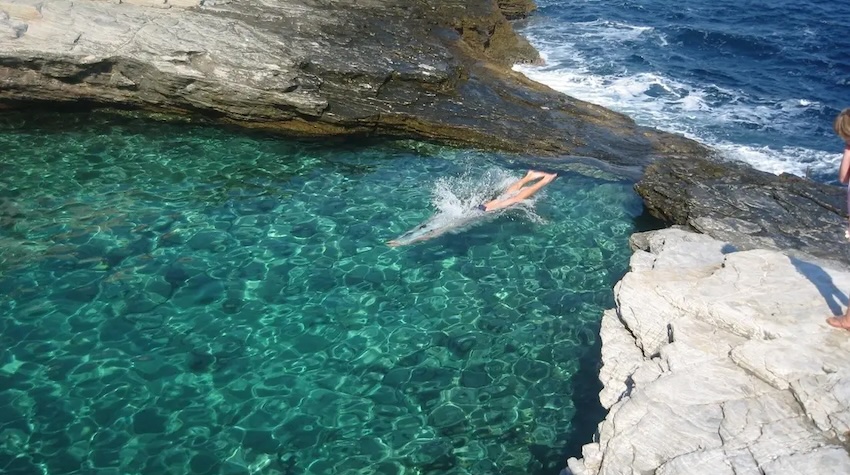
From Turkey’s thermal terraces and Samoa’s volcanic cliffs to the turquoise waters of the Grand Canyon, these natural pools show just how powerfully water can shape a landscape.
Here are five destinations that should undoubtedly be on the wish list of every travel lover.
1. PAMUKKALE, TURKEY – WHITE CASTLES OF STONE AND WATER
In southwestern Turkey lies one of the world’s most famous natural wonders. Pamukkale, meaning “Cotton Castle”, is known for its dazzling white terraces that resemble snow-covered slopes.
These travertine pools were formed by the deposition of calcium carbonate from thermal springs. For thousands of years, mineral-rich water has shaped cascading terraces and natural pools, creating a truly unique landscape.
Certain parts of the site are still accessible for bathing, while the ancient city of Hierapolis rises above the terraces. This remarkable combination of nature and history is one of the reasons Pamukkale is listed as a UNESCO World Heritage Site.
Best time to visit: April–June and September–October.
2. TO SUA OCEAN TRENCH, SAMOA – A PARADISE HIDDEN IN VOLCANIC ROCK
On the island of Upolu, surrounded by lush tropical vegetation, lies a natural pool that looks like an entrance to another world.
To Sua Ocean Trench was formed when a volcanic cave collapsed, creating a nearly 30-metre-deep natural pool filled with crystal-clear seawater. A wooden ladder leads down into the pool, with the descent offering a view reminiscent of a natural cathedral.
Underground channels connect the pool with the Pacific Ocean, meaning its water level is influenced by the tides. Emerald water, dark volcanic rocks and tropical greenery make this one of Samoa’s most striking natural attractions.
Best time to visit: May–October.
3. GIOLA, GREECE – THE NATURAL INFINITY POOL OF THE AEGEAN
On the southern coast of the island of Thassos, the sea has carved a naturally formed pool into the rock over centuries.
Giola is often described as a natural infinity pool because seawater flows through a narrow opening into the rocky basin, creating the impression that the pool merges with the Aegean Sea.
During summer, the pool warms more quickly than the open sea, making the water particularly pleasant for swimming. According to local legend, this was where the goddess Aphrodite used to bathe, adding an extra touch of mystery to this remarkable place.
Best time to visit: June–September.
4. HAVASU FALLS, UNITED STATES – THE TURQUOISE GEM OF THE GRAND CANYON
Deep within the Grand Canyon, on the land of the Havasupai Tribe, lies one of Arizona’s most spectacular natural landscapes.
The waters of Havasu Falls are famous for their intense turquoise colour, while the waterfall plunges over the characteristic red rocks of the Grand Canyon, creating a scene that looks almost unreal.
The site cannot be reached by car. Visitors must hike more than 15 kilometres or use helicopter transport, helping preserve the area’s sense of remoteness and pristine nature.
Best time to visit: March–May and September–November.
5. LAS GRIETAS, GALAPAGOS, ECUADOR – SWIMMING BETWEEN VOLCANIC CLIFFS
On Santa Cruz Island, in the heart of the Galapagos Archipelago, a narrow canyon filled with remarkably clear water awaits visitors.
Las Grietas was formed by fractures in volcanic rock, with seawater eventually filling the deep fissure and creating a natural pool. The mixing of fresh and seawater creates a unique ecosystem, while the calm water makes the site ideal for swimming and snorkelling.
Sunlight filtering between the towering volcanic cliffs creates striking shades of blue and turquoise, making Las Grietas one of the most attractive natural sites on Santa Cruz Island.
Best time to visit: During the dry season, from June to December.
NATURE AS THE GREATEST ARCHITECT
These five destinations differ in landscape, climate and geography, but they share the same story – without human intervention, water has shaped extraordinary places that now attract travellers from around the world.
From the thermal terraces of Pamukkale to the volcanic canyons of the Galapagos, nature once again proves that spectacular bathing spots need neither concrete nor architecture – only time, water and the forces of the Earth.

Join our
Viber Community

FIVE AUTUMN ACTIVITIES FOR THE WHOLE FAMILY

GRADIŠKA INNOVATOR RECEIVES OFFICIAL SUPPORT FOR INNOVATIVE DIGITAL PROJECT

BANJA LUKA’S YOUNGEST RESIDENTS SHOW THAT KINDNESS HAS NO AGE
“ANCHOR AND SAILS IN LOVE”: NENAD GUGL ON THE POWER OF LOVE AND THE MEANING OF LIFE
.jpg)
WHAT IS BEING BUILT IN SUTJESKA NATIONAL PARK?
GAT NEAR GACKO EMERGES AS A NEW TOURIST ATTRACTION: NEW TRAILS, VIEWPOINTS AND REST AREAS
GRADIŠKA INNOVATOR RECEIVES OFFICIAL SUPPORT FOR INNOVATIVE DIGITAL PROJECT
WHAT IS BEING BUILT IN SUTJESKA NATIONAL PARK?

EVERYONE IS INVITED: CHARITY HIKE ON KOZARA MOUNTAIN IN SUPPORT OF JELENA
BANJA LUKA’S YOUNGEST RESIDENTS SHOW THAT KINDNESS HAS NO AGE


 The situation at the border crossings