THE ANCIENT SYMBOL OF THE ROSETTE: FROM SUN WORSHIP TO CHRISTIANITY
A flower with six petals enclosed in a circle—sometimes also placed within a six-pointed star—is an ancient motif decorating the Church of St. Nicholas in Foča, built in the mid-19th century.
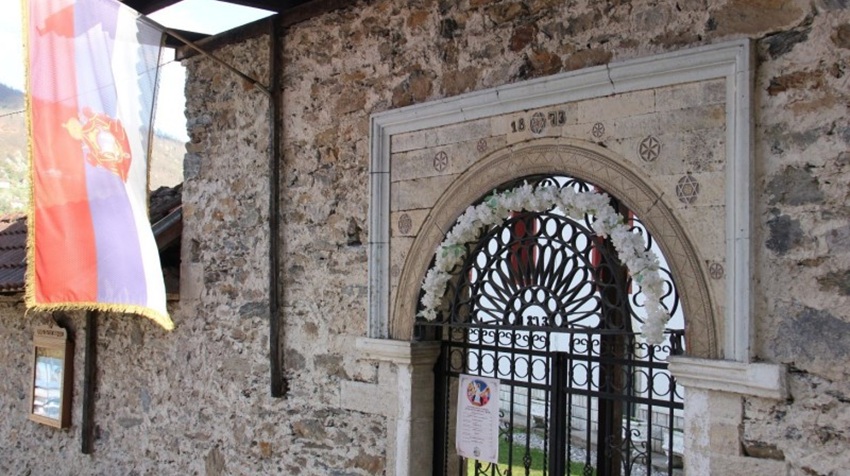
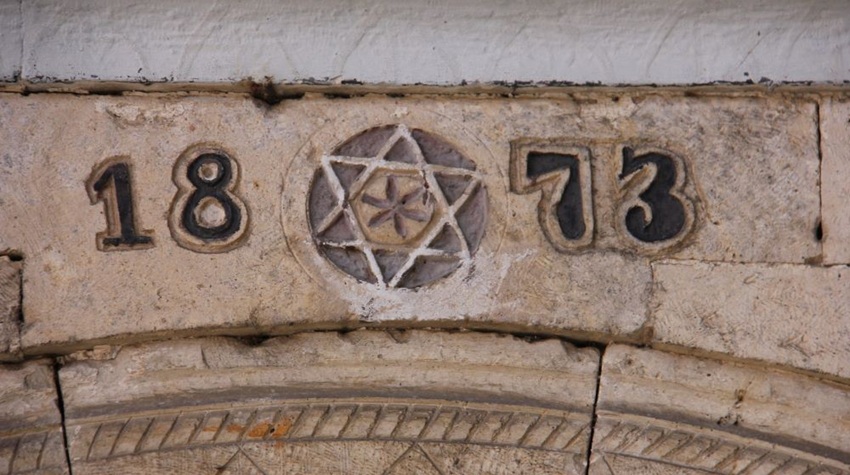
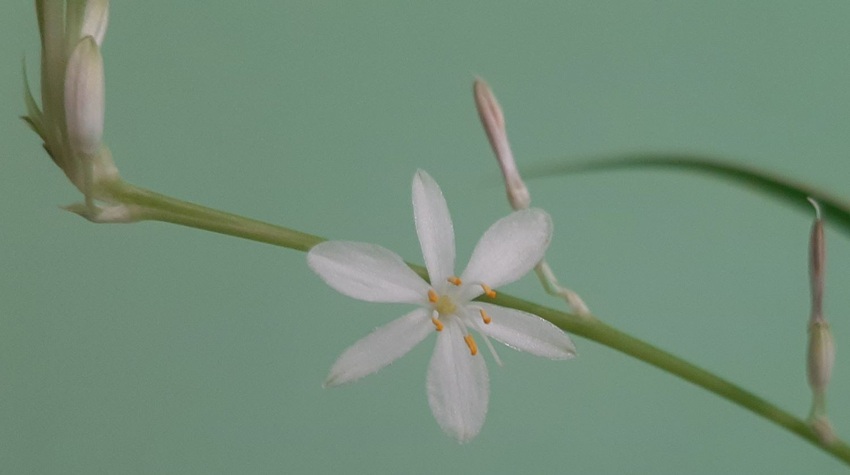
This circular symbol, with its symmetrically arranged six petals, is often associated with perfection and divine light. It is also known as the “sun wheel,” the “sun circle,” or the “seed of life.” A network of such interconnected floral patterns, also found on the church, is interpreted by some as the “flower of life”—a representation of divine creation.
The symbol appears across many cultures and civilizations, stretching back into distant history, and it also holds meaning within Christianity. It decorates all three entrances of the church, built in 1857, as well as the churchyard gate from 1873 and the nearby gate of the Serbian school courtyard.
It can also be found on tombstones in the old Orthodox cemetery above the church, on medieval stećci tombstones, and in Serbian monasteries such as Piva, Peć Patriarchate, Dečani, and others.
The rosette as a universal symbol
In art, this decorative motif is generally known as a rosette (from the French rosette, meaning “little rose”).
Today, the six-petaled rosette is often called “perunika” (iris), although in nature such a symmetrical pattern more closely resembles a lily. Meanwhile, the medieval heraldic symbol of the lily (known as krin) corresponds more to the iris—an inversion that remains something of a mystery.
Throughout history, this six-petaled flower has been one of the most widespread motifs in folk art. Among Slavic peoples, it was carved into wood or stone and used on cradles, barrels, and house entrances. According to traditional beliefs, it protected against lightning, fire, illness, and evil forces.
A prehistoric symbol of the sun and protection
The rosette is also the emblem of the Slovene Ethnographic Museum in Ljubljana.
Museum advisor Marko Frelih explains that the rosette is a prehistoric symbol of the Sun—divine light—found throughout Europe, the Mediterranean, and Asia. He notes that it carries an apotropaic meaning, believed to ward off evil, disease, and harmful forces.
Art historian Zorica Ivković emphasizes that the rosette symbolizes the source of life, the creation of the world, and the perfection of natural laws. When enclosed in a circle, it represents the Sun and the cosmos as a unified, perfect whole.
The meaning of the six-pointed star
On the Church of St. Nicholas, the six-petaled rosette often appears within a six-pointed star formed by two interlocking triangles.
This symbol represents the unity of heaven and earth, harmony, and balance. Experts stress that it is a universal motif and not tied to later religious or political interpretations.
These symbols originally had a protective function and were used by people seeking safety from unknown forces long before modern systems of protection existed.
Christ – the Light of the World
Ancient beliefs and the cult of the Sun found new meaning in Christianity, particularly through the concept of divine light.
In Christian teaching, Jesus Christ is described as the “Light of the World,” and believers are called to follow that light. The symbolism of light as a source of life and truth appears throughout the Bible.
Thus, what was once a symbol of the Sun became, in Christianity, a deeper expression of divine, eternal light—connecting ancient traditions with spiritual belief.

Join our
Viber Community

NEW GENERATION OF STUDENT THEATRE MEMBERS TAKES THE STAGE

AUTUMN FRUITS AND HONEY FESTIVAL COMES TO BANJALUKA

DEJAN KOKANOVIĆ CONQUERS 336 KM THROUGH THE ITALIAN ALPS

HOMEMADE AJVAR - A TASTE OF TRADITION

OKTOBERFEST KICKS OFF IN MUNICH, EXPECTING 6.5 MILLION VISITORS
DEJAN KOKANOVIĆ CONQUERS 336 KM THROUGH THE ITALIAN ALPS

DERVENTA BRINGS ITS PAST TO LIFE: 3D FORTRESS AND VIRTUAL TOUR OF THE CITY
HERZEGOVINIAN EMBROIDERY IN THE HANDS OF NEW GENERATIONS
OKTOBERFEST KICKS OFF IN MUNICH, EXPECTING 6.5 MILLION VISITORS

SPANISH TRAVEL WRITER DISCOVERS THE GREEN SIDE OF BANJA LUKA


 The situation at the border crossings