KSENIJA RADOJA TRADES CITY LIFE FOR THE CLASSROOM IN GLAMOČ
At a time when many young, educated people aspire to move to larger urban centres and embrace a fast-paced lifestyle, some stories remind us of the value of simplicity, courage and unexpected life choices.
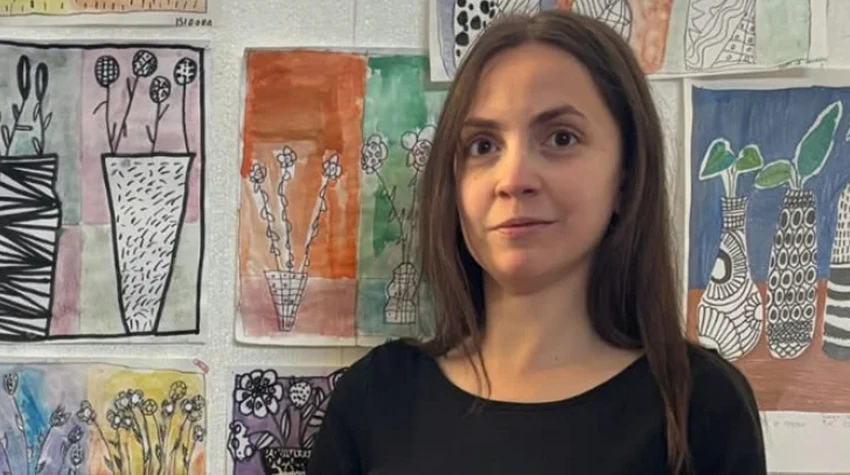
One such story is that of Ksenija Radoja, a Serbian language
and literature teacher who exchanged the hustle and bustle of city life for the
quieter rhythm of Glamoč, bringing fresh energy, knowledge and a passion for
her native language to the local primary school.
Born in Novi Sad, Serbia, Ksenija completed her education in
the city, graduating in Serbian language and literature from the Faculty of
Philosophy. She also spent part of her life and professional journey in Banja
Luka, becoming accustomed to the opportunities, activities and pace of larger
cities. However, life sometimes takes us in directions we never planned.
“I came to Glamoč through a series of circumstances. I
learned that a position in my field was becoming available, and since I was not
employed at the time, I recognised it as a good opportunity worth taking,”
Ksenija recalls.
Although she had never lived in Glamoč before, nor was she
born there, family ties to the area gave her a sense of familiarity. Without
lengthy deliberations, she made her decision spontaneously, packed her bags and
set off on a new chapter of her life on her own.
DEDICATION TO EVERY STUDENT
Since September, at the beginning of the current school
year, Ksenija has been an integral part of the team at Glamoč Primary School.
She teaches Serbian to pupils in grades one through five, with a total of 20
children attending her classes.
“There are generally two classes in each grade, although
some grades have only one. Pupils attending Serbian lessons from both classes
come together, so I teach groups of between three and five children, depending
on the grade. This approach allows me to devote as much attention as possible
to each pupil,” she told Glas Srpske.
Since Serbian was introduced as a school subject only two
years ago, the pupils have varying levels of prior knowledge.
“Their starting points differ, which is to be expected when
working with children of different ages and different previous experiences of
learning the language. Before Serbian was introduced, pupils could choose to
study Bosnian or Croatian, so they followed different programmes and learned
with different teachers,” Ksenija explains.
Although it is still too early to single out particular
anecdotes, she says working with children provides a daily source of
inspiration and small joys that make classroom life special.
TWO WORLDS, BOTH EQUALLY VALUABLE
Moving from major urban centres such as Novi Sad and Banja
Luka to a small municipality like Glamoč represents a significant lifestyle
change. However, Ksenija views the experience with understanding and gratitude.
“The differences are considerable, both professionally and
in everyday life. I was used to the pace and opportunities of large cities, but
small communities like Glamoč offer invaluable peace and much closer, more
personal relationships between people. I am happy to have the opportunity to
experience both ways of life and take the best from each,” she says.
Looking back, Ksenija believes she made the right decision.
She has the opportunity to work in the profession for which she trained, gain
valuable teaching experience and enrich her life by becoming part of a new
community.
For those considering a similar move or returning to a
smaller community, she offers advice based on her own experience.
“Each of us has different expectations, needs and priorities
in life. There is no single right answer to the question of whether one should
move to a smaller community. My message is to be brave enough to consider every
opportunity that comes our way and make the decision that feels right and suits
us best at that particular moment,” Ksenija says.
SERBIAN LANGUAGE CLASSES AND THE NEED FOR READING MATERIALS
Pupils of Serbian nationality at Glamoč Primary School have
been studying their mother tongue only since the 2024/2025 school year. Serbian
language classes for pupils in grades six through nine are taught by Anja
Kalinić, who has been working at the school since Serbian was introduced as
part of the national subject curriculum two years ago.
“Currently, 21 pupils in the upper grades study Serbian:
four in grade six, eight in grade seven, two in grade eight and seven in grade
nine. Unfortunately, the overall number of children at the school is declining.
There used to be more than 300 pupils here, while today there are fewer than
200,” Anja told Glas Srpske.
The teachers follow the curriculum prescribed by the
Republic Pedagogical Institute of Republika Srpska. The first Serbian language
textbooks were provided free of charge by Republika Srpska institutions, and
the books are carefully preserved and passed down from one generation to the
next.
However, the lack of required literary works and additional
reading materials remains one of the biggest challenges.
The experiences of Ksenija and her colleagues highlight the
importance of education in smaller communities, where dedicated teachers play a
vital role in preserving language, passing on knowledge and supporting the next
generation.

Join our
Viber Community

RICH NOVEMBER PROGRAMME AT BANJA LUKA’S JAZAVAC CITY THEATRE
KSENIJA RADOJA TRADES CITY LIFE FOR THE CLASSROOM IN GLAMOČ
AUTUMN COLOURS OF LAKE ALAGOVAC NEAR NEVESINJE

NEW SERVICE AT THE BiH-CROATIA BORDER FROM NOVEMBER 1
NATIONAL THEATRE OF REPUBLIKA SRPSKA WINS TWO AWARDS AT "DAYS OF ZORAN RADMILOVIĆ"
FROM THE FIELDS OF GLAMOČ TO TABLES ACROSS THE REGION: A POTATO WITH A NAME OF ITS OWN
WHERE TO GO FOR A MINI BREAK FOR TWO FOR JUST BAM 69

3 GREAT WEEKEND GETAWAY IDEAS IN REPUBLIC OF SRPSKA
NEW SERVICE AT THE BiH-CROATIA BORDER FROM NOVEMBER 1
AUTUMN IN ITS MOST BEAUTIFUL COLORS THROUGH THE LENS OF TOMAS DAMJANOVIĆ

 The situation at the border crossings