ALARM ON THE DRINA: PROTECTION OF THE EMERALD RIVER URGENTLY NEEDED
Floating waste has once again overwhelmed the Drina River near Višegrad, confirming that previous measures have failed to deliver a lasting solution to a problem that has persisted for years, particularly during the winter months when heavy rains and rising waters carry garbage from unmanaged upstream landfills.
Environmental activists warn that large amounts of plastic, packaging and other municipal waste have accumulated on the surface of the river, forming a floating landfill in front of the reservoir of the Višegrad Hydropower Plant.
No Systemic Solution to the Root of the Problem
Scenes similar to those repeatedly witnessed in previous years — and which have drawn significant media and public attention — clearly indicate that no systemic solution has been found to address the source of the pollution.
The Ministry of Spatial Planning, Construction and Ecology of Republika Srpska stated that the permanent resolution of the floating waste problem on the Drina near Višegrad is only possible through the removal of illegal and unmanaged landfills upstream. However, full regional coordination among the three countries from which the waste originates remains insufficient.
Appeal for Joint Regional Action
As the competent authority for waste management, the Ministry says it has been actively involved and continues to appeal for a solution to this issue, which also affects other parts of Republika Srpska.
In accordance with the Memorandum of Understanding on Environmental Protection Cooperation between the ministries of Republika Srpska and the Republic of Serbia, efforts are underway to address problems characteristic of border areas, including the Drina River.
However, according to officials, the relevant ministry in Montenegro has not been sufficiently engaged in resolving the issue, despite initiatives from Republika Srpska and Serbia. Mixed expert working groups were formed in 2019 and 2021, and a trilateral meeting of ministers responsible for environmental protection was held, but no concrete progress was made in eliminating the root causes of the problem.
Thousands of Cubic Meters of Waste Each Year
Since 2019, whenever waste accumulation occurs, the Ministry has sent urgent requests to the competent institutions in Serbia, Montenegro and Bosnia and Herzegovina to take immediate measures to protect the operation of the Višegrad Hydropower Plant and prevent further pollution of the Drina River.
Authorities emphasize that a permanent solution can only be achieved by removing illegal and local landfills along the banks of the Drina, Lim, Rzav and Tara rivers and their tributaries. Waste management, they remind, falls under the jurisdiction of local governments in all three countries.
An underdeveloped system of environmentally sound waste management, irresponsible disposal by individuals and companies, and insufficient public awareness are also cited as contributing factors.
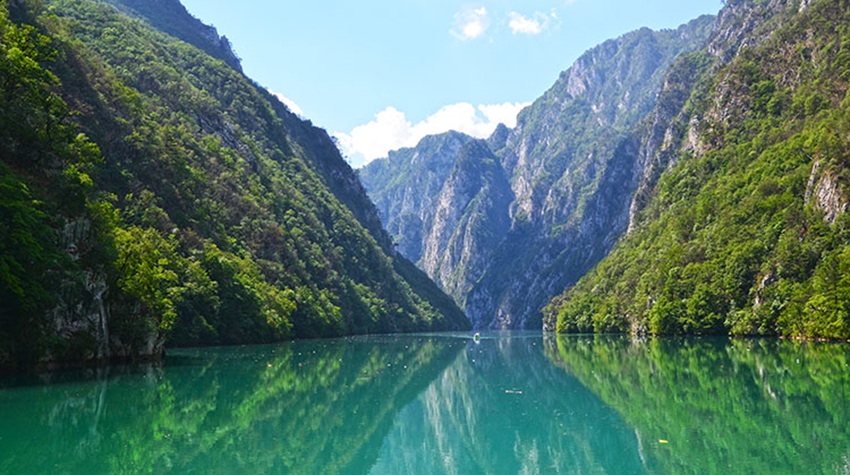
The Drina, known for its emerald waters and significant tourism potential, has once again been overshadowed by the sight of a floating landfill. Workers at the Višegrad Hydropower Plant remove between 6,000 and 8,000 cubic meters of floating waste from the river each year, warning that they cannot solve the problem alone.
Without stronger regional cooperation and decisive action, the alarm on the Drina will continue to ring year after year.

Join our
Viber Community

THE PEOPLE PROTECTED THE SACRED ICON, BELIEVING IT WAS PROTECTING THEM: THE STORY OF THE ČAJNIČE KRASNICA

APPEAL FOR HELP: BLOOD DONORS URGENTLY NEEDED FOR NATAŠA ĆEJIĆ IN BANJA LUKA

NEW GENERATION OF STUDENT THEATRE MEMBERS TAKES THE STAGE

AUTUMN FRUITS AND HONEY FESTIVAL COMES TO BANJALUKA

DEJAN KOKANOVIĆ CONQUERS 336 KM THROUGH THE ITALIAN ALPS
DEJAN KOKANOVIĆ CONQUERS 336 KM THROUGH THE ITALIAN ALPS

DERVENTA BRINGS ITS PAST TO LIFE: 3D FORTRESS AND VIRTUAL TOUR OF THE CITY

OKTOBERFEST KICKS OFF IN MUNICH, EXPECTING 6.5 MILLION VISITORS
AUTUMN FRUITS AND HONEY FESTIVAL COMES TO BANJALUKA

SPANISH TRAVEL WRITER DISCOVERS THE GREEN SIDE OF BANJA LUKA


 The situation at the border crossings