WHAT HAS BROUGHT PEOPLE TO CEROVICA FOR MORE THAN 270 YEARS
When church bells ring out above the village of Cerova on Petrovdan, and residents, guests and descendants of old Krnjina families begin making their way towards Gojakovac Hill, a centuries-old tradition comes to life once again.
The Petrovski Zbor, or Gojakovac Gathering,
held on the feast day of the church dedicated to the Holy Apostles Peter and
Paul, has for centuries been much more than a religious celebration. Beneath
the old linden trees surrounding the church, spiritual and everyday life
intertwined. After the liturgy, people from neighbouring villages gathered,
friendships were formed, business was discussed, traditional dances were
performed, and young men and women found opportunities to meet.
For generations of people from Krnjina,
Petrovdan at Gojakovac was one of the most important days of the year – a day
remembered, retold and eagerly awaited.
The gathering once lasted for several days.
Although today's event is nowhere near as large or as vibrant as it once was,
its essence remains unchanged: people gathering around their church, their
feast day and their ancestral heritage
A WRITTEN RECORD FROM 175
A valuable historical document from 1756
provides evidence of the longevity of the gathering, showing that the Petrovdan
celebration in Cerovica was taking place more than 270 years ago.
The record is preserved in the Tešanj Kadija
court registers and refers to an unfortunate incident that occurred on
Petrovdan that year. A report by Hadži Alija, deputy judge of the Tešanj
judicial district, sent to authorities in Travnik, describes a fight involving
several men from Cerovica and Ostružnja
Although the document does not explicitly use
the word "gathering", the circumstances strongly indicate that a
larger number of people from neighbouring villages had assembled for Petrovdan.
The incident involved people from different settlements and occurred precisely
on the feast day.
The historical importance of the document
therefore lies not only in its description of the incident, but also in what it
reveals about the existence of a shared Petrovdan celebration in the area.
From that time until today, the tradition of
gathering at Gojakovac has never completely disappeared. States, governments
and social systems changed, but Petrovdan remained a day when the people of
Krnjina came together around their church.
That uninterrupted continuity makes the
Petrovski Zbor one of the longest-lasting living religious and folk traditions
in this part of Bosnia and Herzegovina.
BEFORE THE CHURCH, THERE WAS A TEN
Before the church was built at Gojakovac, Holy
Liturgy was celebrated at the gathering place beneath a large traditional tent
– a mobile place of worship that once played an important role in the spiritual
life of Orthodox communities in the region.
These tents were made from thick locally
produced fabric, edged with narrow red cloth and decorated with red crosses
indicating that Holy Liturgy was celebrated there.
At a time when many settlements did not have
churches, such gathering places served as centres of spiritual life, bringing
people together for major religious holidays and helping preserve faith and
tradition.
One of the most significant dates in the
history of Gojakovac was Petrovdan in 1892, when the newly built Church of the
Holy Apostles Peter and Paul was consecrated.
It was one of the largest gatherings ever held
in the area. A large number of distinguished guests attended, while the service
was led by Dabrobosnian Metropolitan Georgije Nikolajević.
A report published that same year in the
Sarajevo journal Dabrobosanski istočnik described the grand celebration and the
generous donation made by the church's godfather, Teodor Đurić, a farmer from
Mala Bukovica.
After a toast offered by priest R. Jokanović,
Đurić announced that he wished to make a contribution to the church. He then
donated 200 silver florins, a bull, 100 lambs, a barrel of beer and 60 oka of
wine, which were shared with the gathered people.
The report also captured the atmosphere
following the service. While the metropolitan and his guests watched people in
traditional costumes dancing in front of the church, others joined the dance,
remained at the tables or sang.
A GREAT FOLK FAIR
According to stories recorded from elderly
residents by Archpriest Budimir Anđelić, the Petrovski Zbor gradually developed
into a major folk fair after the church was built.
Merchants arrived from surrounding areas
carrying agricultural produce, handmade goods and industrial products. Some
stayed for two or three days.
The event therefore acquired not only a
spiritual role but also an important economic and social function, similar to
major fairs held in Derventa, Tešanj and Prnjavor.
Evidence that the tradition survived even the
most difficult periods can be found in the writings of Simeon Tomić, originally
from Vitkovci and later an emigrant to Australia.
He recorded that on Petrovdan in 1943, Holy
Liturgy at Gojakovac was celebrated by priest Savo Božić from Trebava. A large
number of people and soldiers attended, including fighters from Brezovi Dani
near Teslić. Tomić himself carried one of the small icons during the procession
around the church.
PREPARATIONS BEGAN LONG BEFORE PETROVDAN
Preparations for Petrovdan once began weeks
before the feast.
Older residents remember that people used to
observe almost the entire Petrov fasting period, while in later decades fasting
generally lasted one or two weeks. It was not seen merely as a religious
obligation, but as spiritual preparation for the great day when people from across
Krnjina gathered at Gojakovac.
A PLACE OF SONG, YOUTH AND MEETING
Much of what is known today about the way
Petrovdan was celebrated comes from memories of residents from the period
following the Second World War.
Early on the morning of Petrovdan, women
prepared čanke – large wooden containers filled with food. Groups of people set
out from different hamlets towards the church.
Young men and women often walked together
singing, while older residents talked and greeted their neighbours. People from
more distant villages arrived by horse-drawn and ox-drawn carts.
The journey itself was part of the
celebration, because it marked the beginning of the day's communal gathering.
After the liturgy, following days of fasting,
believers received Holy Communion. A traditional auction was then held for the
honour of carrying the cross, banners and icons during the procession.
The ceremony ended with three processions
around the church, accompanied by prayers, chanting and the ringing of church
bells
After the service, the celebration moved into
the churchyard. Beneath the shade of the old linden trees, families spread
blankets and brought out baskets of food prepared days in advance.
Every household from Cerovica traditionally
brought its own čanak. The food included homemade bread, fritters, pork, lamb,
cured meat, chicken, cheese, eggs and spring onions.
Homemade brandy was usually served first,
followed by beer, wine and soft drinks.
The food was not intended only for family
members. In keeping with the old Krnjina tradition, priests and hosts first
invited guests to the table – priests from neighbouring parishes, respected
households, merchants, officials and travellers who had arrived at Gojakovac.
Only after the guests had been served did the
hosts and other residents sit down to eat.
MUSIC, DANCE AND YOUNG LOVE
By the middle of the 20th century, music at
the gathering was performed with the tambura and dvojnice, while young men sang
humorous, romantic and traditional songs.
One of the songs young men used to sing to
girls from the neighbouring village of Ljeskove Vode was a playful invitation
to become part of Cerovica.
Girls from Cerovica responded with their own
verses.
Music and dancing continued beneath temporary
tents, while several taverns operated at Gojakovac. There were also stalls
selling various goods.
For generations of young people, Petrovdan was
therefore not only a religious holiday, but also one of the rare opportunities
to meet friends, relatives and potential partners.
SOME CAME EVEN WITH A LEG IN A CAST
The importance of Petrovdan as a family and
community gathering is illustrated by the memories of Cerovica resident Novak
Gojić.
He recalls that the feast was an important
occasion for relatives who lived far away to return to their ancestral home.
Until the middle of the 20th century, Gojić's relatives from Suho Polje near
Doboj regularly visited the family in Cerovica on Petrovdan.
Milan Gavrić, a retired teacher from Osinja near Derventa, remembers attending the Gojakovac gathering in 1965, shortly after completing teacher training.
Although he had an injured leg and was wearing
a cast, his desire to attend the gathering was stronger than the obstacle. He
travelled to Cerovica the day before Petrovdan, stayed with relatives and
continued on foot towards Gojakovac the following morning.
He remembers that people did not come only for
the religious service, but also for socialising, meeting others and enjoying
the festivities.
For Gavrić, there was an additional reason –
he hoped to meet a particular girl there.
Although she did not appear that day, he and
his relative stayed at the gathering until late in the evening.
According to his recollection, Gojakovac was
packed with people.
Temporary stalls sold drinks, sweets and small
goods. Among the most popular items were decorated gingerbread hearts, which
were treasured by children and young people.
The sounds of the šargija and traditional
songs filled the gathering place. The dance would begin with only a few people
and gradually grow as more young men and women joined.
When the circle became too large to expand
further, one of the young men would step in front of the musician and signal
that the dance should end.
MORE THAN 5,000 PEOPLE AT THE BIGGEST
GATHERING
Tatomir Josić from Cerovica remembers
Petrovdan as the largest gathering in Krnjina.
"In some years, more than 5,000 people
would gather," he recalls.
People arrived from Doboj, Rudanka, Tešanj,
Crni Vrh and villages around Derventa. The main gathering area stretched from
Popov Gaj to the house of Marko Nikolčić.
Until the mid-1970s, traditional folk music
dominated. Later, with the arrival of large entertainment tents, commercial
folk music became increasingly popular.
The gathering was also known for occasional
fights, often involving young men from neighbouring villages
For children, meanwhile, Petrovdan meant
sweets, ice cream and the famous cigla candy, produced by a confectioner from
Stanari who regularly came to the festival.
The excitement surrounding the celebration was
so great that, according to local memories, parents sometimes used the prospect
of attending Petrovdan as motivation for children to finish agricultural work.
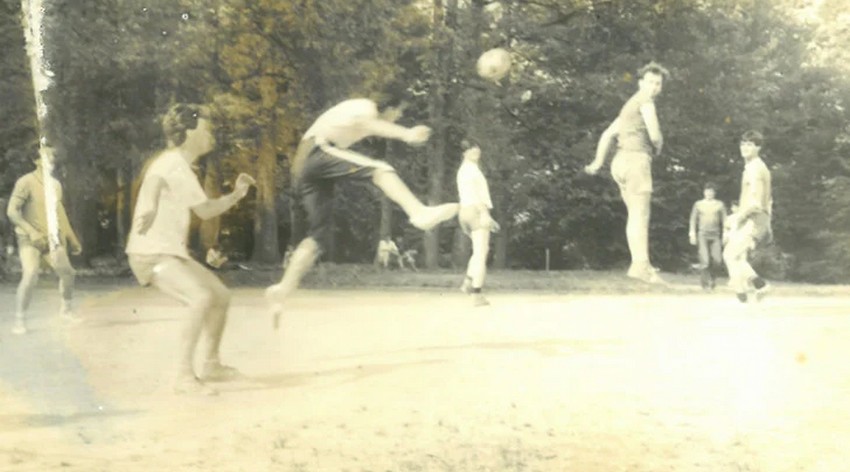
A FOOTBALL TOURNAMENT AS PART OF THE TRADITION
Another important element of the Gojakovac
gathering is the traditional small-sided football tournament.
Held for more than half a century, the
tournament has become an important part of the modern identity of the event.
Bringing together players, supporters and
visitors, it connects sport, tradition and socialising and continues to attract
participants from the surrounding area.
"GATHERING ON THE EVE OF PETROVDAN"
In recent years, several hundred people have
gathered at Gojakovac for Petrovdan.
Following the liturgy and procession,
participants share a communal meal and select the godfather of the church
celebration for the following year.
This year, on July 11, Gojakovac hosted the
event "Gathering on the Eve of Petrovdan", marking 270 years since
the first written reference to the Petrovdanski Zbor in Cerovica.
The programme began at the Local Heritage
Museum in Gojakovac with cultural and spiritual events entitled "Roots and
Memory – 270 Years of the Petrovdanski Zbor".
The celebration continued with an evening
service at the church, a performance by the "Cerovica" Cultural and
Artistic Society and the traditional Petrovdan football tournament.
And so, this year's Petrovdan at Gojakovac
once again demonstrated that this ancient gathering is not merely a memory of
the past.
It remains a living tradition – one that
continues to bring people together, preserve the memory of their ancestors and
connect generations with their homeland and roots.

Join our
Viber Community

NEW SERVICE AT THE BiH-CROATIA BORDER FROM NOVEMBER 1
NATIONAL THEATRE OF REPUBLIKA SRPSKA WINS TWO AWARDS AT "DAYS OF ZORAN RADMILOVIĆ"
AUTUMN IN ITS MOST BEAUTIFUL COLORS THROUGH THE LENS OF TOMAS DAMJANOVIĆ
FROM THE FIELDS OF GLAMOČ TO TABLES ACROSS THE REGION: A POTATO WITH A NAME OF ITS OWN
WHERE TO GO FOR A MINI BREAK FOR TWO FOR JUST BAM 69
FROM THE FIELDS OF GLAMOČ TO TABLES ACROSS THE REGION: A POTATO WITH A NAME OF ITS OWN
GRADIŠKA INNOVATOR RECEIVES OFFICIAL SUPPORT FOR INNOVATIVE DIGITAL PROJECT

BANJA LUKA’S YOUNGEST RESIDENTS SHOW THAT KINDNESS HAS NO AGE
WHERE TO GO FOR A MINI BREAK FOR TWO FOR JUST BAM 69

3 GREAT WEEKEND GETAWAY IDEAS IN REPUBLIC OF SRPSKA
 The situation at the border crossings