KOTOR RANKED THIRD-HAPPIEST DESTINATION IN EUROPE FOR 2026
Montenegro’s historic coastal city of Kotor has received major international recognition after being named the third-happiest tourist destination in Europe for 2026, according to an analysis of more than one million online travel reviews.
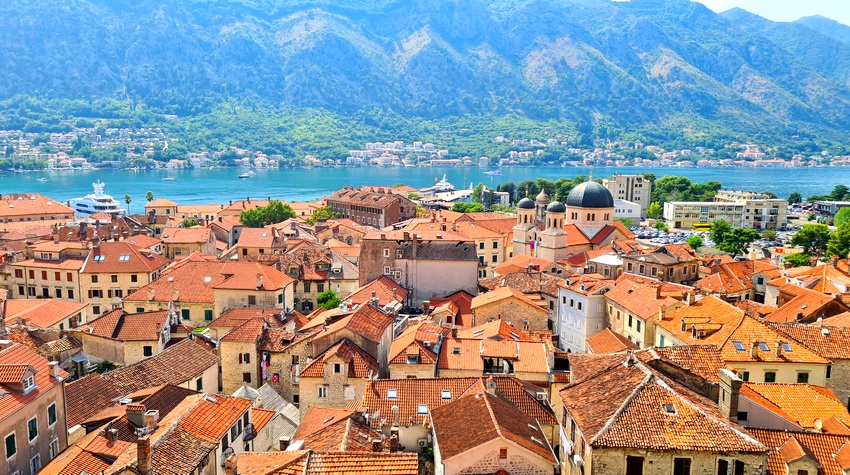
The recognition has also brought Kotor significant international exposure through the British edition of Condé Nast Traveller, which published an extensive travel guide to the city and the Bay of Kotor, later republished by the magazine’s US edition.
Under the headline “One of the Happiest Places
in Europe Is This Charming Walled City in Montenegro”, journalist Jonathan
Wiggin presents Kotor as a destination combining medieval heritage, spectacular
landscapes, gastronomy and modern tourism experiences.
The article was published on August 6 and was
republished by the American edition of Condé Nast Traveller on the same day.
THIRD IN EUROPE ACCORDING TO TOURIST REVIEWS
The ranking that placed Kotor among Europe’s
happiest destinations was compiled by Irish travel insurance company JustCover.
The company analysed more than one million
online reviews of tourist attractions, national parks, resorts, viewpoints and
other sites across 155 destinations worldwide. The research examined how
frequently visitors used words and expressions associated with happiness and
satisfaction in their reviews.
Each destination was then given a score
between zero and 100.
Kotor received 67.9 points, placing third
behind Italy’s Positano and Greece’s Santorini.
The remaining destinations in the European top
10 were Florence, London, Funchal, Gdańsk, Munich, Istanbul and Rome. The data
used for the analysis was updated through June 2026.
It is important to note that the ranking
itself was not created by Condé Nast Traveller. The magazine first reported on
JustCover’s analysis in a separate article published on July 23 before
subsequently dedicating a much more extensive travel guide to Kotor.
A CITY BETWEEN THE SEA, MOUNTAINS AND
CENTURIES OF HISTORY
Jonathan Wiggin writes that he has lived
periodically in Montenegro since 2014 and that Kotor and its bay were among the
main reasons the country attracted him.
He introduces readers to a city surrounded by
historic walls, narrow streets, squares, Romanesque churches and Gothic and
Baroque palaces, while highlighting Kotor’s strong Venetian heritage.
Particular attention is given to the city’s
spectacular position between the sea and Mount Lovćen, as well as views of
settlements along the bay, including Perast and the island of Our Lady of the
Rocks.
The article also recalls that the Kotor region is protected by UNESCO, while emphasising that the city is far more than a historic monument. Kotor is portrayed as a living destination where local residents continue their everyday lives despite the large number of visitors.
Mass tourism has not bypassed Kotor, with
cruise ships frequently dominating the harbour. Nevertheless, according to the
author’s impression, the city has managed to retain much of its local characte.
FROM THE CITY MARKET TO THE FORTRESS ABOVE KOTOR
The travel experience begins outside the
historic walls, at Kotor’s market, where visitors can find olives, olive oil,
fruit, honey, cured meat products, local wines and rakija.
After entering through the main city gate, the
article takes readers through Trg od Oružja and Pjaca od Kina, followed by
churches, museums and smaller historic squares.
Among the recommended attractions are the
Cathedral of Saint Tryphon, the Maritime Museum, the Museum of Cats and the
Church of St Michael with its Lapidarium.
The Cathedral of Saint Tryphon is presented as
Kotor’s most important monument and one of the most significant Romanesque
churches on the Adriatic. The author highlights its 15th-century gilded altar,
14th-century ciborium and the views of the Old Town from its upper terrace.
CABLE CAR AMONG THE MAIN RECOMMENDATIONS
A prominent place in the guide is reserved for
the Kotor–Lovćen cable car, presented as one of the experiences visitors should
include in their itinerary.
According to the article, the journey from the
lower station to Kuk plateau takes approximately 11 minutes and covers more
than 1,300 metres of elevation gain.
From the top, visitors can enjoy panoramic
views of the Bay of Kotor and the Montenegrin coast, particularly spectacular
around sunset.
The cable car is therefore presented not
simply as an individual attraction, but as part of a wider experience connecting
Kotor’s cultural heritage with the natural landscape of the bay and the Lovćen
mountain area.
RESTAURANTS, LOCAL FOOD AND HOTELS
Condé Nast Traveller also devotes considerable
attention to Kotor’s culinary and hospitality scene.
Among the recommended restaurants are Bastion,
Il Pescatore and Galion, while Jazz Club Evergreen and Letrika are highlighted
as places for drinks and evening entertainment.
The guide also recommends local specialities
and products, including krempita, fresh fish, shellfish, local wines and other
flavours associated with the Bay of Kotor.
For accommodation, the magazine recommends
Hyatt Regency Kotor Bay Resort, Palazzo Sbutega and Casa del Mare – Amfora.
The author notes that hotels outside the
historic walls can be a better choice for visitors seeking a quieter stay, as
the Old Town can become noisy at night.
The guide consequently expands the destination
beyond Kotor’s historic centre, connecting the city with Perast, Orahovac,
Prčanj and Lovćen.
WHAT DOES THE RECOGNITION MEAN FOR KOTOR AND MONTENEGRO?
The international importance of the story goes
beyond Kotor’s third-place ranking.
Condé Nast Traveller is a major international
travel media brand owned by Condé Nast, one of the world’s leading publishing
companies, with a global audience interested in destinations, hotels,
gastronomy and authentic travel experiences.
The amount of editorial space dedicated to
Kotor, the numerous concrete recommendations for visitors and the fact that the
British article was subsequently published by the American edition of the same
media brand significantly increase the destination’s international visibility.
Such exposure does not automatically guarantee
an increase in bookings or tourism revenues. However, it presents Kotor and
Montenegro to a global audience through a clear set of reasons to visit —
cultural heritage, spectacular nature, gastronomy, accommodation and modern
tourism infrastructure.
For Kotor, already one of Montenegro’s
best-known destinations, this recognition represents another important
opportunity to strengthen its position on the international tourism map in
2026.

Join our
Viber Community

NATIONAL THEATRE OF REPUBLIKA SRPSKA WINS TWO AWARDS AT "DAYS OF ZORAN RADMILOVIĆ"

AUTUMN IN ITS MOST BEAUTIFUL COLORS THROUGH THE LENS OF TOMAS DAMJANOVIĆ

FROM THE FIELDS OF GLAMOČ TO TABLES ACROSS THE REGION: A POTATO WITH A NAME OF ITS OWN
WHERE TO GO FOR A MINI BREAK FOR TWO FOR JUST BAM 69

3 GREAT WEEKEND GETAWAY IDEAS IN REPUBLIC OF SRPSKA
FROM THE FIELDS OF GLAMOČ TO TABLES ACROSS THE REGION: A POTATO WITH A NAME OF ITS OWN

GRADIŠKA INNOVATOR RECEIVES OFFICIAL SUPPORT FOR INNOVATIVE DIGITAL PROJECT

BANJA LUKA’S YOUNGEST RESIDENTS SHOW THAT KINDNESS HAS NO AGE
WHERE TO GO FOR A MINI BREAK FOR TWO FOR JUST BAM 69
3 GREAT WEEKEND GETAWAY IDEAS IN REPUBLIC OF SRPSKA


 The situation at the border crossings