INITIATIVE LAUNCHED TO ESTABLISH UNA WILD RIVERS NATIONAL PARK
Local and international organisations have launched a joint initiative to protect the Una River basin, presenting a vision for the long-term preservation of one of Europe’s last relatively intact river systems.
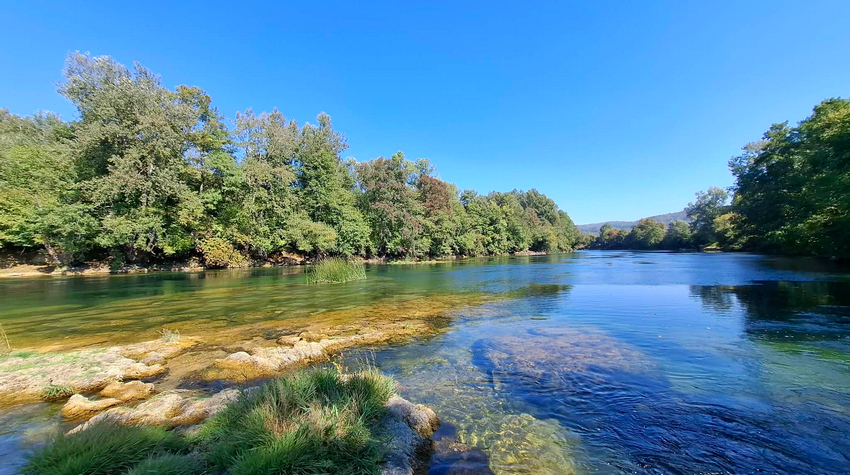
A team
of experts has prepared a feasibility study examining whether the proposed Una
Wild Rivers National Park is technically and practically achievable, given that
the protected area would extend across the territories of Bosnia and
Herzegovina and Croatia.
Mario
Crnković, president of the Green Team association from Novi Grad, told Srna
that this is the first comprehensive feasibility study outlining how more than
650 kilometres of rivers and streams within the Una River basin could be
protected.
“The
proposed concept does not view the Una in isolation, but as part of a wider
river system, including all its tributaries, among them the Sana. I am
convinced that an approach capable of delivering tangible progress while taking
local needs and the existing institutional framework into account can provide a
way to preserve the Una,” Crnković said.
He
added that the first presentations of the initiative would be held this week in
Bihać, Bosanska Krupa, Novi Grad, Sanski Most and Prijedor.
LOCAL COMMUNITIES AND INSTITUTIONS INVITED TO TAKE PART
Crnković
stressed that the process must involve all stakeholders, from citizens and
local communities to anglers, tourism professionals, academics, the wider
scientific community and relevant institutions at every level of government.
“Everyone
has their own perspective, needs and responsibilities. We must listen to those
who support the idea, but equally to those who have questions, concerns or
different proposals,” he said.
According
to Crnković, the goal is to develop a practical and broadly accepted solution
that enjoys genuine support from both local residents and institutions, while
fully respecting their existing responsibilities and jurisdictions.
UNA HOME TO EXCEPTIONAL BIODIVERSITY
Ulrich
Eichelmann, executive director of the organisation Riverwatch, said the Una
still possesses natural features that many European rivers lost long ago.
“We
are talking about one of the last major, relatively intact river systems in
Europe, with exceptional biodiversity, free-flowing rivers and habitats that
have already disappeared elsewhere,” Eichelmann said.
He
highlighted the Una’s importance as a habitat for one of the world’s largest
and healthiest populations of the huchen, also known as the Danube salmon,
which continues to reproduce naturally in the river.
The
species depends on long stretches of free-flowing rivers, making the Una
particularly valuable for its survival.
The
underground waters of the Una basin are also home to the olm, a rare amphibian
that inhabits caves, while wetlands and riverside habitats support numerous
rare bird species and other wildlife.
SCIENTISTS DOCUMENT NEARLY 1,000 SPECIES IN FIVE DAYS
The
importance of the area was further demonstrated during Science Week on the Una,
when approximately 70 scientists and experts recorded nearly 1,000 plant and
animal species in just five days.
Eichelmann
said these findings represent only part of the basin’s biological diversity,
adding that the full extent of its natural wealth remains unknown.
“Natural
treasures such as this are becoming increasingly rare in Europe. The Una is
therefore much more than a natural asset of local importance. Its protection matters
at the European level and beyond, and we can achieve it only through joint
efforts,” he said.
PROPOSED PARK WOULD PROTECT 650 KILOMETRES OF RIVERS AND STREAMS
According
to Eichelmann, the Una can be preserved in the long term only by protecting the
entire river system, from its source to its confluence with the Sava, together
with its free-flowing tributaries.
“The
Una river system represents a single whole, and we must therefore manage it as
a whole. The best way to achieve this is by establishing the Una Wild Rivers
National Park, which would extend across Bosnia and Herzegovina and Croatia,”
he said.
Experts
who assessed the proposal concluded that the concept is feasible. If
established, the park could become the world’s second national park dedicated
to wild rivers, protecting approximately 650 kilometres of rivers and streams.
The
initiative aims to create a coordinated, cross-border approach to conservation,
bringing together local communities, scientists, organisations and public
institutions to safeguard the Una’s exceptional natural heritage for future
generations.

Join our
Viber Community

OČAUŠ CAVE: TESLIĆ’S UNEXPLORED NATURAL TREASURE

WHAT DOES DON SERGIO MARKET BRING TO BANJA LUKA?

REPUBLIC OF SRPSKA ANNOUNCES PUBLIC CALL FOR BOOK PURCHASES
INITIATIVE LAUNCHED TO ESTABLISH UNA WILD RIVERS NATIONAL PARK

WEATHER FORECAST FOR REPUBLIKA SRPSKA: ENJOY THE LAST SUNNY DAYS OF OCTOBER IN NATURE
FROM THE FIELDS OF GLAMOČ TO TABLES ACROSS THE REGION: A POTATO WITH A NAME OF ITS OWN
WHAT DOES DON SERGIO MARKET BRING TO BANJA LUKA?

NEW SERVICE AT THE BiH-CROATIA BORDER FROM NOVEMBER 1
INITIATIVE LAUNCHED TO ESTABLISH UNA WILD RIVERS NATIONAL PARK
REPUBLIC OF SRPSKA ANNOUNCES PUBLIC CALL FOR BOOK PURCHASES


 The situation at the border crossings