GET READY: NEW BORDER RULES WITH EUROPE STARTING IN APRIL
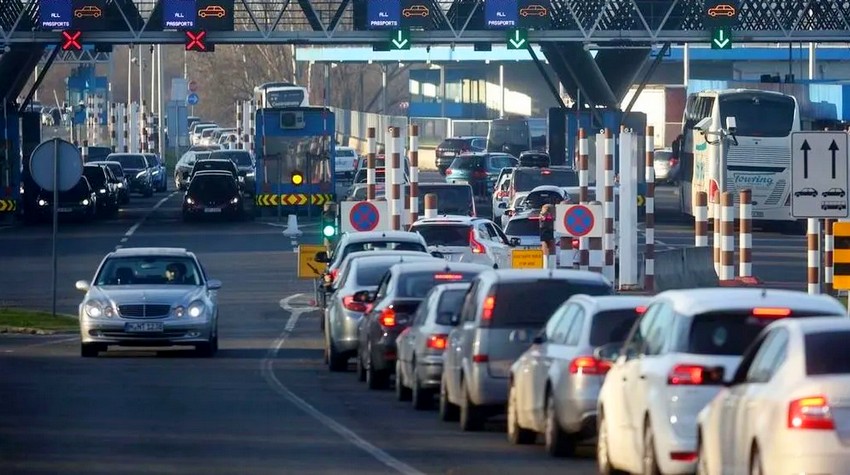
Starting next month, full implementation of the Entry/Exit System (EES) will begin at border crossings with European Union and Schengen Area countries, leading to expected delays—especially at entry points into Croatia.
The
Croatian Ministry of the Interior has reminded travelers that they will still
be required to exit their vehicles during border checks, and this practice will
remain in place going forward.
EES Records and Border Checks
The
duration of border control under the new system will depend on whether a
traveler already has an established EES record.
For
first-time entries, when no record exists, border police will collect biometric
data, including fingerprints and a facial image. For subsequent crossings, once
a record has been created, only identity verification through facial
recognition will be required. Although this process is faster, travelers will
still need to leave their vehicles to complete the checks properly.
Authorities
warn that border procedures may take longer than before in certain situations,
as the new system introduces additional technical and operational steps
They
also emphasize that the duration of checks does not depend solely on the system
itself. Cooperation with border officers, following instructions, communication
during the process, and the quality of biometric data—such as fingerprint
scans—can all impact how long the procedure takes.
How
the EES System Works
The
European Union’s Entry/Exit System will be applied at all international border
crossings. It will automatically record personal data, travel document details,
and the exact time of entry and exit for third-country nationals entering the
Schengen Area, including any refusals of entry.
Collection of Biometric Data
Upon
first entry into Croatia or any EU country, third-country nationals will be
required to provide biometric data—four fingerprints and a facial
photograph—along with information from their travel documents.
This
data will be stored in the system and used for all future border crossings.
The
new rules apply to citizens of several regional countries, including Bosnia and
Herzegovina, Serbia, Montenegro, Albania, and North Macedonia, as well as
travelers from Ukraine, Moldova, and the United Kingdom when entering Europe.
On the
other hand, the system does not apply to European Union citizens. Croatian
citizens and other EU nationals will continue crossing borders using their ID
cards or passports, without the obligation to provide biometric data under this
system.

Join our
Viber Community

TRAVELING BY CAMPERVAN FOR THE FIRST TIME? HERE’S WHAT YOU SHOULD KNOW BEFORE YOU GO

NEW RAIL LINK BETWEEN REPUBLIKA SRPSKA AND SERBIA: DAILY TRAIN SERVICE FROM ZVORNIK TO BELGRADE

‘DRŽAVNI POSAO’ CREW FILMS NEW PROJECT IN TREBINJE

SEE SRPSKA RECEIVES CHARTER FROM BANJA LUKA TOURIST ORGANIZATION

GALIJA TO CELEBRATE MAJOR ANNIVERSARY IN BANJA LUKA
SEE SRPSKA RECEIVES CHARTER FROM BANJA LUKA TOURIST ORGANIZATION
NEW RAIL LINK BETWEEN REPUBLIKA SRPSKA AND SERBIA: DAILY TRAIN SERVICE FROM ZVORNIK TO BELGRADE

BANJA LUKA BOOK FAIR 2026 OPENS TODAY

DAYS OF SEMBERIJA IN AUSTRIA: CULTURE, TRADITION AND LOCAL PRODUCTS PRESENTED TO AUSTRIAN AUDIENCES

FROM EUROPEAN STAGES TO HER HOMETOWN: JOVANA RALJIĆ BRINGS VIVALDI TO BANJALUKA


 The situation at the border crossings