PHOTOGRAPHY HELPS PRESERVE CULTURAL HERITAGE: DOCUMENTATION OF TREBINJE'S NATIONAL MONUMENTS UNDERWAY
TREBINJE – The documentation of national monuments and cultural heritage sites is currently underway in the city of Trebinje as part of the project "Photography in the Service of Culture and Ecology," implemented by the citizens' association "Mostovi."
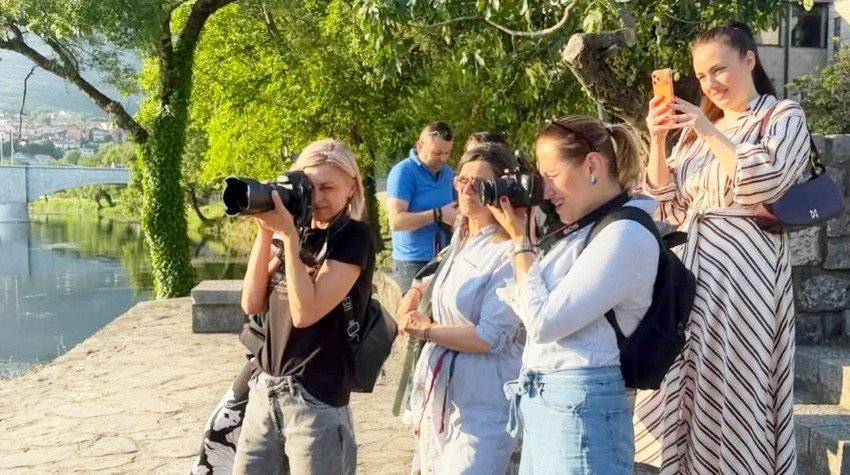
The project's primary goal is to record the
current condition of Trebinje's cultural and historical heritage through
photography, with particular attention given to monuments threatened by
deterioration, inadequate maintenance, and environmental impacts.
Through extensive fieldwork and the
involvement of participants from a photography school, the project is creating
a unique photographic archive that will serve as a valuable foundation for
future efforts aimed at protecting and promoting the city's cultural assets
Project organizers emphasize that photography
plays a far greater role than artistic expression. It serves as an important
tool for documenting the actual condition of cultural heritage while raising
public awareness about the urgent need to preserve these historic sites.
By visually presenting the current state of monuments, the initiative seeks to draw the attention of institutions, heritage professionals, and the wider public to the importance of systematic cultural heritage protection and the preservation of local identity and historical memory.
Once completed, the project will produce a
catalog featuring photographs and essential information about the documented
monuments. The publication will be submitted to relevant institutions as a
contribution to initiatives aimed at improving the protection of cultural
heritage in the Trebinje area.
The initiative is expected to contribute to a
better understanding of the challenges facing cultural heritage preservation
while encouraging responsible institutions to take concrete measures to
safeguard Trebinje's historical landmarks for future generations.
The project is being carried out within the
framework of the Regional Programme on Local Democracy in the Western Balkans 3
(ReLOaD3), funded by the European Union and implemented by the United Nations
Development Programme (UNDP) in partnership with 14 local governments,
including the City of Trebinje, which co-finances local projects with 35
percent of the total funding.

Join our
Viber Community
HELP RANKA FROM SRBAC WALK WITHOUT PAIN AGAIN

SAFECLICK, A FREE EDUCATIONAL GAME THAT TEACHES CHILDREN HOW TO STAY SAFE ONLINE
CHINESE CULTURE AND TRADITIONS COME TO LIFE IN FOČA

FREE DOG TRAINING CLASSES IN BANJA LUKA: LEARN TO UNDERSTAND YOUR PET BETTER
A LITTLE JERUSALEM IN THE HEART OF SARAJEVO: A SACRED PLACE PRESERVING CENTURIES OF HISTORY
WELL-KNOWN ACTORS ARRIVE IN PECKA AS PREPARATIONS BEGIN FOR FILM “BJESNILO”
A LITTLE JERUSALEM IN THE HEART OF SARAJEVO: A SACRED PLACE PRESERVING CENTURIES OF HISTORY
SAFECLICK, A FREE EDUCATIONAL GAME THAT TEACHES CHILDREN HOW TO STAY SAFE ONLINE
FREE DOG TRAINING CLASSES IN BANJA LUKA: LEARN TO UNDERSTAND YOUR PET BETTER

OCTOBER TRAVEL AND DAY TRIPS: INDIAN SUMMER GIVES WAY TO TRUE AUTUMN

 The situation at the border crossings