ALEKSANDAR REVIVES A FORGOTTEN GRADIŠKA THROUGH CHARCOAL AND ACRYLIC
The art scene in Gradiška will be enriched in the autumn of 2026 with an extraordinary exhibition by academic painter and senior curator of the Homeland Museum, Aleksandar Obrenović. By combining archival materials with contemporary artistic expression, Obrenović is preparing a retrospective of the town as it was known to generations after World War II.
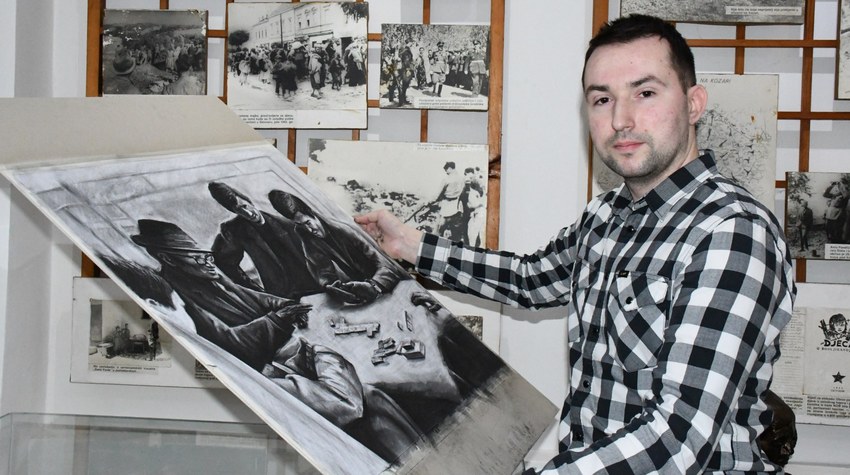
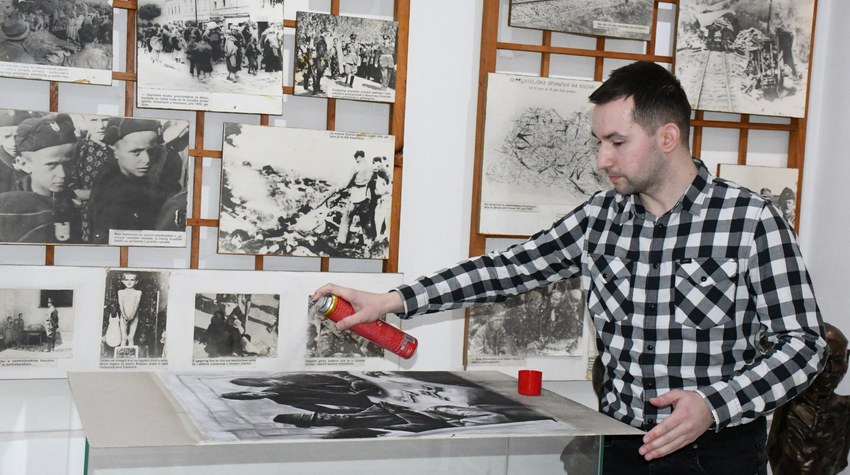
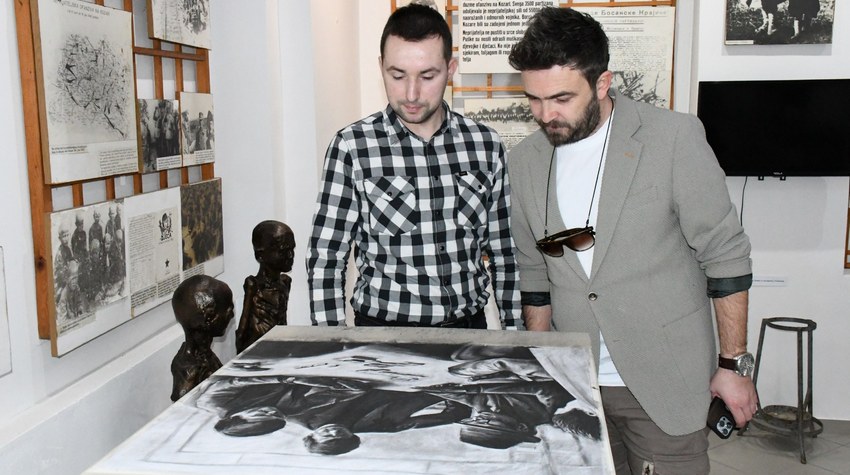
At the
heart of the exhibition lies a fascinating exploration of the legacy of Gojko
Šerbula, a longtime journalist of Glas Srpske. While preparing the exhibition,
the artist embarked on an extraordinary journey through 9,500 photographs,
carefully selecting motifs that are today almost unrecognizable to the modern
eye.
The Spirit of the City in 9,500 Photographs
“I had
the opportunity to review all 9,500 photographs from the legacy, and I can say
that Gradiška at that time had a completely different appearance — very
interesting and highly inspiring,” Obrenović said.
From
the vast archive, he isolated images that allowed him to experiment with
composition, reshaping and reinterpreting them through his own artistic
sensibility.
“I
selected certain photographs that appealed to me, but of course, I recomposed
them in a different way. Through this exhibition, I want to present entirely
new motifs — scenes that people living here today have never had the chance to
see, nor even knew that certain buildings once stood in places such as today’s
‘Korzo’ or other parts of the city,” Obrenović explained.
Opening in September
The
exhibition, scheduled to open in mid-September, will feature around twenty
works divided between charcoal drawings on canvas and acrylic paintings.
“I
find these analogue photographs particularly intriguing. They carry their own
grain and a specific atmosphere. Especially the black-and-white ones — they
allow me to express color the way I personally feel it, rather than being
confined by the colors originally captured by the camera,” he noted.
Through
Obrenović’s brush and charcoal, old buildings and streets cease to be mere
archival numbers from a collection and become living works of art.
“Old
photographs are always fascinating. Technically, they are perfect in their own
way. My desire is to use them to present motifs that will offer our fellow citizens
a new perspective on the town they inhabit every day,” Obrenović concluded.
With
this exhibition, Gradiška’s past will not only be remembered — it will be
reimagined, reshaped, and brought vividly back to life.

Join our
Viber Community

FIVE AUTUMN ACTIVITIES FOR THE WHOLE FAMILY

GRADIŠKA INNOVATOR RECEIVES OFFICIAL SUPPORT FOR INNOVATIVE DIGITAL PROJECT

BANJA LUKA’S YOUNGEST RESIDENTS SHOW THAT KINDNESS HAS NO AGE
“ANCHOR AND SAILS IN LOVE”: NENAD GUGL ON THE POWER OF LOVE AND THE MEANING OF LIFE
.jpg)
WHAT IS BEING BUILT IN SUTJESKA NATIONAL PARK?
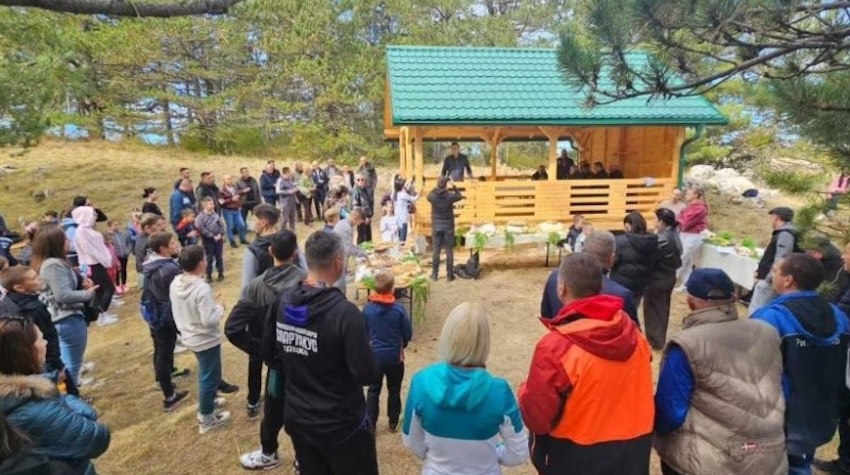
GAT NEAR GACKO EMERGES AS A NEW TOURIST ATTRACTION: NEW TRAILS, VIEWPOINTS AND REST AREAS
GRADIŠKA INNOVATOR RECEIVES OFFICIAL SUPPORT FOR INNOVATIVE DIGITAL PROJECT
WHAT IS BEING BUILT IN SUTJESKA NATIONAL PARK?

EVERYONE IS INVITED: CHARITY HIKE ON KOZARA MOUNTAIN IN SUPPORT OF JELENA
BANJA LUKA’S YOUNGEST RESIDENTS SHOW THAT KINDNESS HAS NO AGE


 The situation at the border crossings