FROM ROME TO HOLLYWOOD: WHY VESPA REMAINS A TIMELESS ICON
Few products have managed to outgrow their original purpose and become symbols of an entire nation. Among them, Vespa holds a special place. Over nearly eight decades, this scooter has evolved into much more than a means of transportation.
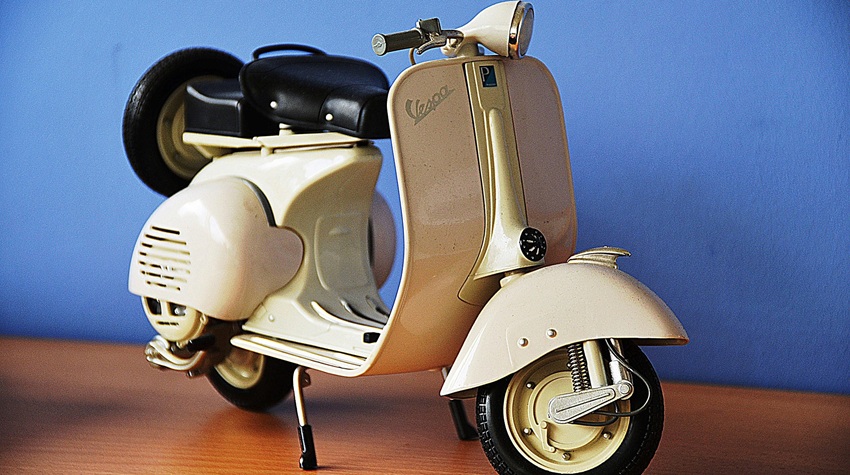
Today, it is hard to imagine the streets of Rome, Florence, or the Amalfi Coast without its distinctive silhouette. Vespa has become synonymous with the Italian way of life, a symbol of freedom, elegance, and carefree living, as well as one of the most recognizable achievements of European design.
From a Post-War Necessity to a Global Phenomenon
The story of Vespa began in the aftermath of World War II, when Italy needed an affordable and practical vehicle for everyday use.
Piaggio, a company known for manufacturing aircraft before the war, decided to create a vehicle that would be economical, easy to use, and accessible to the wider public. The project was entrusted to engineer Corradino D’Ascanio, who wanted to design something completely different from a traditional motorcycle.
The result was revolutionary for its time. The engine was enclosed within the bodywork to prevent riders from getting their clothes dirty, the flat floorboard made it easy to get on and off, and the controls were designed to be user-friendly, even for beginners.
When the first model was introduced in 1946, few could have imagined that it would become one of the most iconic products in the world.
How Vespa Got Its Name
The name Vespa came about quite spontaneously. Upon seeing the first prototype, Enrico Piaggio reportedly exclaimed, “Sembra una vespa!” – “It looks like a wasp!”
Its wide rear section, narrow waist, and distinctive engine sound reminded him of the insect. The name was immediately adopted and soon became one of the most recognizable brands in the world.
The Film That Made Vespa Immortal
Although Vespa quickly became popular throughout Italy, it was cinema that turned it into a global icon.
In 1953, Audrey Hepburn and Gregory Peck rode through the streets of Rome in the classic film Roman Holiday, creating one of the most memorable scenes in cinematic history.
The image of a Vespa gliding past the Colosseum and through Rome’s narrow streets transformed the scooter into a symbol of youth, freedom, and adventure. The film won an Academy Award, Audrey Hepburn became an international star, and Vespa sales surged around the world.
Many design historians believe that no advertising campaign has ever done as much for a product as Roman Holiday did for Vespa.
A Symbol of “La Dolce Vita”
During the 1950s and 1960s, Vespa became an integral part of everyday Italian life.
People rode it to work, to the seaside, shopping, or simply for an evening ride with no particular destination. Unlike motorcycles that emphasized speed and power, Vespa offered a different experience – one focused on enjoying the journey and the moment itself.
That is why it perfectly embodied the philosophy of la dolce vita – a lifestyle that celebrates simple pleasures, good food, friendship, sunshine, and a relaxed pace of life.
Why Vespa Remains Special Today
While the automotive and motorcycle industries have changed dramatically over the decades, Vespa remains instantly recognizable.
Its design has evolved just enough to keep pace with modern times, while preserving the timeless lines that made it famous. This enduring design is perhaps its greatest strength.
Today, Vespas can be seen everywhere – from bustling city streets and Mediterranean coastal towns to magazine covers, films, and advertising campaigns.
It may not be the fastest or most powerful two-wheeler on the road, but few vehicles can claim the status of a true cultural icon. That is why Vespa remains much more than a scooter – it is a symbol of a way of life that has endured for nearly 80 years.

Join our
Viber Community

FIVE AUTUMN ACTIVITIES FOR THE WHOLE FAMILY

GRADIŠKA INNOVATOR RECEIVES OFFICIAL SUPPORT FOR INNOVATIVE DIGITAL PROJECT

BANJA LUKA’S YOUNGEST RESIDENTS SHOW THAT KINDNESS HAS NO AGE

“ANCHOR AND SAILS IN LOVE”: NENAD GUGL ON THE POWER OF LOVE AND THE MEANING OF LIFE
.jpg)
WHAT IS BEING BUILT IN SUTJESKA NATIONAL PARK?
GAT NEAR GACKO EMERGES AS A NEW TOURIST ATTRACTION: NEW TRAILS, VIEWPOINTS AND REST AREAS
GRADIŠKA INNOVATOR RECEIVES OFFICIAL SUPPORT FOR INNOVATIVE DIGITAL PROJECT
WHAT IS BEING BUILT IN SUTJESKA NATIONAL PARK?

EVERYONE IS INVITED: CHARITY HIKE ON KOZARA MOUNTAIN IN SUPPORT OF JELENA
BANJA LUKA’S YOUNGEST RESIDENTS SHOW THAT KINDNESS HAS NO AGE


 The situation at the border crossings