BORIS LEFT AUSTRIA TO WELCOME TOURISTS ON HIS ANCESTRAL LAND
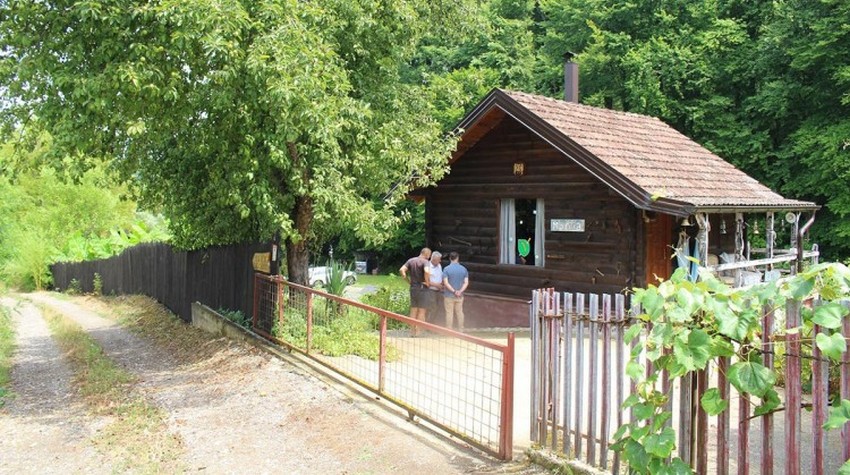
Thirteen kilometres from Kozarska Dubica, beyond Komlenac and along a road that is more gravel than asphalt, lies the village of Tuključani. It is here that 45-year-old Boris Jovičić has decided to build his future by developing rural tourism and making a living from the land of his ancestors.
Born
in Rijeka, Jovičić spent many years working in Bregenz, Austria. Five years
ago, however, he returned to his father's homeland in the nearby village of
Murati.
"I
have always wanted to be involved in rural tourism. I bought four dunums of
land in Tuključani, and an opportunity presented itself here. I decided to
follow my ideas," Jovičić says, determined to pursue his vision despite
the narrow and challenging roads, the small number of residents and the fact
that the village is rapidly losing population.
According
to the 2013 census, Tuključani had 90 residents, while back in 1948, census
officials recorded 327 inhabitants.
"I
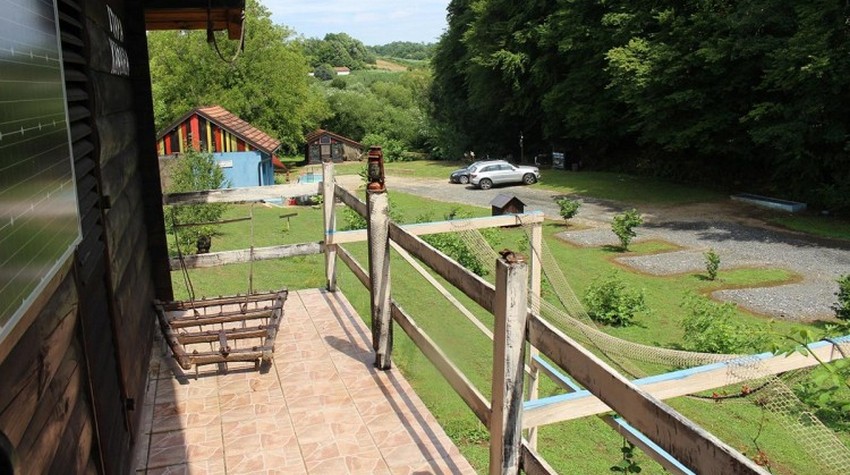
was the first one to come back to this village," Jovičić says, showing
visitors his wooden houses, shelters, flower garden and the Hajdukovac stream,
whose gently flowing water turns a small wheel and sprays water into the air.
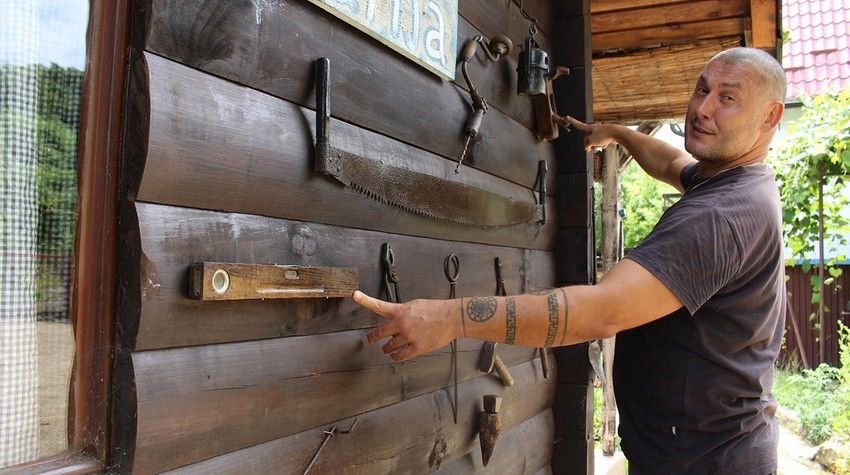
Nearby stands an old storage building filled with agricultural tools and
household objects once commonly used in homes throughout Knešpolje and
Potkozarje.
"My
motivation was the desire for professional independence and the opportunity to
do a job I know and love, while making my own decisions about myself and my
small business. The property I bought was completely neglected and abandoned,
and the small house was in ruins, but I did not give up. I have my own water,
electricity and food. Now everything behind this wooden gate is completely
different from what it was before," Boris says.
A RURAL MUSEUM AND A TRADITIONAL KITCHEN
A
trained waiter, Jovičić now puts to use the experience he gained abroad in his
beautifully arranged ethno-village. He serves his guests traditional homemade
food, with fish, uštipci, kajmak and cheese among the specialties.
When
asked who his most frequent guests are, he answers without hesitation:
"Foreigners."
He
mentions visitors from the Czech Republic, Germany, the Netherlands and
Belgium, as well as guests from the island of Curaçao in the southern
Caribbean, near Venezuela, more than 4,000 kilometres away.
The
messages left by his visitors, written on the wooden beams and pillars of a
large shelter, bear witness to the international appeal of this remote
destination.
"Even
after travelling such a long way in search of new and unexplored parts of
Europe, they sometimes get lost in the forest, at the end of the road. Even
Google cannot find me. It directs travellers to Roman, Turkish and Austrian
roads that disappeared long ago. So I put up my own signs at many locations and
every crossroads. That solved the problem," Jovičić says with a mixture of
hospitality and entrepreneurial determination.
His
property also features a small rural museum, reflecting his passion for
collecting and preserving objects from the past.
"I have always been a collector by nature. Here you can find my grandmother Ljuba's cupboard, old belongings of my aunt Mira, an old radio, blankets and rugs, agricultural tools, watering cans, funnels, whetstones, scythes, pitchforks, old stoves, carriages, barrels and vats, trowels and concrete rulers. There is a story behind every object. But we will talk about that another time – I have other things to do now," he says with a smile.
"I AM LIVING MY OWN STORY"
The
conversation eventually returns to the issue that was mentioned at the very
beginning – the road leading to Tuključani.
"The
roads used to be even worse, with many potholes. Now they have been covered
with gravel and things are much better. It is easier to travel. Anyone who
really wants to come will find a way, even through fields and forests if the
road is impassable. That never discouraged me," Jovičić says.
"I
was the first person in the village to start a business. For half a century,
people were leaving this place, and I was the first one to come back. I rent
out cabins, accommodate campers and prepare food. I am living my own story. I
am not interested in what other people think about it. I know how much I can
do, and I know what I want."
A VILLAGE RICH IN BIRDLIFE AND WATER
Tuključane
is surrounded by the villages of Johova, Čelebinci, Jasenje, Mrazovci, Suvaja,
Brekinja, Pobrđani and Komlenac. The area is distinctly hilly and rich in
sources of drinking water, numerous streams and the Tuklešnica River.
Historical
records suggest that the village was settled in the 18th century by people who
came from the Manjača region. The most common surnames in the area include
Puzigaća, Kos, Kondić, Novaković, Pralica, Rauš and Marjanović.
The
wider region is also known for its rich birdlife. Hawks, ravens, sparrows,
tits, swallows, jays and blackbirds are among the most common species, and some
local family names are believed to have originated from the names of birds.
In a
village that has witnessed decades of depopulation, Boris Jovičić has chosen a
different path. Instead of leaving, he returned. Instead of accepting decline,
he began rebuilding. And behind a wooden gate at the end of a little-known
road, he is creating a place where visitors from across Europe and even distant
parts of the world can discover the rural landscapes, traditions and
hospitality of Potkozarje.

Join our
Viber Community







 The situation at the border crossings