SEMBERIA FARMERS ARE INCREASINGLY TURNING TO SUNFLOWER PRODUCTION – HERE’S WHY
Climate change and increasingly frequent extreme droughts are encouraging farmers in Semberia to turn more and more to sunflower production. According to local producers and agricultural experts, sunflower not only tolerates dry growing conditions considerably better than crops such as wheat and maize, but also offers a number of other advantages.
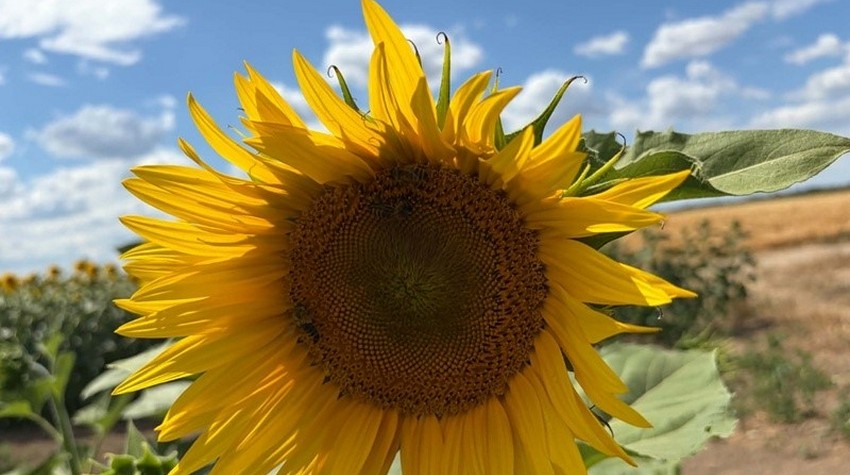
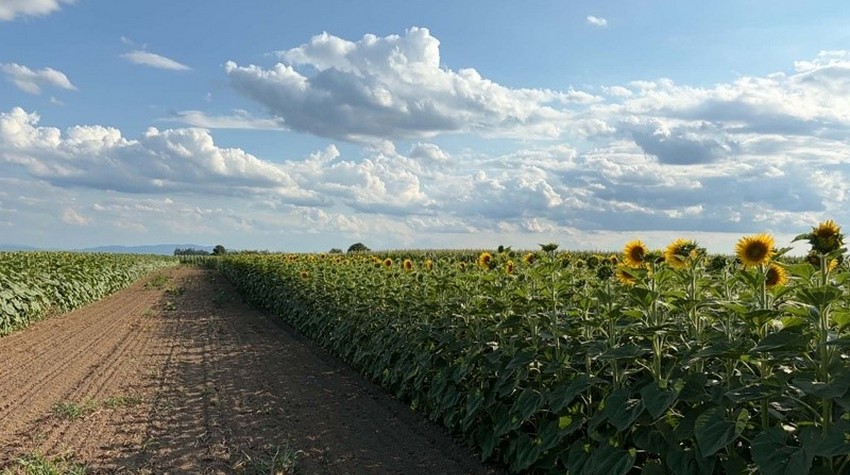
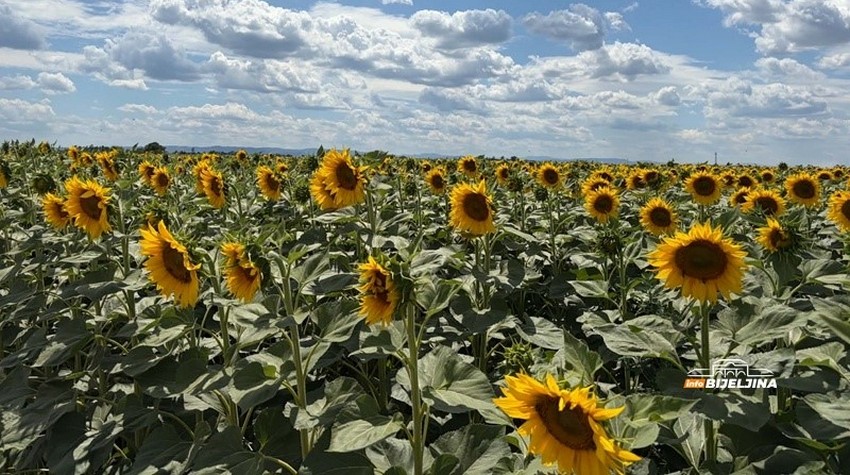
Today,
between 3,000 and 4,000 hectares of agricultural land in Semberia are planted
with sunflower, making it one of the region’s increasingly important oilseed
crops.
Agronomist
Stevan Mesarović, in cooperation with the Agricultural Advisory Service of the
Ministry of Agriculture, Forestry and Water Management of Republika Srpska, has
established an experimental one-hectare sunflower field featuring five
different hybrids.
The
aim is to assess the potential for sunflower production in the Amajlije–Komoluč
area, a flat agricultural zone along the Drina River where light soils are
predominant. These soils are particularly vulnerable to drought, making the
area an important testing ground for crops better adapted to increasingly dry
conditions.
AN ALTERNATIVE TO MAIZE AND CEREALS
“This
area is dominated by cereals and maize, so we are looking for a crop that could
expand crop rotation and provide farmers with greater profitability, while also
offering more stable yields during increasingly frequent drought years and amid
evident climate change,” Mesarović told InfoBijeljina.
According to him, sunflower offers a number of advantages. One of the most important is the availability of a secure market.
Brčko-based oil producer Bimal imports more than 100,000 tonnes of oilseeds annually, while the current contracted sunflower price is around 0.80 convertible marks per kilogramme, providing farmers with greater certainty before planting.
“This practically closes the production cycle,” Mesarović said.
Farmers growing maize, meanwhile, increasingly need irrigation if they want to maintain satisfactory yields during prolonged dry periods.
Sunflower
is considerably more tolerant of low moisture conditions, requires almost twice
as little investment as some competing crops and also plays an important role
in crop rotation.
LOWER INPUTS AND GOOD YIELD POTENTIAL
Sunflower
harvesting generally takes place from mid-August to mid-September.
“In
the worst conditions, yields can be between one and 1.5 tonnes per hectare,
while average yields exceed 2.5 tonnes, with some fields reaching as much as
four tonnes,” Mesarović explained.
With
appropriate agricultural practices and professional advice, he believes
sunflower can provide reliable yields even under challenging conditions.
The
crop is planted at the same 70-centimetre row spacing commonly used for maize.
It requires less fertiliser and is generally easier to protect against pests
and diseases.
Mesarović
also points to differences compared with maize, where farmers can face serious
problems such as maize redness disease caused by phytoplasma and transmitted by
leafhoppers.
DRONES ARE ENTERING SUNFLOWER PRODUCTION
Modern
technology is also increasingly becoming part of sunflower production.
Because
of the crop’s considerable height, farmers are beginning to use agricultural
drones for preventive treatments against fungal diseases. This allows
treatments to be carried out quickly and efficiently during later stages of
vegetation, when conventional tractors can no longer safely enter the fields
without damaging the crop.
The
combination of lower production costs, drought tolerance and modern
agricultural technology is making sunflower increasingly attractive to farmers
in Semberia.
IRRIGATION REMAINS THE LONG-TERM CHALLENGE
Experts
agree that serious agricultural production is increasingly difficult to imagine
without irrigation.
Among
the solutions being considered are drip irrigation and subsurface irrigation
systems, which deliver water directly below the soil surface
Until
such systems become more widespread, however, sunflower has a significant
advantage in the eyes of local farmers: high drought resistance combined with a
secure contracted market price.
For
these reasons, agricultural experts expect the area planted with sunflower in
Semberia to continue growing in the coming years, particularly as climate
change continues to reshape traditional crop production.

Join our
Viber Community

THREE WARM AUTUMN DRINKS TO SATISFY YOUR SWEET CRAVINGS
VLAŠIĆ FOR 299 BAM: TWO NIGHTS, BREAKFAST, QUAD TOUR AND TRADITIONAL BOSNIAN PIE
WELL-KNOWN ACTORS ARRIVE IN PECKA AS PREPARATIONS BEGIN FOR FILM “BJESNILO”

IS A ONE-PAGE WEBSITE ENOUGH FOR YOUR BUSINESS?

RADIO LAKTAŠI TO HIT THE AIRWAVES SOON: MODERN STUDIO, NEW EQUIPMENT AND GREAT MUSIC
AUSTRIAN COMPANY TO OPEN CHOCOLATE FACTORY IN REPUBLIKA SRPSKA
WELL-KNOWN ACTORS ARRIVE IN PECKA AS PREPARATIONS BEGIN FOR FILM “BJESNILO”
DRVAR CORNELIAN CHERRY DAY: 25 YEARS OF TRADITION AND LOCAL FLAVORS
SAVA – A SPECIAL RIVER FOR THE PEOPLE OF GRADIŠKA
IS A ONE-PAGE WEBSITE ENOUGH FOR YOUR BUSINESS?


 The situation at the border crossings