THE PLACE WHERE NIKOLA TESLA DREAMED THE FUTURE OF THE PLANET
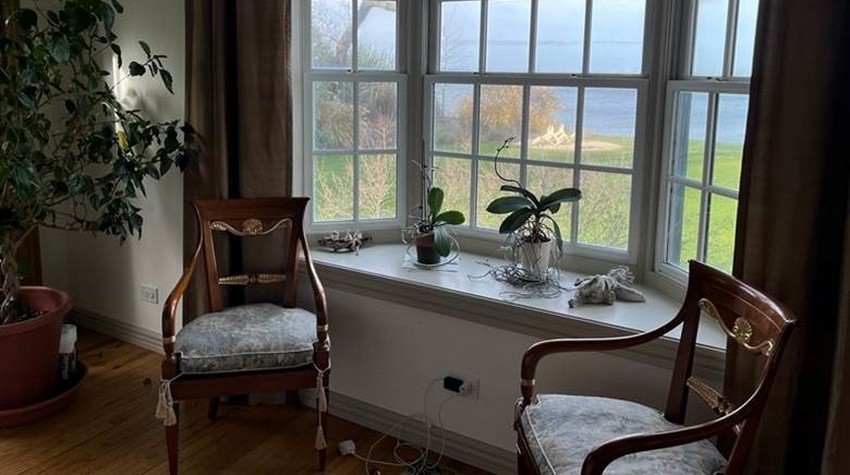
The final testimony of Nikola Tesla’s life in the United States has only recently come to light, thanks to writer Barbara Dadino, the owner of the house on Long Island where one of humanity’s greatest minds lived while pursuing his grand vision — the construction of his laboratory and the famous Wardenclyffe Tower.
.jpg)
.jpg)
Dadino
transformed years of research about Tesla and a lost chapter of Wardenclyffe’s
history — the place he moved to from New York driven by an immense dream — into
her book Return to Wardenclyffe, recently published in Serbia.
“The
story I uncovered about Tesla is truly incredible,” Dadino told Tanjug, noting
that for revealing what she describes as a previously untold story, she
received the title of “Tesla Ambassador” from Serbia’s Ministry of Foreign
Affairs — an honor she says she is especially proud of.
A HOUSE THAT WITNESSED HIS HAPPIEST AND HARDEST YEARS
Five
years ago, a commemorative plaque was placed on the house, marking the period
Tesla lived there — a time Dadino describes as both his happiest and most
difficult.
The
plaque features words by Tesla’s biographer Marc Seifer, one of the most
respected researchers of his work and the author of Wizard, who dedicated half
a century to studying Tesla’s achievements.
“Tesla
rented this house in 1902. It was his home during the construction of the
laboratory and Wardenclyffe Tower, based on one of his most revolutionary ideas
— a global wireless system for communication and energy transmission,” Dadino
explained.
She
added that Tesla enjoyed swimming in the nearby bay and, from a rise in the
yard, operating his invention — a remote-controlled boat.
A DISCOVERY THAT SPARKED AN INVESTIGATION
Barbara
Dadino and her partner Daniel Byrne only learned that the “father of the
electrical age” had lived in the house after purchasing it in 2011.
“The
house enchanted us immediately, but only after our second offer was accepted
did the previous owners tell us: ‘You know, Nikola Tesla lived here.’ We almost
fainted,” she recalled.
The
fact was unknown even to local residents, which prompted her in-depth research.
“I
went through old newspapers searching for proof. Soon I discovered not only
that he lived here, but also what a magnificent man he was — socializing with
neighbors, speaking with children, even taking an interest in agriculture,” she
said.
A CITY OF THE FUTURE THAT NEVER CAME TO LIFE
According
to Dadino, Tesla led a different life in Wardenclyffe than in New York,
although he remained fully devoted to his laboratory and tower.
He
planned to live there for the rest of his life and to build an entire
“Beautiful City – Radio City,” inspired by the urban planning movements of the
time. The house was intended to become the center of a global electrical energy
system.
Tesla
arrived in Wardenclyffe at the height of its development, after the railroad
connected New York with eastern Long Island and investor James S. Warden
launched the construction of an exclusive resort community.
MORGAN’S SUPPORT AND THE BEGINNING OF A GRAND PROJECT
In
1901, Tesla purchased 200 acres of land and built his laboratory and tower with
financial backing from banker J. P. Morgan, who invested $150,000 in the
ambitious undertaking.
Tesla
initially commuted daily from New York City to oversee construction before
permanently moving to Wardenclyffe in 1902.
“He
had the privacy he needed, but also the closeness of friends such as Stanford
White and Mark Twain. It was one of the happiest periods of his life,” Dadino
said.
THE COLLAPSE OF A DREAM
The
situation changed after Tesla’s split with Morgan, who withdrew funding —
partly because Tesla built the tower twice as tall as originally agreed.
Without
financial support, Tesla returned to New York in 1904 in search of new
investors.
The
tower, which during testing emitted light visible as far as Connecticut, was
demolished in 1919 and sold for scrap metal, while the laboratory was later
seized.
A VISION THAT OUTLIVED FAILURE
Despite
the setback, Tesla never abandoned his dream of transmitting energy and
messages wirelessly across the globe.
“He
believed that such energy could help humanity — that people would be more
educated, well-fed, and that wars would become meaningless,” Dadino emphasized.
During
that same period, Tesla further developed ideas about the advancement of
humankind through education, health, and peace.
A PLACE OF PILGRIMAGE
Today,
the Long Island house has become a place of pilgrimage for admirers of the
great scientist.
Visitors
come from around the world, including Tesla’s descendants, biographers, and
numerous scientists. Organized by the Serbian Consulate General, Tesla’s
birthday has even been celebrated there for the first time with guests from
several countries.
“People
come deeply moved by the fact that he lived here,” Dadino said, adding that the
house continues to preserve the memory of the visionary who sought to connect
the entire world through energy.

Join our
Viber Community
DAYS OF SEMBERIJA IN AUSTRIA: CULTURE, TRADITION AND LOCAL PRODUCTS PRESENTED TO AUSTRIAN AUDIENCES
BANJA LUKA BOOK FAIR 2026 OPENS TODAY
THE PEOPLE PROTECTED THE SACRED ICON, BELIEVING IT WAS PROTECTING THEM: THE STORY OF THE ČAJNIČE KRASNICA

APPEAL FOR HELP: BLOOD DONORS URGENTLY NEEDED FOR NATAŠA ĆEJIĆ IN BANJA LUKA
NEW GENERATION OF STUDENT THEATRE MEMBERS TAKES THE STAGE
APPEAL FOR HELP: BLOOD DONORS URGENTLY NEEDED FOR NATAŠA ĆEJIĆ IN BANJA LUKA
DEJAN KOKANOVIĆ CONQUERS 336 KM THROUGH THE ITALIAN ALPS

OKTOBERFEST KICKS OFF IN MUNICH, EXPECTING 6.5 MILLION VISITORS
DAYS OF SEMBERIJA IN AUSTRIA: CULTURE, TRADITION AND LOCAL PRODUCTS PRESENTED TO AUSTRIAN AUDIENCES

AUTUMN FRUITS AND HONEY FESTIVAL COMES TO BANJALUKA


 The situation at the border crossings