HOW TO COOL YOUR HOME WITHOUT AIR CONDITIONING OR A FAN: THE ANCIENT INDIAN TRICK THAT STILL WORKS
As summer heatwaves continue to push temperatures higher, many households rely on air conditioners and electric fans to stay comfortable. While effective, these appliances often lead to significantly higher electricity bills during the hottest months of the year.
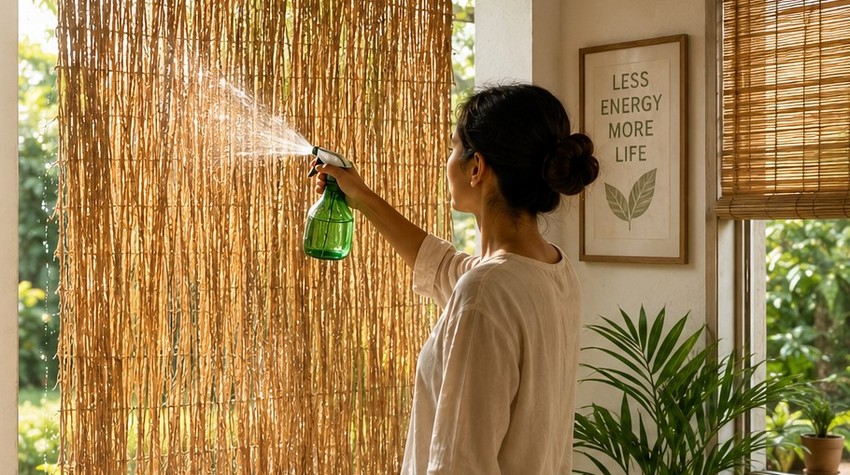
However,
there is a centuries-old Indian cooling technique that offers a simple,
natural, and energy-free alternative. Using nothing more than natural curtains
and water, this traditional method can help create a cooler and more refreshing
indoor environment within minutes.
A Traditional Cooling Method from India
In
India, where summer temperatures frequently exceed 50°C and Delhi once recorded
an extraordinary 52.9°C, people have relied on natural cooling solutions for
generations.
One of
the oldest techniques involves vetiver, a fragrant grass well known for its
natural cooling properties. Curtains woven from vetiver fibers are placed over
doors and windows. When sprayed with water, the curtains cool the air passing
through them by evaporation, creating a pleasant breeze inside the home.
How You Can Try It at Home
Even
if vetiver curtains are not available where you live, the same principle can be
applied using natural materials such as bamboo or woven reed curtains.
For the best results:
Install
natural-fiber curtains on windows and doors exposed to direct sunlight.
Spray
the curtains regularly with cool water during the hottest hours of the day.
As the
water evaporates, it naturally cools the incoming air, helping lower the indoor
temperature without electricity.
Why Natural Cooling Is Worth Considering
This traditional technique offers several advantages:
Eco-friendly:
It requires no electricity, reducing energy consumption and environmental
impact.
Cost-effective:
It helps lower cooling costs by reducing the need for air conditioning.
More
comfortable humidity: Unlike air conditioners, which can dry out indoor air,
evaporative cooling adds a gentle level of moisture that may feel more
comfortable for some people.
A Modern Version of an Ancient Idea
Today,
many people adapt this method by using thick blackout curtains instead of
traditional vetiver screens. Spraying these curtains with cool water can
produce a similar evaporative cooling effect, especially when combined with
good ventilation and shaded windows.
While
this technique may not completely replace an air conditioner during extreme
heat, it can noticeably improve indoor comfort and reduce dependence on
electrical cooling devices.
As
temperatures continue to rise across many parts of the world, this ancient
Indian cooling trick remains a practical, affordable, and environmentally
friendly way to keep homes cooler during the summer months.
Spray the curtains regularly with cool water during the hottest hours of the day.
As the water evaporates, it naturally cools the incoming air, helping lower the indoor temperature without electricity.
Why Natural Cooling Is Worth Considering
This traditional technique offers several advantages:
Eco-friendly: It requires no electricity, reducing energy consumption and environmental impact.
Cost-effective: It helps lower cooling costs by reducing the need for air conditioning.
More comfortable humidity: Unlike air conditioners, which can dry out indoor air, evaporative cooling adds a gentle level of moisture that may feel more comfortable for some people.
A Modern Version of an Ancient Idea
Today, many people adapt this method by using thick blackout curtains instead of traditional vetiver screens. Spraying these curtains with cool water can produce a similar evaporative cooling effect, especially when combined with good ventilation and shaded windows.
While this technique may not completely replace an air conditioner during extreme heat, it can noticeably improve indoor comfort and reduce dependence on electrical cooling devices.
As temperatures continue to rise across many parts of the world, this ancient Indian cooling trick remains a practical, affordable, and environmentally friendly way to keep homes cooler during the summer months.

Join our
Viber Community










 The situation at the border crossings