WINTER EQUIPMENT IN BOSNIA AND HERZEGOVINA: WHAT DRIVERS NEED TO KNOW BEFORE HITTING THE ROAD
Winter equipment is mandatory for all vehicles in Bosnia and Herzegovina from November 1 this year until April 1 next year, regardless of weather conditions or the state of the roads. This means vehicles must be equipped with the prescribed winter equipment even when roads are dry and there is no snow or ice.
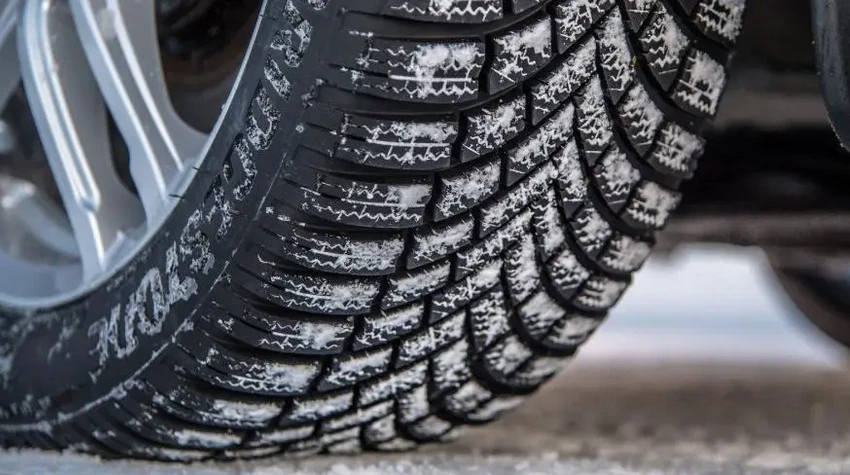
For drivers who have not yet prepared their cars for the
colder months, now is the right time to check their tyres, tread depth,
battery, antifreeze and other essential equipment.
The obligation to use winter equipment applies from November
1 to April 1 of the following year.
Importantly, this requirement does not depend on whether
snow has fallen or winter road conditions have already developed.
In other words, drivers can be fined for operating a vehicle
without the prescribed winter equipment in early November, even when the road
surface is completely dry.
Outside this period, winter equipment may also be required
whenever winter road conditions occur, meaning when roads are covered with snow
or ice, as well as on sections where appropriate traffic signs indicate that
such equipment is mandatory.
WHAT COUNTS AS WINTER EQUIPMENT?
For passenger vehicles, regulations allow several
combinations of tyres and additional equipment.
Drivers can use:
Winter tyres fitted on all four wheels;
Winter tyres fitted on the driving wheels, together with
snow chains or other appropriate traction-enhancing devices;
Summer tyres with a minimum tread depth of four millimetres
on all four wheels, together with snow chains or other appropriate
traction-enhancing devices prepared for the driving wheels.
Although several combinations are permitted, quality winter
tyres fitted on all four wheels remain the safest choice for drivers who
regularly travel during the winter months.
WHY IS A FOUR-MILLIMETRE TREAD DEPTH IMPORTANT?
It is not enough for a tyre to be labelled as a winter tyre.
Its condition and tread depth are equally important.
The tread depth must be at least four millimetres for the
tyre to meet the prescribed requirements.
Tread depth can be checked using a special measuring gauge,
the wear indicators built into the tyre or a visual inspection, although the
latter is less accurate.
It is advisable to inspect tyres at several points because
they do not always wear evenly. The inner edge of a tyre may wear more quickly,
particularly if the wheel alignment is not properly adjusted.
WHAT ARE THE FINES FOR NOT HAVING WINTER EQUIPMENT?
Drivers caught operating a vehicle without the prescribed
winter equipment face a fine of 40 BAM.
For legal entities and individuals independently engaged in
transport activities, the fine can reach 500 BAM.
In addition to financial penalties, police officers may
remove a vehicle from traffic and prohibit further driving until the deficiency
has been corrected and the vehicle is properly equipped.
Therefore, the problem is not limited to a possible fine.
Drivers may also face an unexpected interruption to their journey.
ARE ALL-SEASON TYRES ENOUGH?
All-season tyres can be an acceptable option if they meet
the prescribed requirements for winter equipment.
When purchasing them, drivers should pay attention to the
markings on the tyre sidewall and the tread depth.
However, the fact that a tyre is legally permitted for
winter use does not mean it will perform as well as a quality winter tyre in
all conditions.
All-season tyres can be a practical solution for drivers who
mostly drive in urban areas, cover relatively low annual mileage, live in
regions with milder winters and can avoid driving when roads are covered with
snow and ice.
On the other hand, quality winter tyres are a safer choice
for those who regularly travel early in the morning, drive through mountainous
areas or use roads affected by snow and icy conditions.
LOOK FOR THE 3PMSF SYMBOL
When purchasing all-season tyres, it is also worth looking
for the 3PMSF marking, represented by a three-peaked mountain with a snowflake.
This symbol confirms that the tyre has passed a prescribed
test for traction on snow.
The M+S marking can also be found on tyres intended for use
in winter conditions, but on its own it does not provide the same evidence of
tested snow performance as the 3PMSF symbol.
ARE SNOW CHAINS REQUIRED IF YOU HAVE WINTER TYRES?
If a vehicle is fitted with winter tyres on all four wheels,
snow chains are not automatically required as part of that winter equipment
combination.
However, on certain roads and in severe winter conditions,
the relevant authorities may require the use of chains or other
traction-enhancing devices.
For this reason, carrying suitable snow chains in the boot
is recommended, particularly for those travelling across mountain passes during
winter.
WHEN IS THE BEST TIME TO FIT WINTER TYRES?
A practical rule is to fit winter tyres before temperatures
remain consistently below approximately seven degrees Celsius.
There is no need to wait for the first snowfall.
Late October is a good time to arrange the change, as tyre
service centres are usually particularly busy at the beginning of November.
Before fitting winter tyres, drivers should check tread
depth, tyre age, possible cracks and damage, tyre pressure, the condition of
the wheels and the valves.
DO NOT FORGET THE BATTERY AND ANTIFREEZE
Tyres are not the only part of a vehicle that needs
attention before winter. Several other important components should also be
checked before colder weather arrives.
Battery – Low temperatures put additional strain on the
battery, meaning an older or weakened battery may fail precisely when the
engine is started on a cold morning.
Antifreeze – Check the coolant level and make sure it
provides adequate protection against freezing.
Windscreen washer fluid – Replace summer washer fluid with a
winter formula designed to withstand low temperatures.
Wiper blades – Worn blades can significantly reduce
visibility during rain, snowfall and sleet.
Lights – Shorter days and more frequent fog make properly
functioning vehicle lights particularly important.
WHAT IS THE BEST CHOICE FOR DRIVERS?
The choice between winter and all-season tyres primarily
depends on where, how often and under what conditions a vehicle is driven.
For drivers who mostly use their cars in urban areas and
rarely encounter snow-covered roads during winter, quality all-season tyres can
be a practical solution.
For those who travel frequently, drive through mountainous
regions or need to be on the road regardless of weather conditions, winter
tyres fitted on all four wheels remain the safer choice.
The most important thing is not to wait for the first
snowfall.
A properly prepared vehicle during winter is not simply a
way to avoid a fine. Above all, it is about ensuring the safety of drivers,
passengers and all other road users.

Join our
Viber Community
WINTER EQUIPMENT IN BOSNIA AND HERZEGOVINA: WHAT DRIVERS NEED TO KNOW BEFORE HITTING THE ROAD

TREBINJE - A FAVORITE SHOPPING DESTINATION FOR VISITORS FROM MONTENEGRO AND CROATIA

SWEET TREATS FOR A NOBLE CAUSE: HUMANITARIAN BAZAAR HELD IN ŠIPOVO

HALF A CENTURY BENEATH THE SURFACE: BANJA LUKA’S BUK DIVING CLUB CELEBRATES 50 YEARS

FROM BILEĆA TO CYPRUS: IRENA VUKOJE PURSUES HER VOLLEYBALL DREAMS
HALF A CENTURY BENEATH THE SURFACE: BANJA LUKA’S BUK DIVING CLUB CELEBRATES 50 YEARS

MINI CHRISTMAS TREES: THE PERFECT SOLUTION FOR DECORATING SMALL SPACES

THE MOST BEAUTIFUL PLACES IN REPUBLIKA SRPSKA WHEN THE FIRST SNOW FALLS
SWEET TREATS FOR A NOBLE CAUSE: HUMANITARIAN BAZAAR HELD IN ŠIPOVO
FROM BILEĆA TO CYPRUS: IRENA VUKOJE PURSUES HER VOLLEYBALL DREAMS


 The situation at the border crossings