WILL BILEĆA GET A MUSEUM WITH AN OPEN-AIR LAPIDARIUM?
The town of Bileća could see the revitalisation of its museum, including the restoration of a valuable collection of medieval tombstones and the creation of an open-air lapidarium, in a project estimated to cost around €1.8 million.
The
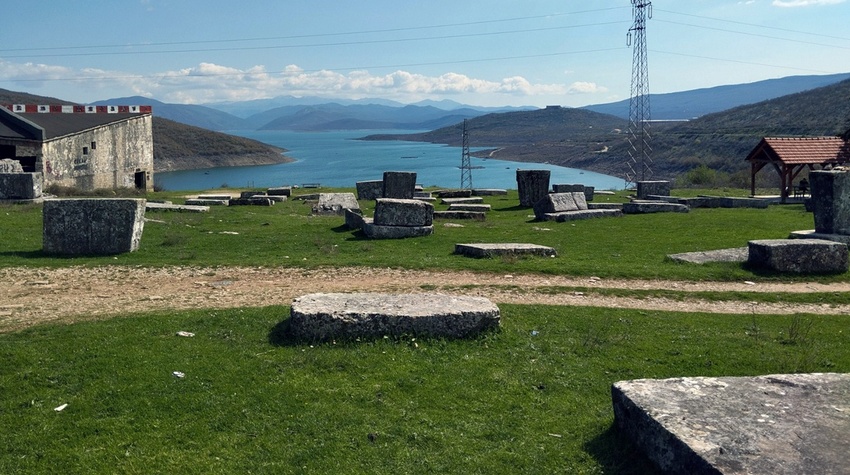
building of the museum, together with its neglected surroundings, needs
comprehensive restoration, according to Lazar Gnjato, director of the Jefto
Dedijer Cultural Centre in Bileća.
A SITE RICH IN ARCHAEOLOGICAL HERITAGE
The
museum is located above the source of the Trebišnjica River, an area once rich
in archaeological sites, where traces of human civilisation can be followed
from prehistoric times through the ancient and medieval periods to the 20th
century.
Gnjato
explained that the proposed project goes beyond renovating the museum building.
It also includes landscaping and revitalising the surrounding area, which
contains a necropolis of medieval tombstones known as stećci.
These
stone monuments were relocated from the Trebišnjica River valley during the
1960s, before the area was flooded following the construction of Bileća Lake.
"The
stećci also need to be conserved and restored to their original condition so
that they can be permanently preserved," Gnjato said.
PROJECT DESIGNED WITH SUPPORT FROM THE MINISTRY
The
conceptual design for the museum's revitalisation was developed with financial
support from the Ministry of Education and Culture of the Republic of Srpska.
It was prepared by two renowned architectural firms from Banjaluka.
Gnjato stressed that the Cultural Centre is open to suggestions, comments and all forms of assistance and support in bringing the project to life.
He
noted that the undertaking would require substantial investment, particularly
because a museum of this kind must meet specific conditions for the
preservation and storage of exhibits.
A NEW CULTURAL IDENTITY FOR BILEĆA
The
ultimate goal is to establish a museum that will bring the region's cultural
heritage to life and make it accessible not only to local residents but also to
visitors from across the region and tourists exploring Bileća.
"Our
goal is to have a museum where cultural heritage will be brought to life and
presented not only to local audiences but also to regional visitors and
tourists. Through these cultural activities, we want to create a recognisable
identity for our town," Gnjato emphasised.
A BUILDING DESIGNED BY A RENOWNED ARCHITECT
Bileća
once had a Local Heritage Museum housed in a building designed by the renowned
Yugoslav architect Juraj Neidhardt.
However,
the building is now neglected and in poor condition, having suffered extensive
damage in a fire during the 1990s.
The
planned revitalisation would therefore represent an important step towards restoring
a valuable architectural landmark and establishing a modern cultural
institution dedicated to preserving and presenting the rich archaeological and
historical heritage of the Trebišnjica valley.

Join our
Viber Community
WILL BILEĆA GET A MUSEUM WITH AN OPEN-AIR LAPIDARIUM?

GOLDEN SPIRITS OF MRKONJIĆ GRAD: CELEBRATING TRADITION AND LOCAL FLAVOURS
A HIDDEN RETREAT JUST 3 KM FROM BANJA LUKA CITY CENTRE
SUNNY NOVEMBER IN TREBINJE: A CITY FULL OF LIFE AND MEDITERRANEAN CHARM

ICE RINK RETURNS TO “PRIJEDOR WINTER”
GOLDEN SPIRITS OF MRKONJIĆ GRAD: CELEBRATING TRADITION AND LOCAL FLAVOURS

ONE SKI PASS TO CONNECT THE REGION'S MOST POPULAR WINTER RESORTS
SUTJESKA NATIONAL PARK MANAGEMENT PREPARES NEW TOURISM OFFER: WILDLIFE TO BE “HUNTED” WITH CAMERAS

WORLD TOURISM FILM AWARDS TO BE HELD IN AFRICA FOR THE FIRST TIME
BANJALUKA INCREASINGLY ATTRACTIVE TO YOUNG TRAVELLERS FROM AROUND THE WORLD


 The situation at the border crossings