SRPSKA AND SERBIA TO CONNECT PROTECTED AREAS
Protected areas in Republika Srpska and Serbia are set to establish a new cross-border cooperation framework under the name “Tara–Drina”, bringing together protected natural areas on both sides of the border.
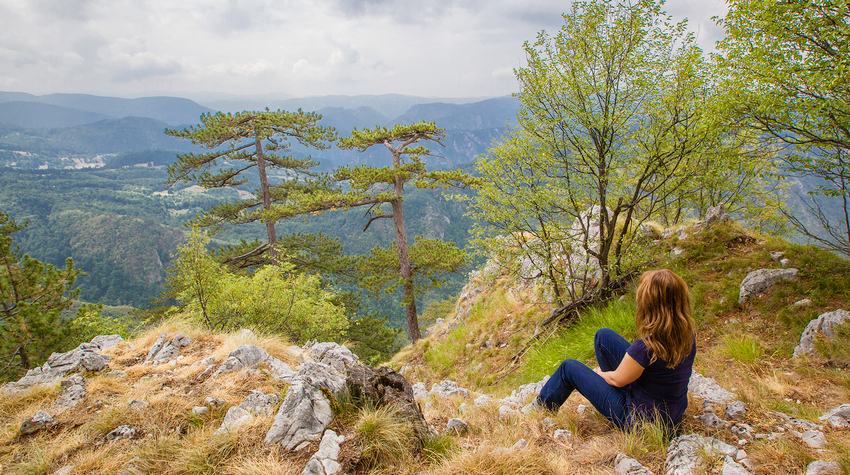
The
initiative will connect Drina National Park and Veliki Stolac Nature Park in
Republika Srpska with Tara National Park and Šargan–Mokra Gora Nature Park in
Serbia, the Ministry for Spatial Planning, Construction and Ecology of
Republika Srpska told Srna.
A NEW CROSS-BORDER AREA
Bojan
Vipotnik, Minister for Spatial Planning, Construction and Ecology of Republika
Srpska, said the four protected areas will carry out joint activities under the
name “Tara–Drina Cross-Border Area.”
Vipotnik
recalled that a Memorandum of Understanding and Cooperation in the Field of
Environmental Protection, signed in November 2025 between Serbia’s Ministry of
Environmental Protection and Republika Srpska’s Ministry for Spatial Planning,
Construction and Ecology, provides, among other things, for cooperation
concerning protected areas, particularly through cross-border links between
protected areas in Serbia and Republika Srpska.
“Activities
aimed at establishing the Tara–Drina Cross-Border Area have been underway since
mid-2024 and are the result of cooperation between the two ministries, as well
as the Republic Institute for Protection of Cultural, Historical and Natural
Heritage of Republika Srpska and the Institute for Nature Conservation of
Serbia,” Vipotnik said.
LEGAL FRAMEWORK FOR COOPERATION
The
legal basis for connecting the protected areas across the border is provided by
the Nature Protection Law of Republika Srpska, which allows protected areas to
be linked with protected areas in neighbouring countries or entities.
Vipotnik
added that a similar provision is contained in Serbia’s Nature Protection Law.
COOPERATION IN NATURE CONSERVATION
According
to Vipotnik, the cross-border connection will directly contribute to developing
and improving cooperation in the management of protected areas and
implementation of conservation measures.
It
will also facilitate joint scientific research, the exchange of experience and
expertise in nature protection, and cooperation among institutions responsible
for managing protected areas.
“We
will be able to implement projects, contribute to the development of
sustainable tourism, organize education and promotional activities, and involve
all interested stakeholders in the implementation of activities within the
cross-border protected area,” Vipotnik said.
FOCUS ON SUSTAINABLE TOURISM AND NATURAL HERITAGE
Future
cooperation will focus particularly on improving the management of protected
areas, implementing conservation measures, organizing scientific research and
exchanging experiences.
The
partners will also work on the development of sustainable eco-tourism and the
promotion of the natural and cultural values of the Tara–Drina Cross-Border
Area.
The
initiative is expected to strengthen cooperation between Republika Srpska and
Serbia in nature conservation while creating new opportunities for joint
projects, research, education, tourism development and the promotion of one of
the region’s most valuable natural areas.

Join our
Viber Community

WHAT MAKES THE PERFECT STEAK?

HOW TO MAKE TRADITIONAL HOMEMADE SOAP
SRPSKA AND SERBIA TO CONNECT PROTECTED AREAS
COULD THE TOLISA RIVER RETURN TO ITS FORMER COURSE?
JAMA LEDANA: A FROZEN GEM OF REPUBLIKA SRPSKA

THIS IS WHAT THE NEW BANJALUKA AIRPORT WILL LOOK LIKE: CAPACITY OF 2.5 MILLION PASSENGERS

NATALIJA LIVED 25 YEARS WITH HER MOTHER’S KIDNEY – NOW HER TENANT WANTS TO GIVE HER A SECOND CHANCE

BORA STANKOVIĆ’S LITERARY LEGACY REMEMBERED IN DERVENTA

PERUĆICA NAMED EUROPE’S MOST SECLUDED “ENCHANTED” FOREST

BANJA LUKA AND JEZERO JOIN FORCES TO PROMOTE TOURISM


 The situation at the border crossings